
The Pentagon Wants to Shut Anthropic Down for Being a “RADICAL LEFT WOKE COMPANY”
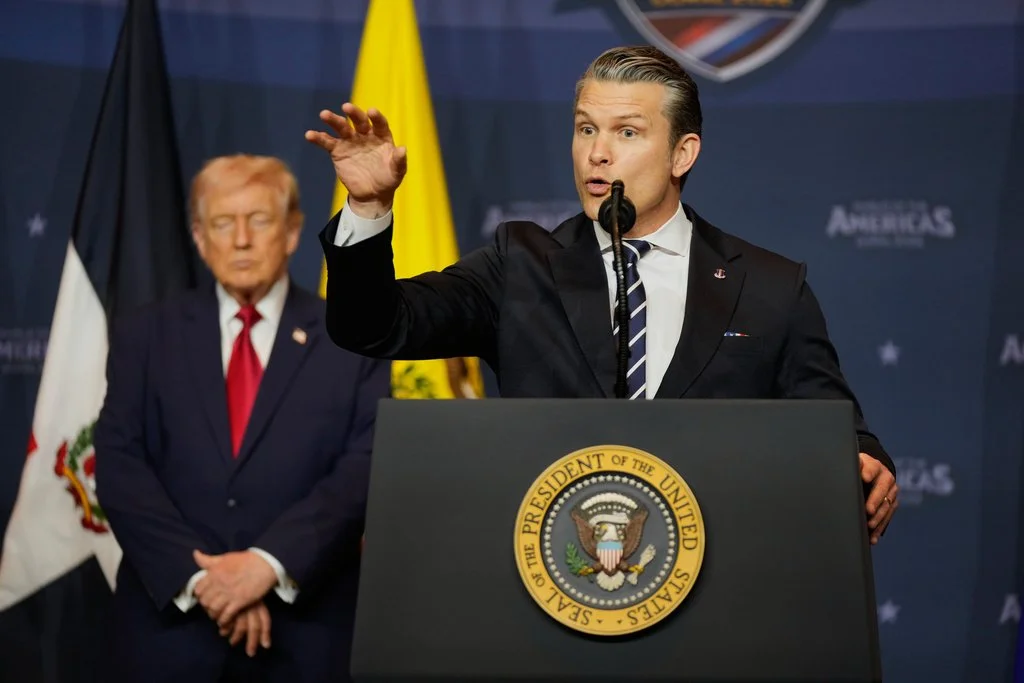
Defense Secretary Pete Hegseth, right, speaks President Donald Trump listens during the Shield of the Americas Summit, Saturday, March 7, 2026, at Trump National Doral Miami in Doral, Fla. (AP Photo/Mark Schiefelbein)
Anthropic is a leading US-incorporated AI company behind the large language model Claude, which Secretary of Defense Pete Hegseth once called “exquisite” technology of great value to the Defense Department. Now, the Pentagon has labeled Anthropic a “supply-chain risk”—the first US tech firm to receive this designation—in what critics say is an attempt to effectively sideline the company.
On July 14, 2025, the Pentagon awarded $200M contracts to Anthropic, OpenAI, Google, and xAI, with Anthropic becoming the first cleared for classified use. Defense officials described Claude to be “the most advanced and secure model for sensitive military applications. Just nine days later, on July 23, President Donald Trump signed an executive order to prevent “woke AI” in the government. The order sought to ensure AI tools used by federal agencies did not have what the Trump administration considered politically biased guardrails.
In January of 2026, Claude was used by US special operations forces in the raid to capture Venezuelan President Nicholas Maduro. Reportedly, Claude, through its Palantir partnership, was used in both preparations and in the active operation of the capture. This event turned out to be the catalyst for the rift between Anthropic and the Pentagon, with Hegseth explicitly stating that the Pentagon will reject AI models with restrictions on military use.
Anthropic CEO Dario Amodei put out a statement in February 2026 to highlight two redlines: Claude should not be used for mass domestic surveillance or for fully autonomous weapons. The US government already possesses the power to track and observe its citizens, but does so only on a small scale due to the manual task required to analyze the relevant data. According to Amodei: “To the extent that such surveillance is currently legal, this is only because the law has not yet caught up with the rapidly growing capabilities of AI.” With AI, it is suddenly possible for the government to assemble the massive amount of data available to monitor any and all Americans.
Partially autonomous weapons already exist and have played an important role in Ukraine’s war against Russia. Amodei states that fully autonomous weapons—weapons that are able to select and kill targets without any human involvement—may prove to be an advancement for good, but that AI’s current capabilities for proper judgment are not reliable enough for such weapons. Anthropic’s statement emphasizes that “the Department of War, not private companies, makes military decisions,” but Anthropic’s values, and democratic values, do not align with the Pentagon’s need for full autonomous use for “all lawful purposes.” At this time, Anthropic is the only of the contracted companies to refuse to remove its guardrails.
On February 24, 2026, Hegseth gave Anthropic a deadline of February 27 for the company to give the military full access to Claude, or face penalties. This would include the termination of its $200M contract with the Pentagon, designation as a “supply-chain risk,” and even the invocation of the Defense Production Act to force the removal of guardrails via a government takeover.
Two days later, on February 26, Anthropic rejected the Pentagon’s offer, with Amodei saying Anthropic “cannot in good conscience accede to their [the Pentagon’s] request.”
Through Section 3252 of Title 10 USC (United States Code), Hegseth can make Anthropic a “supply-chain risk,” which is a term previously reserved for firms of US adversaries such as China’s Huawei. The label bars Anthropic from the Department of Defense and allied contractor use, which includes Palantir, Boeing, and Lockheed Martin to start.
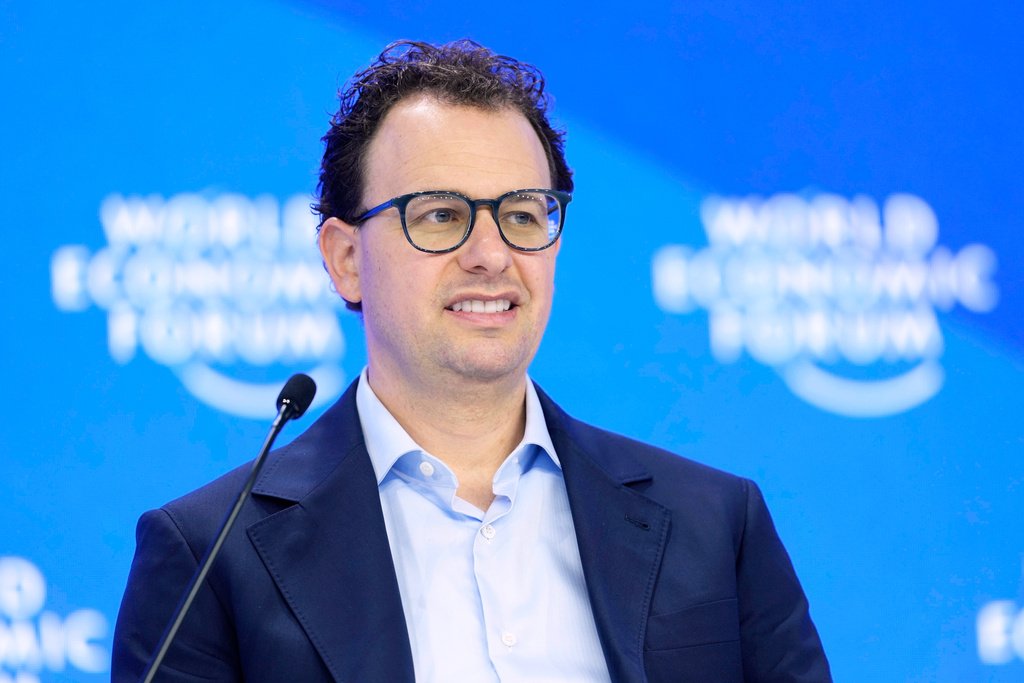
FILE - Dario Amodei, CEO and co-founder of Anthropic, attends the annual meeting of the World Economic Forum in Davos, Switzerland, Jan. 23, 2025. (AP Photo/Markus Schreiber, File)
The entire tech sector stands to suffer from this action. Cutting a major AI developer out of defense supply chains could slow innovation, close off the sector from foreign markets, and potentially allow American AI firms to fall behind Chinese competitors. As one tech industry representative remarks: “It will be difficult to do business when a social media post from the president can abruptly force companies to tear out crucial inputs.” Through the Anthropic-Pentagon conflict, in the backdrop of the Trump administration, the policy volatility seen time and time again may discourage investment in US firms all together.
Despite the designation, Claude reportedly continued to appear in U.S. military systems. During the early 2026 U.S. campaign against Iran, the model was still used indirectly through a Palantir platform.
On March 9, 2026, Amodei announced that Anthropic will challenge its designation in court as a violation of its free speech and due process rights. Anthropic claimed that Hegseth’s designation violated the Administrative Procedure Act, which has the authority to overturn the designation if the court finds the government acted improperly. In fact, there could be much evidence to support this claim, according to legal experts.
University of Minnesota Law School professor Alan Rozenshtein notes the contradiction: “The government was simultaneously threatening to use the (Defense Production Act) to force Anthropic to sell its services, using its services in active military operations, and saying it's too dangerous to use them in government contracts… Not all of these things can be true.” The Anthropic-Pentagon dispute has become a defining moment for the relationship between the US government and private companies. As we await further developments to the story, the question is whether AI systems should hold the authority to set their own limits, or if national security demands will ultimately always come first.