
Why do Some Multinational Athletes Choose to Represent One Country Over the Other
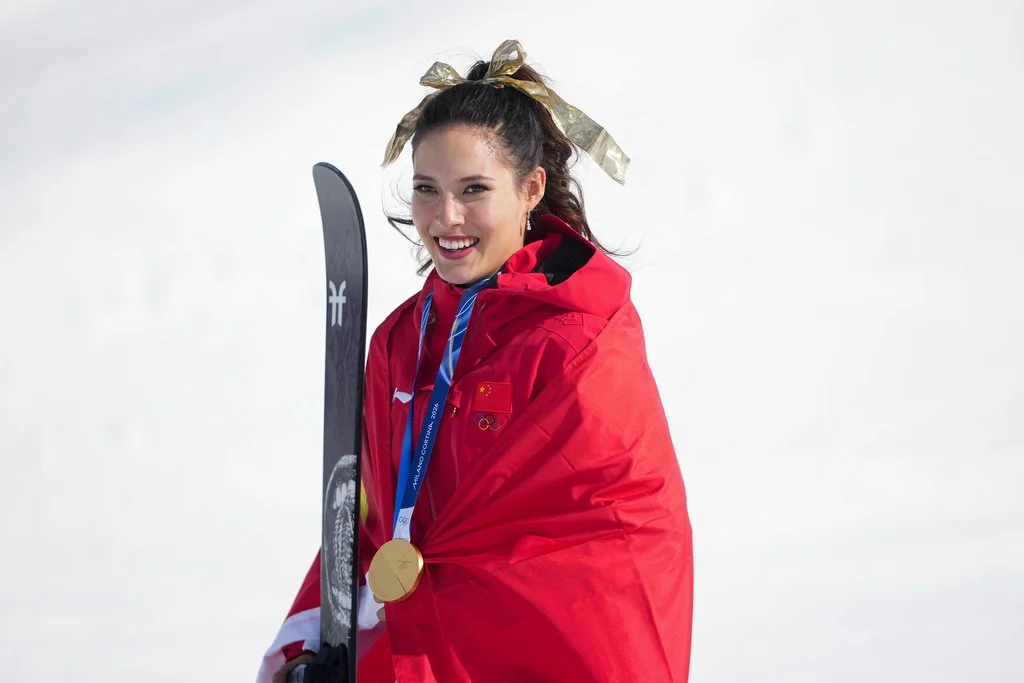
Gold medalist China's Eileen Gu celebrates winning the women's freestyle skiing halfpipe final at the 2026 Winter Olympics, in Livigno, Italy, Sunday, Feb. 22, 2026. (AP Photo/Lindsey Wasson, File)
Freestyle skier Eileen Gu was just 15 when she announced on Instagram and Weibo that she intended to compete for China in the 2022 Beijing Olympics. Born in San Francisco to an American father and a Chinese mother, Gu said her goal was to inspire Chinese women and girls to participate in winter sports. The decision, however, sparked significant backlash.
Gu did not always compete for China. In the 2018-19 freestyle skiing World Cup season, she competed for Team USA before requesting to change the nation she represented with the International Ski Federation. She has always described herself as both American and Chinese, spending her summers in China and even briefly attending Peking University in Beijing.
The social media sensation is often compared to figure skater Alysa Liu, who also identifies as Chinese-American. Both athletes were born and raised in the Bay Area, though Liu has continued to compete for the U.S. team.
Liu made history at the 2026 Milano-Cortina Winter Olympics, becoming the first American in 24 years to win gold in women’s figure skating, also earning a second gold in the team event; both achievements were widely celebrated in the U.S. On the other hand, Gu, a six-time Olympic medalist, was once again criticized in February by public figures including U.S. Vice President JD Vance, as well as former NBA player Enes Kanter Freedom who called Gu a "traitor" for representing China.
Labeled “ungrateful” by conservative critics following her 2019 decision, Gu says she’s been “physically assaulted on the street,” during her time at Stanford University, in addition to receiving death threats. Her admission to the university was also highly publicized, prompting a 2022 petition by some parents of prospective students and members of the Chinese American community who opposed her acceptance. The status of Gu’s U.S. citizenship was never publicly confirmed while she was granted a Chinese passport — though China does not allow dual nationality.
However, Gu is only one out of the eight U.S.-born athletes who represented other countries at the 2026 Winter Olympics — with Zoe Atkin for Great Britain, Tallulah Proulx for the Philippines, Lyon Farrell for New Zealand, Jacquie Pierri for Italy, Winston Tang for Guinea-Bissau, Anabelle Zurbay for Ireland.
Some athletes, like Zurbay, have even fewer direct ties to the country they chose to compete for. Born in Minnesota and based in Vail, Colorado, the 17-year-old alpine skier gained her eligibility to represent Ireland through her Westmeath-born grandmother.
“So many athletes compete for a different country,” Gu told USA today in February. “People only have a problem with me doing it because they kind of lump China into this monolithic entity, and they just hate China. So it’s not really about what they think it’s about.”

Anabelle Zurbay, flag bearer of Ireland, leads her team in during the Olympic opening ceremony at the 2026 Winter Olympics, in Cortina d'Ampezzo, Italy, Friday, Feb. 6, 2026. (AP Photo/Misper Apawu)
Gu’s remark came in response to Vance’s suggestion during a Fox News interview where he said Gu should compete for the U.S. team because she is “somebody who grew up in the United States of America, who benefited from our education system, from the freedoms and liberties that make this country a great place.”
Figure skater Zhu Yi is another U.S.-born athlete who chose to represent China at the Olympics. Yi renounced her U.S. citizenship in 2018 to compete for China in the 2022 Beijing Winter Olympics as a part of the country’s "Morning Road" initiative, which recruited athletes prior to the competition. Although her transfer wasn’t a hot topic on social media, her fall in the women’s singles short program during the team event was discussed significantly more than mistakes of Chinese-born athletes. Within days of her fall, “#ZhuYiFellDown” was viewed more than 200 million times on Weibo, with some users calling her “rotten” and an “embarrassment.”
On Chinese social media, Gu is celebrated, often described as a “hero” by Weibo users. In contrast, Liu has faced pressure from Chinese officials to represent the country, both online and in person. Some Chinese netizens have criticized her due to her father, Arthur Liu’s, background as an 1989 Tiananmen protester — calling her a “second-generation anti-China figure.” Arthur Liu was a student activist who ended up on the Chinese government’s most wanted list after China’s crackdown on Tiananmen Square protests. He and Liu reported harassment, including being targeted in an alleged spying operation ahead of the 2022 Beijing Olympics.
More recently, reports have indicated that Gu and Yi were paid a total of $6.6 million by the Beijing Municipal Sports Bureau in 2025 and $14 million over the past three years. Neither athlete has responded to requests for comment from U.S.-based newspapers.