
EU’s Foreign Policy Shake-Up Meets Resistance From Within
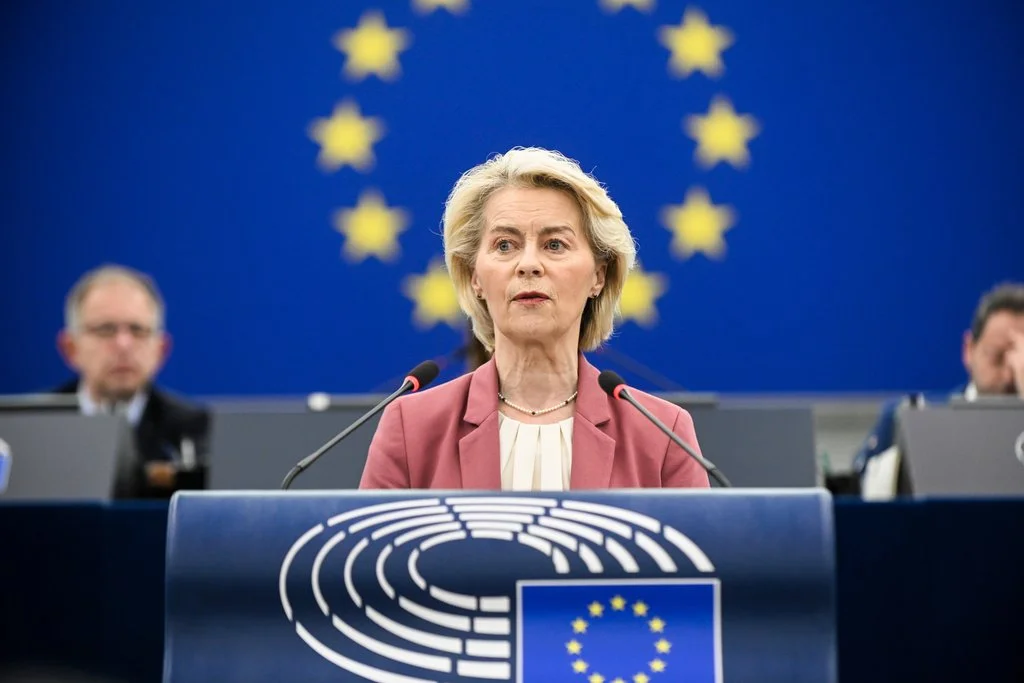
European Commission President Ursula von der Leyen speaks during a joint debate on the European Council and the situation in the Middle East, at the European Parliament in Strasbourg, eastern France, Wednesday, March 11, 2026. (AP Photo/Pascal Bastien)
On March 9, European Commission President Ursula von der Leyen called on the EU to adopt a more “realistic and interest-driven” foreign policy, marking a sharp turn from decades of European diplomatic tradition and triggering an immediate wave of criticism from inside the bloc.
Speaking at the annual EU Ambassadors Conference in Brussels, von der Leyen said Europe “can no longer be a custodian for the old-world order, for a world that has gone and will not return.” Von der Leyen also hinted at scrapping the unanimity requirement in foreign policy decision-making, questioning whether the bloc’s reliance on “consensus and compromise” was “more a help or a hindrance.” She rejected the idea that the EU could continue to rely on the rules-based system to defend their interests and declined to condemn the ongoing US-Israeli strikes on Iran on legal grounds.
The speech came as the Iran War entered its second week with regional energy markets in turmoil and Western alliances under growing strain. Von der Leyen pointed to Hungary's ongoing veto on a 90 billion euro loan to Ukraine as a prime example of why the current system was failing. “You have all seen the challenges we have faced in getting this over the line, even after all 27 leaders have agreed to it,” she said.
The remarks brought back arguments about who speaks and represents the EU on foreign policy. Under EU treaties, that role belongs to High Representative Kaja Kallas rather than the Commission president. Still, critics argue von der Leyen has been steadily encroaching on that position since the beginning of the Iran War in early March. French MEP and former minister, Nathalie Loiseau, was among the most vocal critics. “I thought I was hallucinating when I watched Ursula von der Leyen calling the leaders of the Gulf states. She doesn’t have her own diplomatic service, she speaks without a mandate and without intelligence briefings,” she said.
Nine EU diplomats and officials voiced their frustrations over von der Leyen taking positions in the early days of the war that went beyond what the 27 member states had agreed on. One issue that caused particular concern was her early call for “a credible transition in Iran.” One senior EU diplomat, speaking on condition of anonymity, reportedly commented on von der Leyen’s tendency to put forward her personal ideas without consulting her colleagues.
The Commission pushed back against these criticisms. A spokesperson said von der Leyen was providing “political leadership of the Commission’s external policy” in accordance with the EU treaties, and that contacting other heads of state was part of her duties.
The backlash extended to von der Leyen’s own team. On Tuesday, Commission Executive Vice-President Teresa Ribera suggested that the comments had not been phrased very carefully. Meanwhile, European Council President António Costa seemed to contradict von der Leyen directly, arguing that “power policy” cannot replace international law. Facing the pushback, von der Leyen softened her position in a speech at the European Parliament in Strasbourg on Wednesday, emphasizing that the EU was “founded as a peace project” and would continue to uphold these principles.
However, this was not enough to spare her a grilling from MEPs in the European Parliament, where several political groups openly challenged her comments and the broader direction of EU policy. Socialists & Democrats President Iratxe García argued that the problem lay in the people violating the world order, not the order itself. Renew Chief Valérie Hayer called on Europe to “reaffirm its commitment to international law,” while Greens Vice-President Diana Riba directly addressed von der Leyen in her criticisms.
Member states are also divided over how to interpret the situation and what Europe’s response should look like. Spain’s Prime Minister, Pedro Sánchez, publicly disagreed with von der Leyen’s framing, arguing that the main issue is not replacing an “old world order” but preventing a slide from a system governed by law to one defined by disorder. Southern and Western European capitals have generally pushed harder for legal restraint, while other governments have placed greater emphasis on maintaining an alignment with Washington.
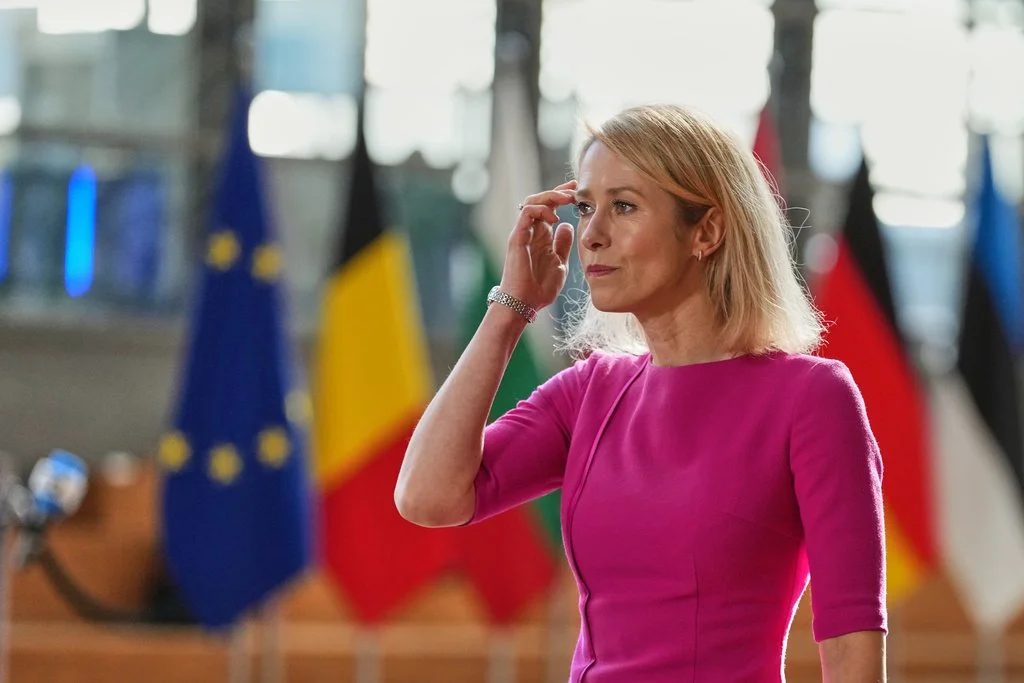
European Union foreign policy chief Kaja Kallas arrives for a meeting of EU foreign ministers and representatives of the Gulf Cooperation Council at the European Council building in Brussels, Belgium, Thursday, March 5, 2026. (AP Photo/Virginia Mayo)
At the same conference, Kallas struck a different tone on international law. Instead of focusing on power politics, she emphasized the importance of restoring legal norms and accountability. “Without restoring international law, together with accountability, we are doomed to see repeated violations of the law, disruption and chaos,” she told ambassadors.
The energy crisis adds further pressure. Von der Leyen told the European Parliament that the 10 days of war had already cost European taxpayers an additional 3 billion euros in fossil fuel imports. Gas prices have risen about 50 percent since the conflict started, and oil prices are increasing by approximately 27 percent. The Strait of Hormuz, through which 20 percent of the world’s oil is transported, remains effectively closed.
The European Parliament is set to hold a dedicated debate on the US-Israeli military operation in Iran ahead of the European Council meeting in mid-March, where the bloc’s foreign policy direction is expected to be a central topic.