
European Nations Retaliate to Iranian Attack, Deploying Naval Vessels
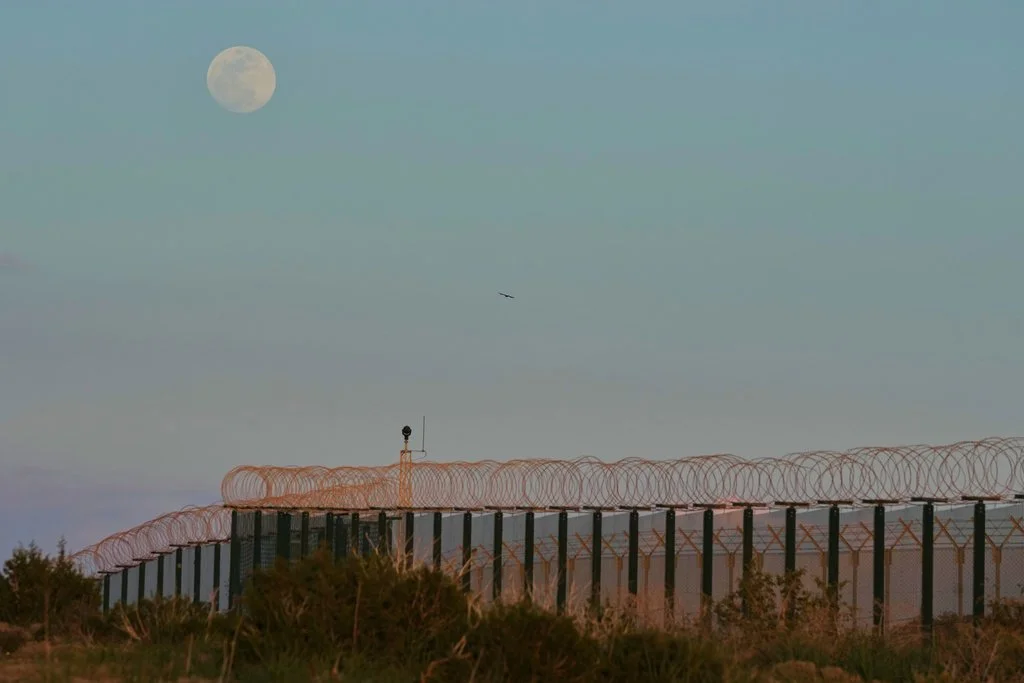
The moon rises over the fences of U.K.'s RAF Akrotiri air base after it was hit by a drone strike early morning near Limassol, Cyprus, Monday, March, 2, 2026. (AP Photo/Petros Karadjias)
On March 2 a drone strike, which officials have attributed to Hezbollah, hit the British air base in Akrotiri, Cyprus. The strike hit the base just after midnight and caused panic amongst the local population. This came as a series of attacks by Iran and its allies after being bombed by the US and Israel, beginning on Feb. 28. The drone was suspected to have been fired from Lebanon, with officials stressing that the target was the British air base rather than the island itself. Keir Starmer claimed that Britain had accepted a US request to use its bases for “defensive” strikes, providing a possible motivation for the attacks.
The response from Western European countries to this strike was seen almost immediately, with Britain, France, and Greece sending air-defence forces to Cyprus the following day. French President Emmanuel Macron pledged to defend Cyprus, planning to dispatch additional warships to the surrounding naval area to strengthen defence in the region. Macron visited Cyprus on March 9, outlining his plans to deploy the ships as a defensive move, as allies up their presence in the Mediterranean, Red Sea, and the Strait of Hormuz.
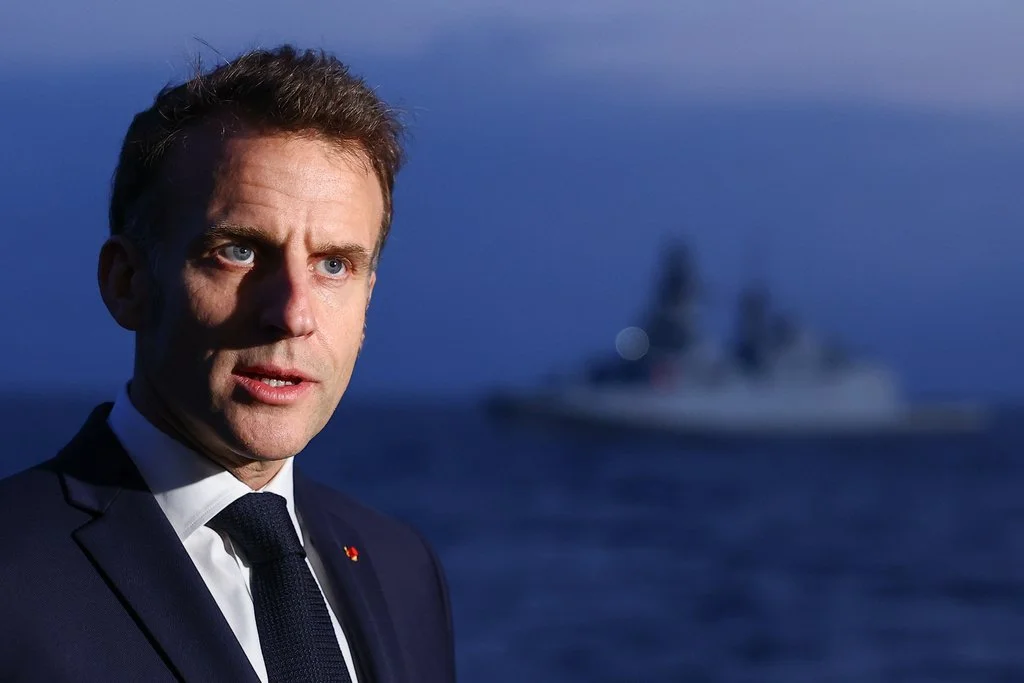
French President Emmanuel Macron speaks to members of the media as he visits the French aircraft carrier Charles de Gaulle, during his visit to Cyprus, Monday March 9, 2026. (Gonzalo Fuentes/Pool Photo via AP)
“When Cyprus is attacked, it is Europe that is attacked,” Macron said in his address. His statement showcases a unity of the European countries, who are taking a collective stance on the attacks from the East. Macron, whose navy has already provided a warship to the area, said that there would be a total of two warships supplied to the ‘Shields in Greek’ naval mission. Launched in 2024, the mission is the European Union’s main Red Sea naval. Macron added that there would be eight warships added to the region, including the aircraft carrier group and two helicopter carriers. Greece has already dispatched four F-16 fighter planes to the Paphos air base, and Greek Prime Minister, Kyriakos Mitsotakis, echoed sentiments of “European solidarity” in his address.
With conflict continuing in Iran, tensions remain high in the region. Additionally, European nations are also concerned with the passage of oil through the Strait of Hormuz, a trade route which is currently being blocked by Iran. Macron pointed to a “purely defensive, purely escort mission”, involving both EU and non-EU states, which would be tasked with gradually reopening the Strait of Hormuz. Amid safety concerns, European states continue to think about their next steps in regaining control of a key international trade route.