
Iran War Drags Down Southeast Asian Tourism
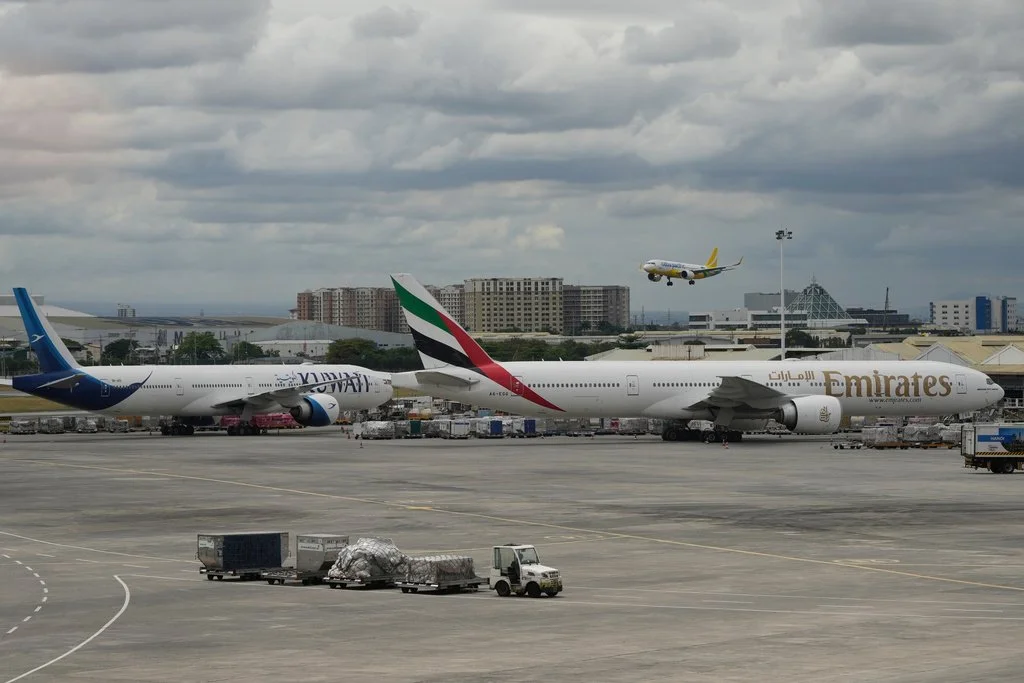
A plane prepares to land beside parked Middle East carriers at Manila's International Airport, Philippines on Monday, March 2, 2026. (AP Photo/Aaron Favila)
As the war in Iran enters its fifth week, the fallout has become increasingly difficult to contain. Global air travel is among the hardest-hit industries. Major flight hubs in the Gulf states that typically handle 15% of global air traffic have significantly reduced their capacity. These transit points are crucial for the flow of tourists into Southeast Asia. Cancellations, rising costs driven by a doubling of the price of jet fuel, and consumer aversion to long-haul travel that passes through the Middle East have all dampened expectations for post-Covid growth in the Southeast Asian tourism sector.
Over 100 ships cross the Strait of Hormuz on a normal day, carrying 20% of the world’s daily oil and liquefied natural gas (LNG) trade. Since Iran’s blockade, traffic has reduced to virtually zero. Asian economies were already vulnerable to these shocks since 80% of the oil leaving the Strait of Hormuz was destined for Asia. Further blows to the economy from a downturn in tourism are an unwelcome addition. The sector accounted for 9.4% of Cambodia’s GDP and 12% of Thailand’s in 2024. A Thai government official projects that the country might lose up to 3 million visitors, costing them $4.5 billion if the war drags on for six months.
On the day the US and Israel launched their attacks on Iran, 22.9% of the scheduled flights of Southeast Asian carriers were canceled. 125 million people travel between Europe and Asia each year—a third of which flows through major airports in the Middle East. With carriers reducing service, travel to and from Southeast Asia will be significantly limited as flights get rerouted, delayed, or suspended altogether.
Airfares have risen as demand is being funneled into a narrower set of options while carriers add fuel surcharges in response to jet fuel skyrocketing to $197 per barrel by March 20. Although many airlines hedge against Brent oil, the historical pattern of jet fuel and crude oil being roughly the same price has not held. Jet fuel prices went up 100% compared to the one-third rise in Brent crude, resulting in a squeeze on profits and the passing of these costs to consumers.
Concerns over long-haul travel are evident in a report conducted by Pear Anderson and the ASEAN Tourism Association, showing 28% of cancellations and postponements came from the travelers themselves, compared to 49% caused by logistics. The risk of flying through a war zone has deterred many potential tourists, who will look elsewhere or simply postpone trips until the situation in the Middle East stabilizes.
Taken together, the combination of flight disruptions, rising fares, and geopolitical risk underscores the fragility of Southeast Asia’s tourism recovery. It is worth noting that countries will not be affected equally. Analysts believe that destinations with a higher percentage of European and Middle Eastern travelers (Thailand, Bali) and those more reliant on connecting flights (smaller markets like Cambodia and Laos) will face greater disruption.
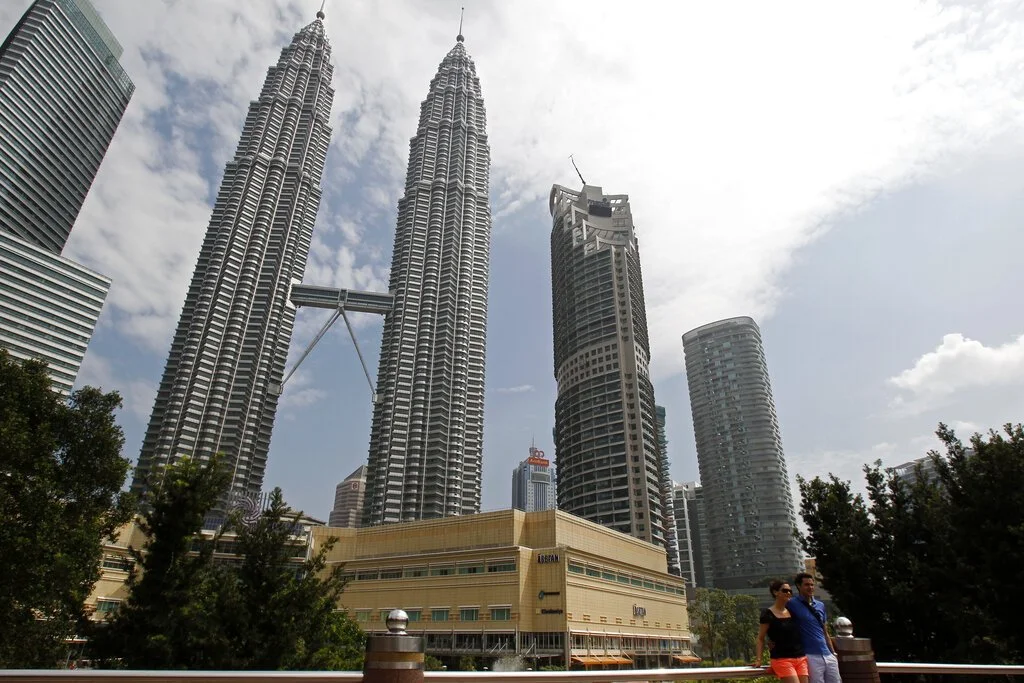
Tourists pose for a photo in front of Malaysia's landmark Petronas Twin Towers as haze dissipated overnight, in Kuala Lumpur, Malaysia, Thursday, June 27, 2013. Singapore suffered its worst haze in history last week after blazes in peat swamp forests on Indonesia's Sumatra island sent massive plumes of smog across the sea to neighboring Singapore and Malaysia. (AP Photo/Lai Seng Sin)
On the other hand, Malaysia’s prospects are more mixed. 75% of its international arrivals are made up of travelers from Southeast Asia. Norazman Mahmud, the CEO of the Civil Aviation Authority of Malaysia, told Channel NewsAsia that this crisis can be an opportunity to position ASEAN countries like Malaysia, Singapore, and Thailand as safe and reliable hubs for Europe-bound flights. A post-war pivot to focus on travelers within Asia is expected to help offset the losses elsewhere.
The macroeconomic outlook for the broader region is dire. The energy crunch has led to fuel shortages, fears of persistent inflation, and major disruptions to economic activity. A scramble to find alternative sources of energy is compounded by an ever-stronger dollar that is eroding the purchasing power of local currencies. Tourism contributed $374 billion to Southeast Asia’s GDP, equivalent to 9.4%. A slowdown in the sector threatens to cloud economic growth and remove an important source of foreign currency inflows when they are most needed.