
Nepali Prime Minister Balendra Shah is set to make his first official visit to India since taking office in March. His talks with Indian Prime Minister Narendra Modi are expected to focus on economic assistance and addressing disagreements over water-sharing arrangements, infrastructure projects, and border territoriess. between the South Asian neighbors. Shah is expected to arrive in New Delhi on Nov. 22 and meet Modi the following day. The visit follows a November 4-5 meeting in Kathmandu between Shah and Indian Foreign Minister Vikram Misri, who discussed possible areas of cooperation ahead of the prime minister’s visit. Indian Ministry of External Affairs spokesperson Randhir Jaiswal described the proposed visit as an opportunity to strengthen cooperation and discuss “all matters of mutual interest.”
One of Nepal’s main goals for Shah’s meeting with Modi is securing financial assistance for reconstruction and infrastructure development. India has previously supported Nepal’s recovery from natural disasters, including contributing $1 billion following a devastating 7.6 magnitude earthquake that struck Nepal in 2015. Nepal is now asking for more than $2 billion from New Delhi, in loans and grants for infrastructure projects and reconstruction following the August 26 Bhotekoshi floods. The disaster damaged roads, bridges, and hydropower facilities, with the United Nations Development Programme estimating reconstruction costs at approximately $4.7 billion. The proposed assistance package has not yet been finalized, and its terms still remain subject to the upcoming talks between the two governments.
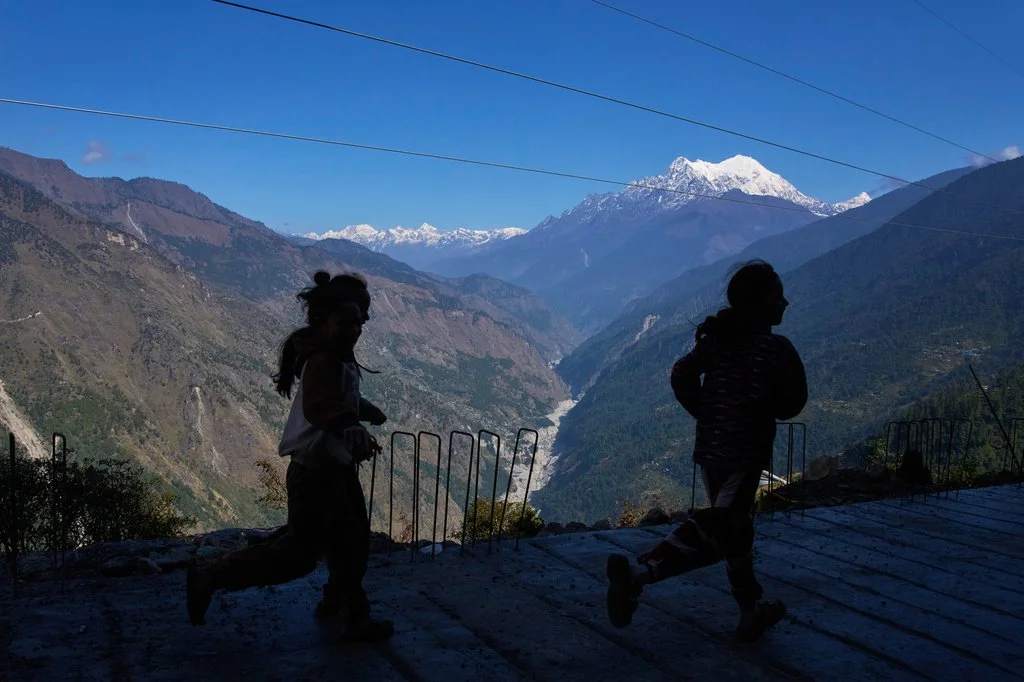
Children run as the Langtang Lirung mountain looms in the background, overlooking destruction caused by floods, along the Bhotekoshi River in Rasuwa, Nepal, Friday, Nov. 13, 2026. (AP Photo/Niranjan Shrestha)
The visit is also expected to bring a joint ten-point “vision document” for future projects between the two countries. India proposed the document, which establishes longer-term targets for trade, investment, energy, transit, education, and digital connectivity. It would build on earlier agreements, including a long term electricity trade deal and plans to expand oil pipelines between the two countries, while setting new goals for cooperation. The document is expected to be unveiled alongside a joint announcement by Prime Ministers Shah and Modi following their meeting.
Nepal is also pushing for better transportation links with India. It has repeatedly requested additional air-entry routes through Indian airscape via Manendranagar and Bhairahawa, to improve international access to its airports in Pokhara and Bhairahawa. The two countries have rceently resumed talks on the issue, but have not reached an agreement. Railway connection, petroleum pipelines, and improvements to border facilities are also expected to come up during the visit.
The two countries are also looking to expand their cooperation on energy projects. Under a 2024 long-term power trade agreement, India agreed to work toward importing up to 10,000 megawatts of electricity from Nepal over the following ten years. The agreement is intended to encourage investment in Nepal’s hydropower industry. However, progress on the Pancheshwar Multipurpose Project, a proposed joint hydropower project on the Makahali River, has remained stalled since 1996 over disagreements about water-sharing arrangements and the distribution of the project’s benefits.
The countries also have unresolved border disputes. Nepal and India continue to dispute territories including Kalapani, Limpiyadhura, and Lipulekh. Nepal’s claims over the western border region intensified in 2020 after it published a revised political map that included Kalapani, Limpiyadhura, and Lipulekh as part of Nepal. India rejected the map in a May 2020 statement, with Foreign Ministry spokesperson Anurag Srivastava arguing that Nepal’s claims lacked historical evidence, and that the border dispute should be resolved through diplomatic talks. It maintained that the territories belong to India. This disagreement remains an unsolved, recurring issue in their relations.
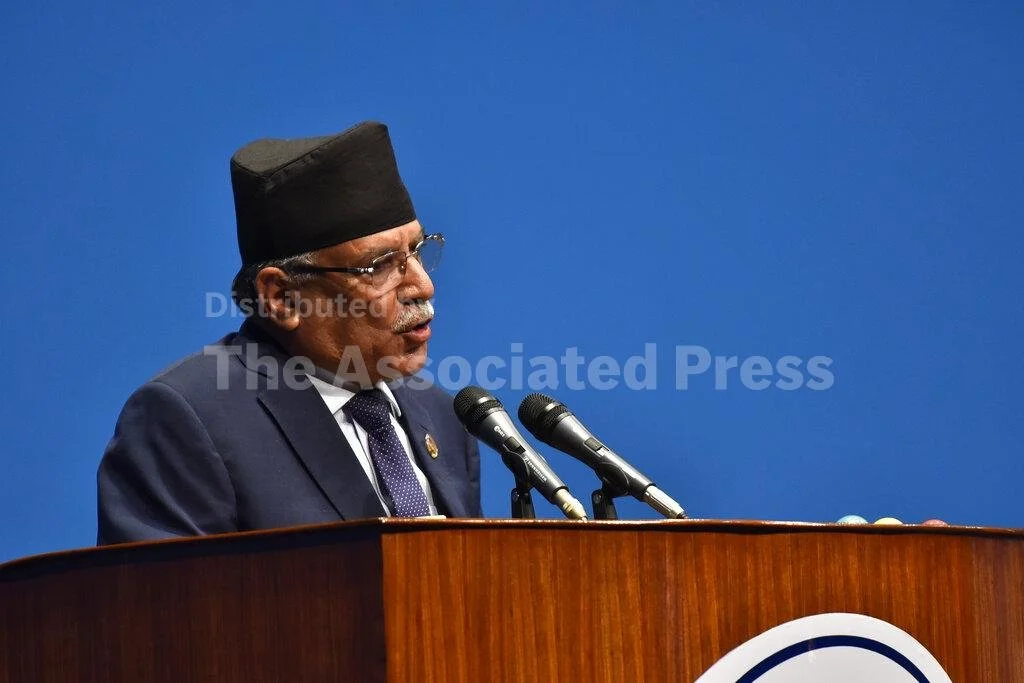
Co-chairman of the ruling Communist Party of Nepal Pushpa Kamal Dahal speaks in the House of Representatives during the clause-wise discussion on the Constitution amendment bill at Kathmandu, Nepal on Saturday, June 13, 2020. The House unanimously adopted the amendment bill later on the day to change the coat of arms in the Constitution to implement the new map including the triangular territory of Limpiyadhura, Kalapani and Lipu Lekh encroached by India. (Photo by Narayan Maharjan/NurPhoto via AP)
The visit also comes as Nepal seeks to maintain relations with not just India, but also China, another one of its neighbors. A 20-member delegation of Shah’s ruling Rastriya Swatantra Party is visiting Beijing, showing Kathmandu’s parallel approach to engaging with its neighbors. India remains Nepal’s largest trading partner, accounting for more than 60 percent of its external goods trade, according to the Indian Embassy in Kathmandu. While Nepal continues building ties with China, Nepal’s location and dependency on Indian trade and transit routes make its relationship with New Delhi particularly important.
Prime Minister Shah’s visit presents an opportunity to establish new priorities for Nepali-Indian relations, particularly in infrastructure, energy, and economic development. However, the proposed agreements will depend on negotiations and implementation by both governments. Whether the visit produces progress beyond existing commitments will be an early indication of how the new Nepali government intends to manage its relationship with its most crucial neighbor.