
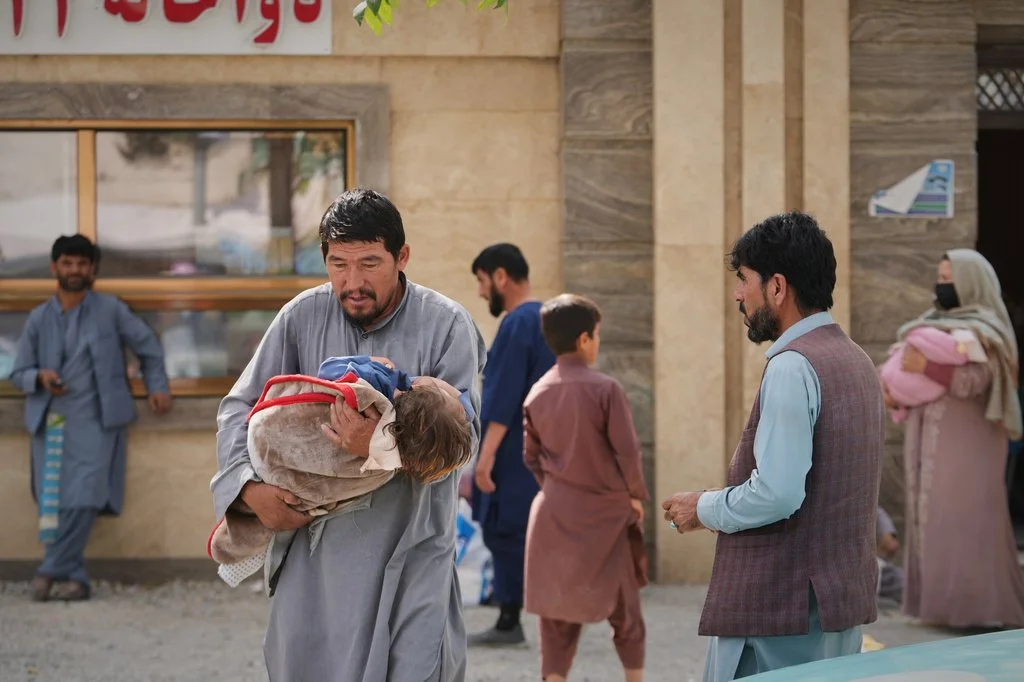
A man carries a child wrapped in a blanket outside Indira Gandhi children's hospital in Kabul, Afghanistan, Monday, Oct. 12, 2026. (AP Photo/Siddiqullah Alizai)
According to the UN Office for the Coordination of Humanitarian Affairs (OCHA), 21.9 million people in Afghanistan require humanitarian assistance, yet only approximately 31% of funding needed to address the crisis has been secured as of September 2026. The crisis is compounded by food insecurity, the mass return of Afghans from neighboring countries, climate-related disasters, and shortages of essential services. Continued shortfalls in international funding could lead to further reductions to food assistance and support programs, potentially limiting vulnerable families access to essential resources.
The scale of Afghanistan’s humanitarian crisis has raised growing concern about access to basic resources. International humanitarian aid has declined from $3.27 billion in 2022 to $1 billion in 2025. More than halfway through 2026, only $438 million in humanitarian assistance has been secured, leaving a reported funding gap of 74%. Dr. Tajudeen Oyewale, UNICEF’s representative in Afghanistan, stated “At precisely the moment when the needs are increasing, the services available to children are being reduced due to funding cuts”. Meanwhile, Al Jazeera has reported that over the past four years, acute malnutrition among children under five increased by 14% in 2026, affecting approximately 3.7 million children. Conditions worsened in two-thirds of Afghanistan’s provinces during the second quarter of 2026 compared with the same period the previous year. Children are particularly vulnerable to food shortages because their developing bodies require consistent access to adequate nutrition.
Food insecurity remains another major concern, despite favorable rainfall and improved agricultural production in 2026. The World Food Programme (WFP) has projected that 19.2 million people will face high levels of acute food insecurity during the November 2026-April 2027 winter season, an increase from the 17.4 million people during the corresponding period a year earlier. An assessment by the WFP attributed the worsening outlook to high food and transportation costs, unemployment, and aid shortfalls that have limited assistance.
Economic pressures have also undermined farmers’ ability to sustain agricultural production. High fertilizer and other input costs, combined with low crop prices, may force poorer farmers to plant less or use fewer resources, limiting future yields. Meanwhile, the return of millions of Afghans from Pakistan and Iran has placed additional pressure on communities already struggling with poverty, drought, and limited employment opportunities. The WFP projects that 5 million people will experience emergency levels of hunger during the upcoming winter season—double the number projected for April-September 2026. The agency has warned that, without additional food and funding assistance, improved growing conditions alone will not be enough to prevent growing food insecurity. Seasonal employment shortages during the winter months could further limit households’ ability to obtain food, leaving children more vulnerable to malnutrition.
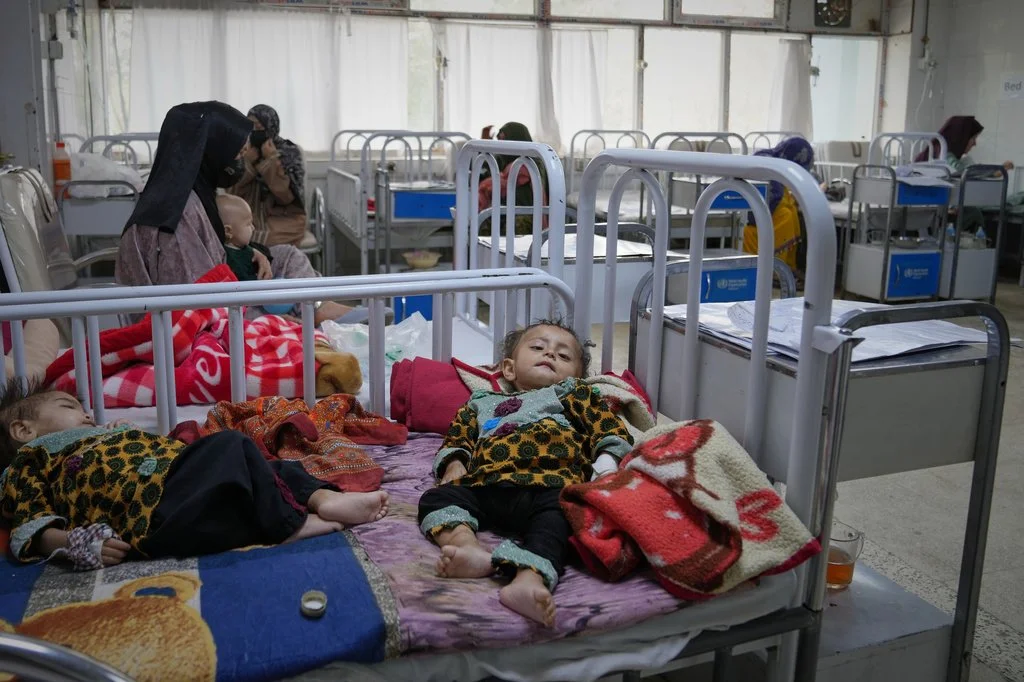
Afghan women care for their children in the malnutrition ward at Indira Gandhi children's hospital in Kabul, Afghanistan, Monday, Oct. 12, 2026. (AP Photo/Siddiqullah Alizai)
Afghanistan’s humanitarian crisis is also shaped by the country’s political and economic circumstances following the Taliban's return to power in August 2021. The Taliban regained control of the country after waging a two-decade insurgency against the U.S.- backed Afghan government. Their return prompted many international donors to suspend aid, raising concerns about further economic deterioration, and the country’s ability to meet its population’s basic needs. Humanitarian assistance increased temporarily in 2022 in response to worsening conditions, with donors providing more than $2.6 billion that year. Nevertheless, UN officials warned that these contributions remained insufficient to meet Afghanistan’s needs. These political and economic pressures have coincided with reduced humanitarian assistance, while millions of Afghans continue to struggle accessing adequate food and services.