
A Punjab Border Shooting Puts India-Pakistan Tensions Back in Focus
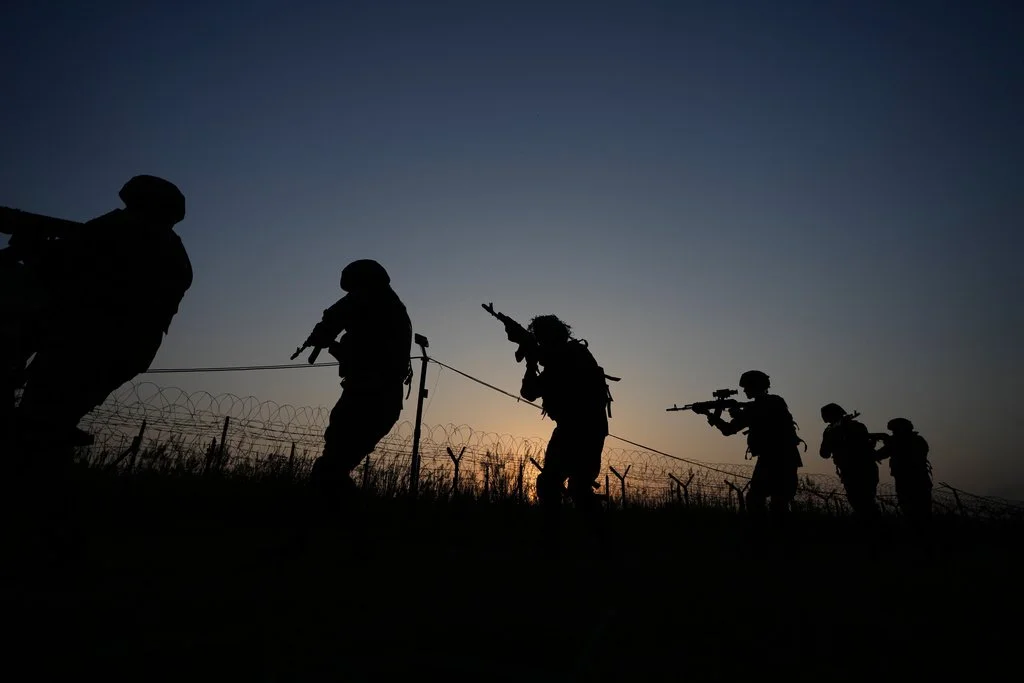
Indian Army soldiers conduct patrol and tactical drills along the heavily militarized Line of Control (LoC) dividing the Kashmir region between India and Pakistan, in the Akhnoor sector, approximately 66 kilometers (41 miles) from Jammu, India, Thursday, Oct. 16, 2025. (AP Photo/Channi Anand)
Two deaths along the India-Pakistan border have triggered competing diplomatic protests, with each government challenging the other's account of the shooting. The development on October 2 left two Pakistani nationals dead and another person reportedly wounded, prompting Islamabad and New Delhi to summon each other’s charge d’affaires the following day. Pakistan called the men unarmed civilians and demanded an investigation, while India said its Border Security Force (BSF) acted after the individuals crossed into Indian territory and posed a security threat.
The exchange comes 17 months after an attack in Indian-administered Kashmir killed 26 people. India blamed Pakistan for supporting the militants responsible, an allegation Islamabad denied. The attack triggered days of military exchanges, including missile and drone strikes, before a ceasefire took effect on May 10, 2025. The Congressional Research Service describes the confrontation as among the most serious between the two nations in decades, shining a light on the risks posed by unresolved disputes between the nuclear-armed neighbors.
In the latest incident, Pakistan’s Foreign Ministry said Indian BSF personnel used “unprovoked and lethal force” against unarmed civilians in the Bedian sector along the international border. Pakistan said the victims had not been attempting to infiltrate India and rejected what it called an attempt to mischaracterize them as “infiltrators.”
Islamabad summoned India’ charges d’affaires the following day on October 3 to lodge a formal protest of the incident. It demanded an “immediate, transparent and credible investigation,” legal and disciplinary action against the alleged responsible, and formal communications on the investigation’s findings.
India’s Ministry of External Affairs offered a different account later that day. It said three individuals crossed into Indian territory via the Ferozepur sector of Punjab and continued toward the border fence despite multiple warnings from the BSF to return to Pakistan. The ministry said the force was “compelled to engage them” because they posed an “imminent security threat.”
New Delhi rejected Pakistan’s allegations as “baseless and motivated” and summoned Pakistan’s charge d’affaires to protest what it described as continued leniency toward Pakistani illegal cross-border infiltration. India also alleged cross-border movement by armed narcotics syndicates operating in Pakistan and urged Islamabad to investigate and prevent further activity.
The accounts differ on both the men's status and the circumstances that led to the shooting. Although India and Pakistan disagree on what happened, the shooting’s location adds another layer of uncertainty to the incident. The international border in Punjab has generally remained more peaceful than the disputed Kashmir frontier, where the two countries have frequently exchanged fire, according to reporting on the incident. The shooting occurred outside the area most commonly associated with cross-border clashes, although the exact circumstances remain disputed.
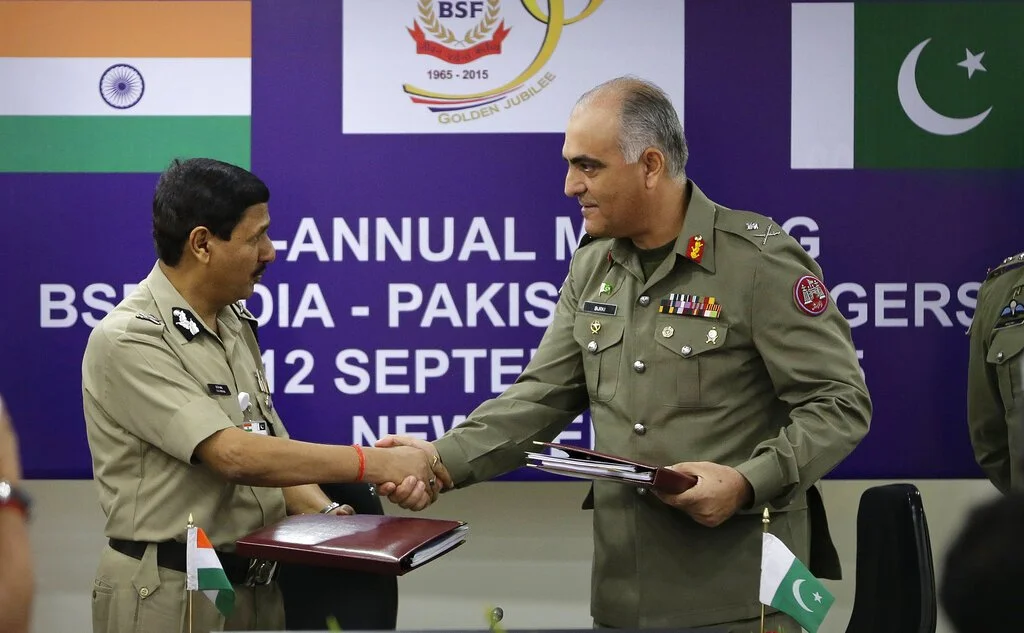
Indian Border Security Force (BSF) Director General D.K. Pathak, left, and Pakistani Rangers Director General (Punjab) Maj. Gen Umar Farooq Burki shake hands as they exchange copies of the joint accord at Indian Border Security Force (BSF) headquarters in New Delhi, India, Saturday, Sept. 12, 2015. A 16-member Pakistani delegation of border officers arrived the capital for three-day talks with India’s Border Security Force (BSF) to discuss ways of reducing tension alongs its border in the disputed Kashmir region in order to avoid civilian casualties. The DG-level talk concludes Saturday. (AP Photo/Altaf Qadri)
The incident also followed a separate disagreement regarding security operations in Kashmir. On October 1, Pakistan’s military challenged India’s claim that its forces had killed a senior commander from Lakshar-e-Taiba, an armed group based in Pakistan. Pakistan presented a man it said had been wrongly identified as the now dead commander. The dispute preceded the Punjab shooting by roughly 24 hours.
Tensions also resurfaced earlier this year on September 16, when India and Pakistan exchanged diplomatic protests over a naval collision in the Arabian Sea. India accused a Pakistani vessel of colliding with an Indian warship, and said the incident violated a 1991 bilateral agreement requiring their naval vessels to maintain a distance of at least three nautical miles in international waters.
Together, the incidents add to a series of recent tensions between India and Pakistan, which have traded accusations over incidents at sea and along their shared border. In the case of the Punjab shooting, competing accounts leave unanswered questions about whether the men crossed the border accidentally or posed the security threat described by India. Pakistan has requested an investigation, but the both of the two nation’s governments’ public statements offer no mutually accepted explanation of the events that led to the two deaths. The shooting has revived familiar tensions in Indian-Pakistani relations regarding its disputed border, along with new uncertainties about the countries’ eventual responses to the incident’s findings.