
Imran Khan’s Political Influence Endures as PTI Marches Toward Islamabad
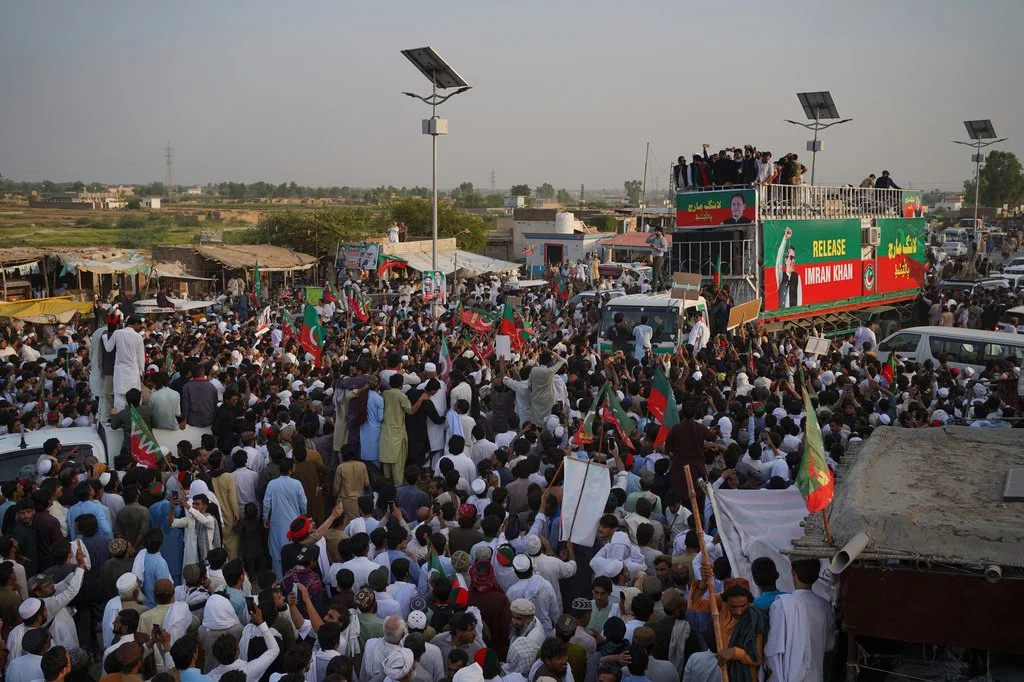
Supporters of imprisoned former Prime Minister Imran Khan's party prepare to march demanding Khan's release, in Lakki Marwat, a remote town in northwestern Pakistan, Sunday, Oct. 4, 2026. (AP Photo/Maaz Awan)
Pakistani police placed large shipping containers along central roads surrounding Pakistan’s capital ahead of the planned demonstration, restricting access to key routes into Islamabad. PTI had originally scheduled the march for September 27, but it was postponed as negotiations between the two parties continued. On October 4, more than 5,000 supporters began marching toward the capital after two rounds of negotiations failed to reach an agreement. The protesters called for Khan’s release, improved access to medical care, and increased family visits while he remained in prison.
The march began in Khyber Pakhtunkhwa, a northwestern province governed by PTI, under the leadership of provincial Chief Minister Sohail Afridi. Since becoming chief minister in October 2025, Afridi has organized demonstrations and traveled throughout the province to mobilize support for Khan’s release.
The October 2026 march follows previous PTI demonstrations demanding Khan’s release. In November 2024, thousands of supporters marched toward Islamabad, prompting authorities to impose security restrictions, block major roads, and disrupt internet access. The demonstration quickly escalated into violent clashes between protesters and authorities. The October 4 march reflects PTI’s continued use of public demonstrations to pressure the federal government. The scale of the protests demonstrated PTI’s continued ability to mobilize supporters around Khan despite continued restrictions on his party.
Khan became prime minister in 2018 and left office in April 2022 after losing a parliamentary vote of no confidence. After organizing rallies to protest his removal from office, Khan was arrested in May 2023 and again in August on charges such as corruption and revealing state secrets—which he and PTI have rejected as politically motivated. His imprisonment has since become a central point of conflict between PTI and the federal government. His family and supporters have raised concerns about mental and physical health and the shortage of information available about his wellbeing. Pakistani authorities have refuted allegations that he has been denied the appropriate care.
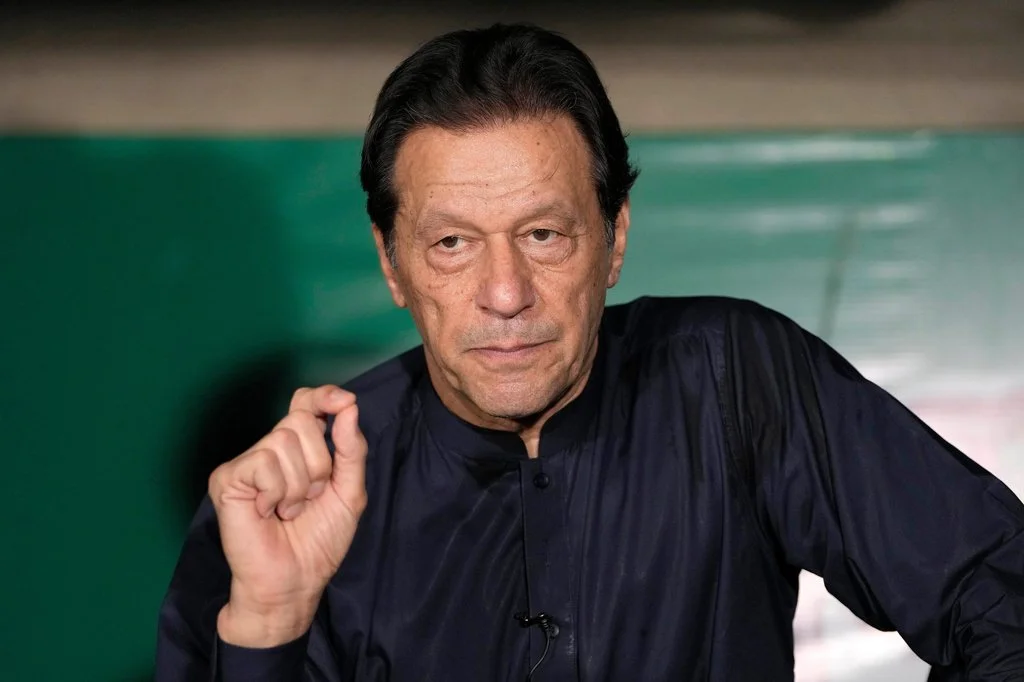
Pakistan's former Prime Minister Imran Khan gives a press conference at his home, in Lahore, Pakistan, on May 18, 2023. (AP Photo/K.M. Chaudary)
Despite Khan’s imprisonment and restrictions on his party, PTI has continued to play a significant role in Pakistani politics. During the 2024 general election, authorities barred PTI from contesting under its party name and using its traditional cricket-bat symbol. PTI-backed candidates instead ran as independents, winning 93 seats in the National Assembly, compared with 75 for the Pakistan Muslim League-Nawaz (PML-N) and 54 for the Pakistan People’s Party (PPP). Although PTI-backed candidates won the highest number of seats, they did not win a majority, allowing the two rival parties to form a coalition government.
PTI has continued to oppose the coalition government and has retained control of Khyber Pakhtunkhwa, one of Pakistan’s four provincial governments, demonstrating how the party has sustained its political presence despite Khan’s imprisonment. The two sides have continued to disagree over Khan’s detention, the treatment of PTI and its supporters, and the party’s right to organize political demonstrations.
Human rights organizations have criticized restrictions on freedom of expression and peaceful assembly in Pakistan. Members of PTI have faced arrests and restrictions, while members of Khan’s family have been detained. These actions have drawn further scrutiny to the government’s treatment of the opposition and the conditions under which PTI supporters can organize protests.
The October 4 march followed unsuccessful negotiations between PTI and Pakistan’s federal government regarding Khan’s continued imprisonment and detention conditions. PTI continues to advocate for his release, but the two sides have yet to reach an agreement. The march also represents PTI’s continued ability to mobilize support despite restrictions on the party and its demonstrations. With PTI maintaining a strong political base as well as platform, this dispute remains a central point of contention between the party and Pakistan’s federal government.