
Supreme Court Begins New Term with Major Climate Change Case
On October 5th, 2026 the Supreme Court returned from its summer recess, entering the new nine-month term to hear a significant climate change case. The Justices heard arguments for nearly two hours, however observers are still unsure on how they will vote. The Supreme Court must decide whether to allow a state lawsuit challenging ExxonMobile and Suncor Energy move forward. The lawsuit was brought by Boulder, Colorado’s local government, accusing the companies of downplaying the role of fossil fuels in climate change. However, the companies argue that this is a federal issue that can’t be heard by state courts.
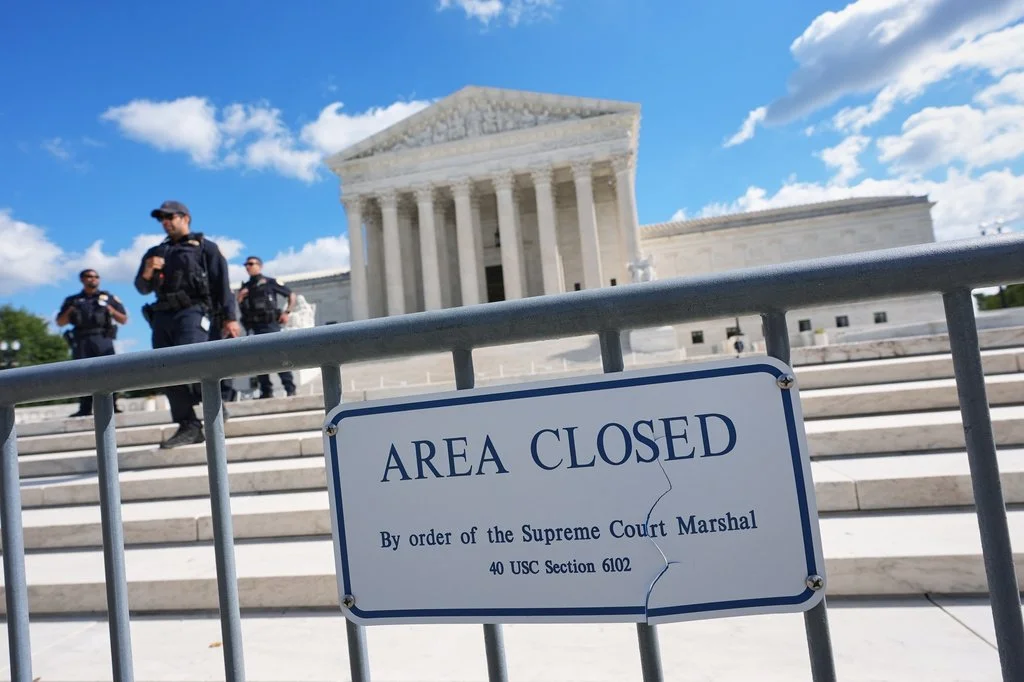
The Supreme Court is pictured, Monday, Oct. 5, 2026, in Washington. (AP Photo/Mariam Zuhaib)
If the Supreme Court rules with the big oil companies, many other state and local climate cases may be shut down. However, if they return this case to the state courts and allow it to progress, this could open the door for further challenges across the US. Due to Justice Samuel Alito’s major oil stock-holdings, he has chosen to recuse himself from the case, leaving only five conservative justices ruling in the case as opposed to the typical six. As the three liberal justices are expected to side with Boulder, only one conservative justice must be convinced for Boulder to win. Since the oil companies are the plaintiffs bringing the case they would need more than half of the Justices’ votes to win.
The original case was filed by Boulder, Colorado back in 2018 at the state level, alleging that the oil companies knowingly contributed to climate change and harmed Boulder’s property and residents. Boulder specifically cited widespread injuries such as flood damage, wildfire risk, drought, and damage to public infrastructure. The County Commissioners of Boulder specifically sought monetary damages under public nuisance laws to recover the lost costs, rather than challenging the fossil fuel operations themselves. However, Suncor Energy asserted that these local laws couldn’t apply to interstate or international greenhouse gas emissions, and moved to the US Court of Appeals. Despite this, the federal court returned this case to the Boulder County District Court, which sided with Boulder. The Colorado State Supreme Court further upheld this ruling, causing the oil companies to appeal to the Supreme Court.
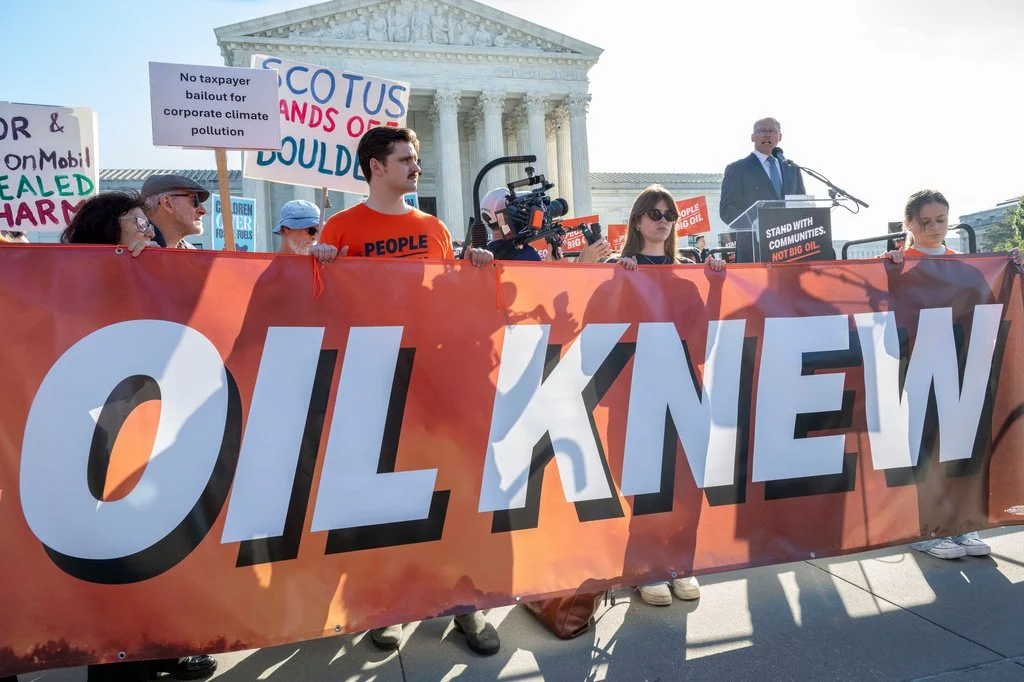
Former Washington Gov. Jay Inslee, at podium on right, speaks at a rally outside the U.S. Supreme Court in Washington, Monday, Oct. 5, 2026, as the justices hear arguments in Suncor Energy v. Boulder, a case concerning Boulder's lawsuit against ExxonMobil and Suncor Energy over alleged climate deception. Speakers urged the court to allow Boulder's lawsuit to advance toward trial (AP Photo/Kevin Wolf)
This comes while the Trump administration makes massive cuts to environmental regulations. The trend continued on October 7, 2026 as Trump’s EPA announced it would be making changes to the extensive Biden regulations. While they did not release the exact revisions, the EPA mentioned repealing restrictions controlling methane emissions from oil production. These regulations require energy companies to address methane leaks and restrict new oil wells from burning off the excess gas that’s extracted along with oil. These changes could have a notable impact on climate change as methane is known to have a 28 times greater global warming effect than carbon dioxide, trapping heat more efficiently.
As this case continues, many await the decision, questioning whether the recent trend of environmental setbacks will continue. Those in support of Boulder hope the case will be treated similarly to past successful tobacco cases, in which state courts were allowed to pursue damages against tobacco companies under public nuisance laws. However, those opposed worry that a massive influx of suits from different states and localities seeking similar damages could overwhelm the court system. Whichever way the Justices rule, this case could vastly change the landscape of environmental suits for years to come.