
As Iran War Continues, States Say Federal Election Security Help Came Too Late
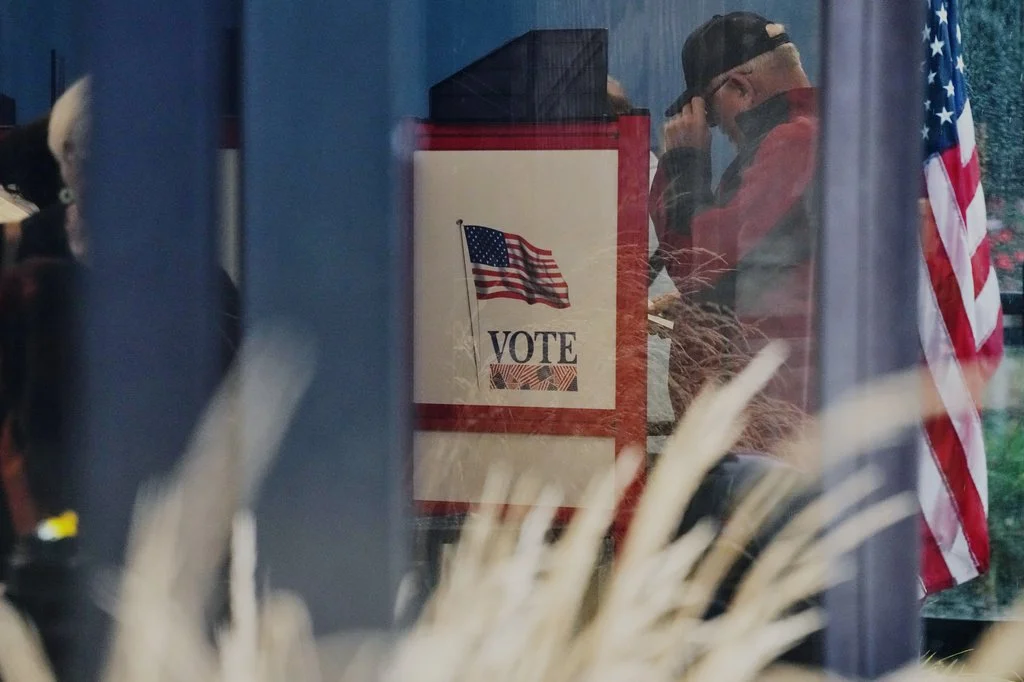
A voter stands at a voting booth at the Elections & Voter Services building in Minnesota on Sept. 18, 2026. (AP News/Ellen Schmidt)
On Thursday, President Donald Trump said the US will not attack Iran before Election Day, though a US blockade remains in force. The Senate rejected the war powers resolution 49-50 on Sept. 24.
The Cybersecurity and Infrastructure Security Agency (CISA), part of the Department of Homeland Security, released an election security plan on Sept. 24. The plan promises training exercises, risk assessments, and threat briefings for states, according to The Washington Post. A CISA spokesperson told the Post that the agency “is committed to supporting state and local election officials.”
Defense Secretary Pete Hegseth followed in late September, directing US Cyber Command and military intelligence agencies to counter foreign interference in the elections.
Several state officials told the Post the federal support arrived too late. Utah Lt. Gov. Deidre Henderson, a Republican and the state’s chief election officer, said states are “in the dark when it comes to any sort of intelligence” on foreign adversaries. She said, “The threats that we’re getting now are mostly from our own government.”
Henderson has fought the Justice Department over Utah’s voter rolls. The department sued the state earlier this year after she refused to turn over voters’ private information, and in July, it sent her a letter warning of criminal prosecution, the Deseret News reported.
Idaho Secretary of State Phil McGrane, also a Republican, said the lack of a permanent CISA director has left states in “a holding pattern.” West Virginia Secretary of State Kris Warner, a Republican, said his state builds its own partnerships and does not need close federal ties.
Arizona Secretary of State Adrian Fontes, a Democrat, said CISA officials told states on an August call that it was too late to rebuild their support for 2026. Fontes told NPR he remains confident states will run safe and secure elections.
Sen. Alex Padilla, D-Calif., and Rep. Joseph Morelle, D-N.Y., the top Democrats on the committees that oversee federal elections, wrote to Homeland Security Secretary Markwayne Mullin in early September. The lawmakers demanded that DHS release more than $39.6 million Congress approved for election security, and they cited the war and reported Iranian cyberattacks on U.S. water systems. DHS and CISA did not immediately respond to NPR’s request for comment.
US intelligence agencies have detected no sign that foreign adversaries can tamper with voting machines or vote counts, the Post reported. A recent intelligence report identified election-related activity by Iran, though on a smaller scale than Russia’s or China’s.
FBI Director Kash Patel told the Senate Judiciary Committee on Sept. 15 that every field office has agents assigned to election crimes. Patel declined to commit to keeping agents away from polling places, and Democrats on the panel objected. Patel said the bureau “will always follow the law and the guidelines.”
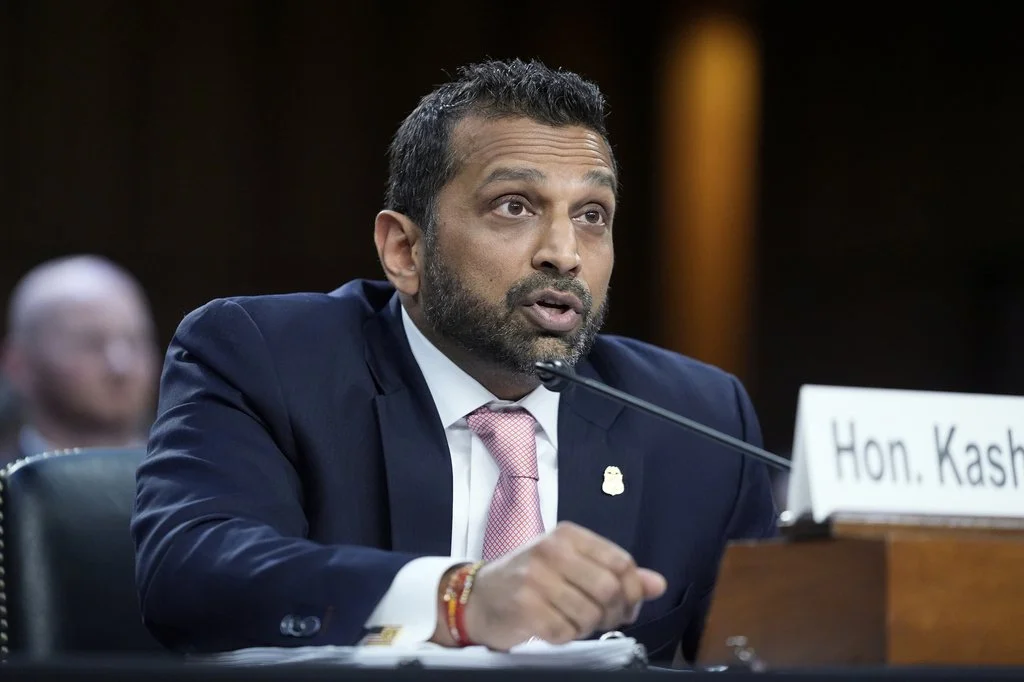
FBI Director Kash Patel testifies before the Senate Judiciary Committee on Capitol Hill in Washington on Sept. 15, 2026. (AP Photo/Manuel Balce Ceneta)
Researchers are also measuring the risk of physical violence. The Center for Strategic and International Studies reported in a Sept. 29 brief that election-related terrorism is “rare but potentially consequential.” Authors Daniel Byman and Riley McCabe counted 11 attacks and plots tied to U.S. elections from January 2015 through June 2026, 10 since 2021.
Six came from the political right, three from the left and one from jihadists; one targeted both parties’ headquarters. Nine reached the attack stage, and none killed an intended victim. FBI sting operations stopped the other two.
The brief warns that political conflict over Israel, Gaza, Iran and US Middle East policy could spill into the campaign, with extremists directing those grievances at candidates, advocacy groups, or Jewish and Muslim communities.
The intelligence firm Recorded Future examined the war’s effect on US extremism in a July 30 report. Its analysts described Iran-linked plots on US soil during the war as “largely aspirational” and said law enforcement disrupted them early. The analysts wrote that the greater risk comes from U.S.-based extremists motivated by the war’s political and economic fallout, and that the midterm cycle will very likely add to threats against public officials.
Byman and McCabe wrote that the response should stay proportionate to the threat. Both wrote that Candidates, election workers, and polling places need protection, and that a heavy police or military presence can intimidate voters.