

Canadian Minister of Justice Sean Fraser announced Canada’s decision to indefinitely suspend MAID for individuals whose sole condition was mental illness. (AP Photo/Justin Tang/The Canadian Press)
On Oct. 7, 2026, Canada indefinitely suspended plans to expand its medically assisted dying law to include people whose sole condition was mental illness due to a lack of consensus. Supporters of including mental health as a sole reason for qualification argue that their access to medical care and constitutional rights are being violated, while critics argue other actions should be taken, such as improved access to affordable healthcare and housing. Due to the suspension, Canadians with mental illness as their sole condition for medically assisted dying will no longer be able to access assisted dying by March 2027, as had been previously planned.
The Canadian government defines medical assistance in dying (MAID) as a “process that allows someone who is found eligible to be able to receive assistance from a medical practitioner in ending their life.” In Canada, there’s 2 methods of MAID available: a medical practitioner can “directly administer a substance that causes death,” or a medical practitioner can prescribe/provide a “drug that the eligible person takes themselves, in order to bring about their own death.” To be eligible for MAID in Canada, an individual must be at least 18 years old, mentally competent, “have a grievous and irremediable medical condition”, make a voluntary request for MAID, and be eligible for health services funded by a province, territory, or the federal government of Canada. A “grievous and irremediable medical condition” is defined as a serious disease, disability, or illness in an irreversible stage, and the individual is experiencing unbearable physical or mental suffering that can’t be relieved by a treatment the individual finds acceptable.
Extending Canada’s MAID program to individuals suffering from incurable mental health conditions was first introduced under former PM Justin Trudeau in March 2023. Since then, MAID for mental illness was postponed in March 2024 and postponed once more until March 2027.
The nonprofit organization, Dying With Dignity Canada, released a statement following Canada’s indefinite suspension of MAID for individuals with mental illness as their sole condition. CEO of Dying With Dignity Canada, Helen Long, said that the decision made by Canada’s federal government is “discriminatory” and “unconstitutional,” preventing “all Canadians from equal access to apply for MAID.”
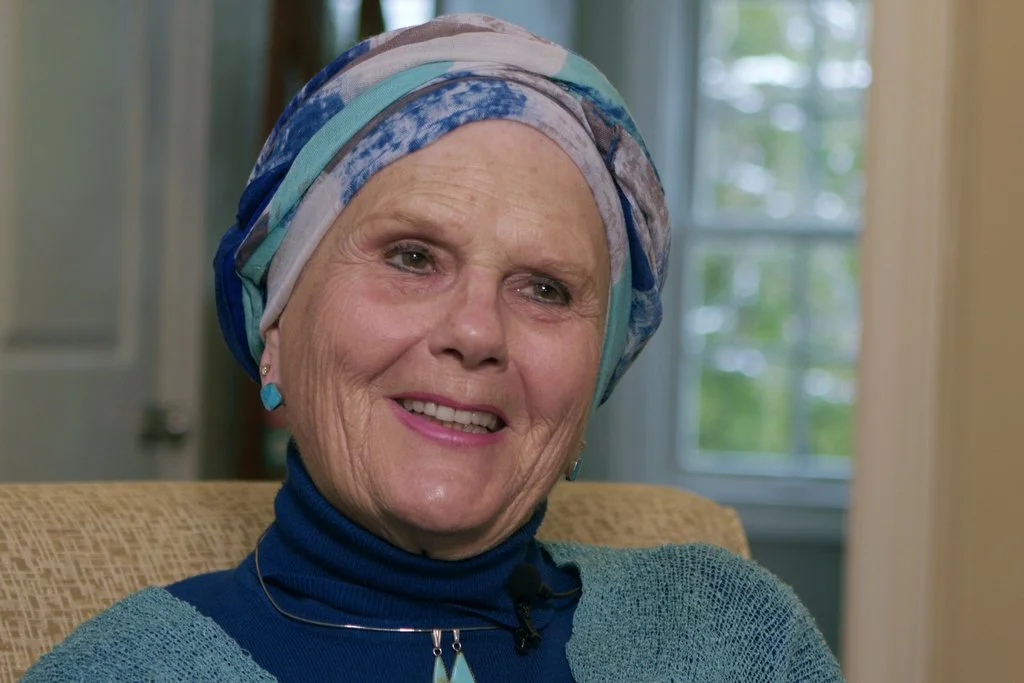
Lynda Bluestein, pictured in her CT home on Feb. 28, 2023, had terminal cancer. She ended her life on Jan. 4, 2024, in VT using MAID and taking prescribed medication. (AP Photo/Rodrique Ngowi)
One activist supporting mental illness as a sole condition for MAID is Claire Brosseau. Brosseau, who’s in her late forties, has dealt with debilitating mental illness since she was first diagnosed with manic depression at the age of 14. Since then, Brosseau has been diagnosed with a plethora of mental illnesses, has tried dozens of different therapies, over 25 medications, and attempted to commit suicide numerous times. Despite everything she has physically and mentally gone through, Brosseau’s body is still healthy, and she could live for decades more. Yet, Brosseau wants to end her suffering in a peaceful way with assisted dying.
The only nations that allow mental illness as a sole condition to qualify for MAID are the Netherlands, Belgium, Luxembourg, Switzerland, and Spain. Yet, controversy remains. In Belgium, 3 doctors were acquitted in Jan. 2020 after being accused of murder for assisting Tine Nys, a 38-year-old woman, with dying in April 2010. Nys’s family argued that her condition wasn’t an “incurable mental disorder,” accusing Nys’s former general practitioner, a psychiatrist and the doctor who administered the lethal injection, of murder.

MAID campaigners in London at a rally supporting the legalization of MAID in the UK on Oct. 22, 2021. MAID has not yet been legalized in the UK. (AP Photo/Matt Dunham)
Around the world, about 400 million people live in countries that have legalized MAID. In Europe, MAID is legal in Austria, Belgium, France, Luxembourg, the Netherlands, Portugal, Spain, and Switzerland, the first country to legalize MAID in 1942. Over the past few years, MAID has become legal in many parts of Australia and become legal in New Zealand under the conditions that “patients must be terminally ill and expected to die within six months.” Canada legalized MAID in 2016. In 2026, about 1 in every 20 deaths in Canada were medically assisted. In South America, Uruguay legalized MAID in 2025. In Latin America, Colombia, Cuba, and Ecuador decriminalized euthanasia.
In the US, MAID is legal in 13 states and Washington, D.C. Oregon became the first US state to legalize MAID in 1994, and it was enacted in 1997. On Feb. 6, 2026, Governor Kathy Hochul of New York signed legislation into law that allows MAID to be available to “terminally ill New Yorkers with less than six months to live.” Governor Hochul stated that the state wants to safeguard New Yorkers’ freedoms and rights, and this includes the “right for the terminally ill to peacefully and comfortably end their lives with dignity and compassion.” Hochul also described how the legislation was personal, after her excruciating experience of watching her mother suffer from ALS.
Canada’s debate over whether mental illness should be a sole qualification for MAID raises ethical questions throughout the world. What condition should qualify for assisted dying? Is blocking mental illness as a qualification unconstitutional?