
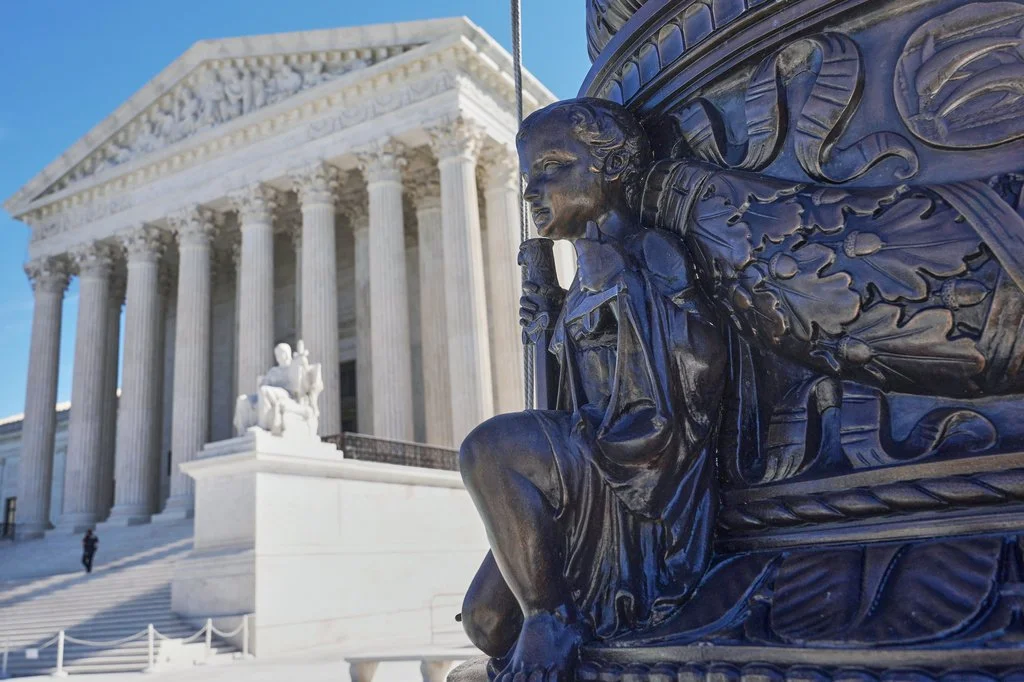
The U.S. Supreme Court is seen Friday, Sept. 25, 2026, in Washington. (AP Photo/Mariam Zuhaib)
New York Times bestselling author David Enrich warns in his new book, “Murder the Truth: Fear, The First Amendment, and a Secret Campaign to Protect the Powerful”, that the protections journalists have long enjoyed under the First Amendment and subsequent Supreme Court cases may soon end.
According to his analysis, the recent onslaught of libel cases against journalists, initiated by Donald Trump in his first campaign, reveals a broader campaign against free speech. Beginning with an effort to overturn NYT v. Sullivan, which has protected press freedom since its 1964 ruling, Donald Trump has sought to usher in a “new era of impunity for elected officials and big companies” through strategic legal assaults. One way states are increasingly fighting back against this rising trend in litigation is through SLAPP statutes.
Researchers Penelope Canan and George Pring of the University of Denver coined the term in a journal article, “Strategic Lawsuits Against Public Participation.” At the time, these lawsuits focused primarily on political expression under the First Amendment's Petition Clause, which protects “the right to petition the government for redress of grievances.”
SLAPP statutes today are a modern legal defense designed to address meritless lawsuits that seek to punish or silence speech the plaintiff dislikes. Rather than win the defamation or libel case, the plaintiff typically aims to harass the defendant and silence them through costly litigation. The average cost of fighting such a lawsuit, according to the Institute of Free Speech, is around $39,000, and settlements can reach even higher amounts. For freelance reporters or smaller, local newsrooms without the finances to support such litigation, a defamation lawsuit can often feel like a death sentence.
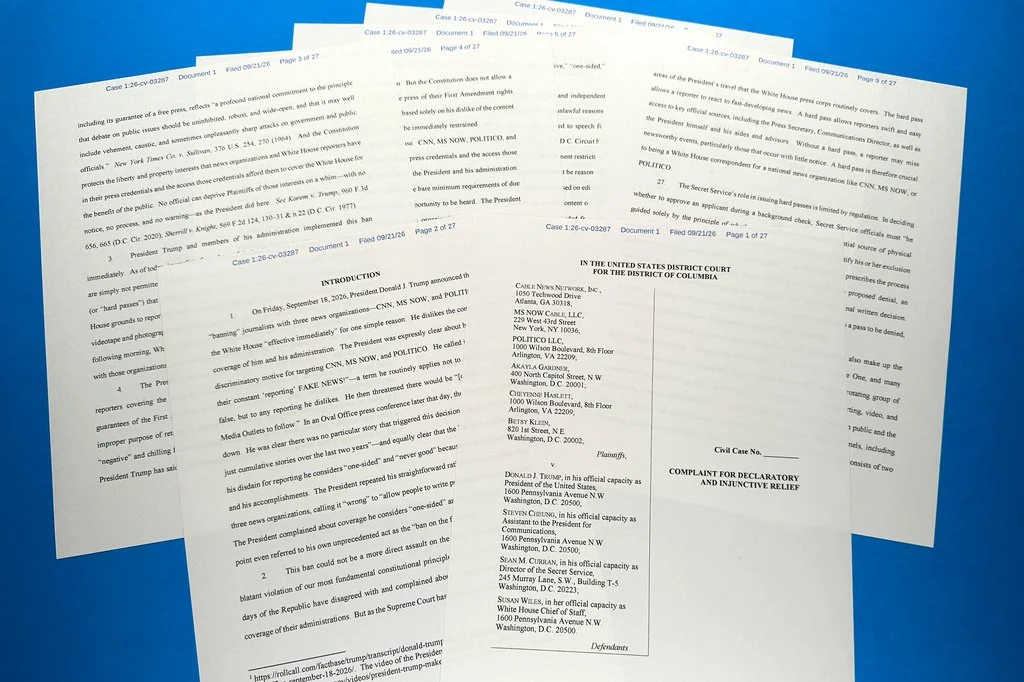
The lawsuit filed by CNN, MS NOW and Politico against the administration of U.S. President Donald Trump is photographed Monday, Sept. 21, 2026. (AP Photo/Jon Elswick)
Unlike other procedural defenses, an anti-SLAPP motion asks the judge to consider the merits of the case before litigation. If the judge accepts the motion, the plaintiff must then prove their argument is worthy of consideration before months of legal fees can stack up against the defendant. Some SLAPP statutes even require the plaintiff to pay the defendant’s legal fees if they cannot provide such evidence to the court.
Data made available by the US District Court shows a steady increase in the number of federal suits filed under the category “Assaults, Libel and Slander”, with 848 cases being filed in 2025, up from an average of 400-500 over the past twenty years. Without central data on state court filings, the real number is likely much higher. Since Donald Trump’s first election, his rhetoric has inspired many copycat lawsuits filed against journalists and now private individuals, seeking to punish free speech that the plaintiff finds unacceptable.
Donald Trump is far from the first president to speak out against their own media coverage. Yet his war against the media has resonated with many conservative public figures who have been similarly scorned by investigative journalists digging into their business dealings and personal relationships. His designation of the media as “evil” and “the enemy of the people”, along with claims that the New York Times, CNN, NBC, ABC and CBS were selling “fake news” to the public, adapted into the conservative mainstream well, and has remained one of the most frequent talking points in his second term.
Forty states and the District of Columbia have adopted SLAPP statutes, with Missouri’s statute taking effect on August 28th of this year. For journalists and newsrooms that can't afford libel insurance, it may be their only line of defense.