
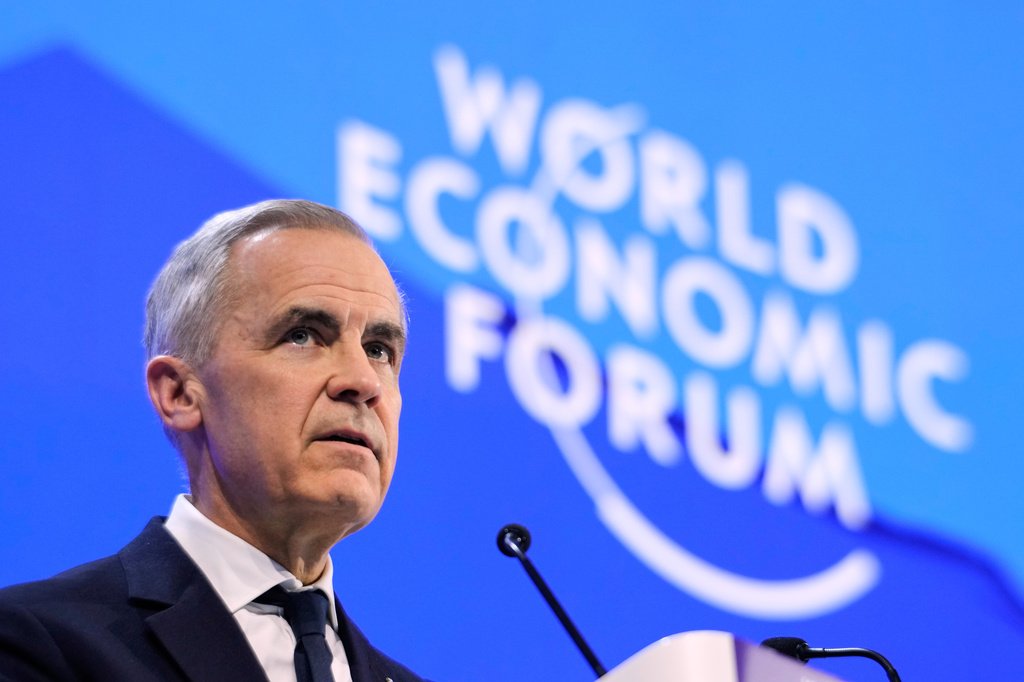
Canada’s Prime Minister Mark Carney speaks during the Annual Meeting of the World Economic Forum in Davos, Switzerland, Jan. 20, 2026. (AP Photo/Markus Schreiber)
On Oct. 11, Prime Minister Mark Carney had two calls about the same fuel. With Ukrainian President Volodymyr Zelenskyy, he condemned a newly announced U.S. deal to buy Russian diesel, arguing that it would fund Russia’s war. With President Donald Trump, he pledged that Canada would continue to “maximize our exports of oil and diesel to the United States.”
The calls came after three weeks in which Washington threatened to restrict diesel exports, dropped the idea, and immediately turned to Moscow. The episode exposed a gap in Canada’s energy system, a country that produces more oil than it refines and still relies on the United States to fuel much of its east.
Diesel in Canada hit a record C$2.75 a liter on Sept. 17, as the Iran War disrupted shipping through the Strait of Hormuz. “Wars abroad have severely affected global diesel fuel inventories,” fuel analytics firm Kalibrate wrote in its August price review. On Sept. 22, Treasury Secretary Scott Bessent said the administration was studying a full or partial export ban, and Trump endorsed the idea. It would have been the first U.S. energy export restriction since 2015, WION noted.
Republicans facing tough midterm races, including Senators Chuck Grassley and Dan Sullivan, pushed for curbs. Oil executives warned they would lead to domestic production cuts. On Oct. 2, G7 nations agreed to release up to 100 million barrels of emergency oil and diesel over four months and reaffirmed a commitment to “refrain from export restrictions on energy and energy products” among members. Trump dropped the plan. “Well, it was never really on the table,” he told reporters.
For Canada, the scare exposed a contradiction. “Canada produces more crude oil than Canadian refineries process,” the Canada Energy Regulator states. Yet the country imported 485,000 barrels a day of refined products in 2025, and 79.6 percent came from the United States. Quebec alone took in 103,000 barrels a day, mostly transportation fuel.
The explanation is geography. Canada’s largest refinery, in Saint John, New Brunswick, has no crude pipeline connection and relies on sea shipments, the regulator reported. Around 75 percent of Canada’s crude imports also came from the U.S. in Nova Scotia and Prince Edward Island; fuel oil supplied 28 percent of home heating energy in 2023, compared with 2 percent nationally.
Energy Minister Tim Hodgson argued the risk was manageable because Canada is a net diesel exporter, “if push came to shove, we can deal with that,” he said in a Bloomberg interview. Both points are accurate. The national surplus is concentrated in the West, while eastern markets have limited pipeline access to it.
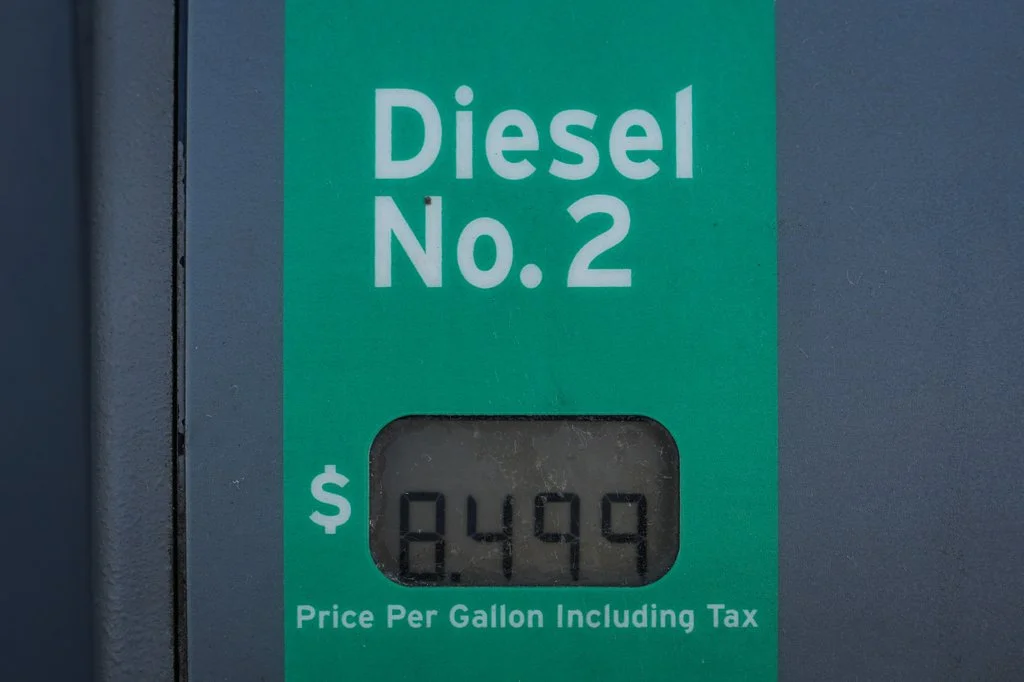
A diesel fuel price is displayed on a pump in Brea, Calif., Thursday, Sept. 10, 2026. (AP Photo/Jae C. Hong)
Canada’s position changed again on Oct. 9, when Trump announced a deal for Russia to supply more than 300,000 tons of diesel immediately, followed by an additional 500,000 tons in November. Analysts estimated the total pledged volume equals about 12 hours of global consumption. Six senators urged the administration to “immediately reverse course,” and Rep. Gregory Meeks introduced legislation to block it, arguing, “this deal won’t lower costs for the American people, who are already paying for Trump's failed war of choice in Iran.”
Carney pledged two days later. His office said Canadian exports yield well over a million barrels of diesel a day. Commitments like this are usually “constrained by egress capacity rather than political intent,” they cautioned.
The pledge also comes during trade tension. At the Jul. 1 review of the Canada-United States-Mexico Agreement (CUSMA), the U.S. declined to extend the pact in its current form. Before the review, Hodgson and Dominic LeBlanc, the minister responsible for Canadian trade with the U.S., met with industry leaders about keeping preferential access for Canadian energy.
At home, Conservative MPs called for raising diesel production to one million barrels a day, and Alberta and Ontario proposed an east-to-west energy corridor. Past efforts struggled. Economist Andrew Leach said the canceled Energy East pipeline would have needed “a massive uptick in expected production from the oil sands.”
Prices remain high. Diesel in Toronto jumped 15 cents to 261.9 cents a liter. The G7 release is scheduled to run until early February, the same month federal fuel tax relief begins phasing out, during the part of the winter when eastern Canada is most vulnerable.