
Not Quite Thawed: Future US-China Joint AI Ventures Remain Frozen After Trump–Xi Summit, Echoing Cold War Hegemonic Friction
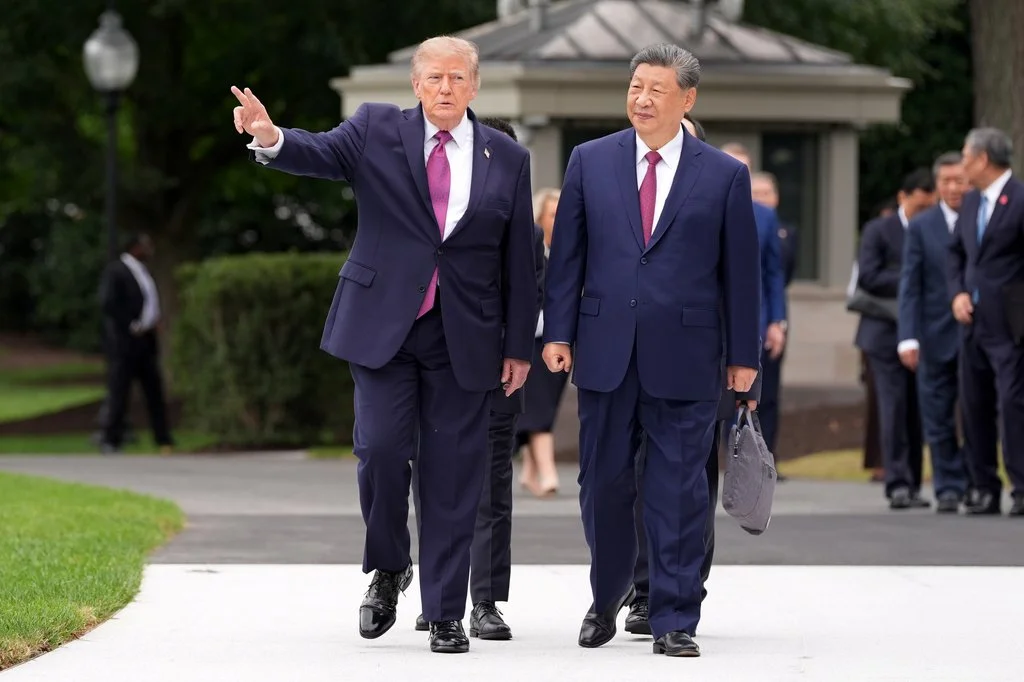
President Donald Trump, left, speaks with China's President Xi Jinping during a tour of the South Lawn of the White House, Thursday, Sept. 24, 2026, in Washington. (AP Photo/Alex Brandon)
On Friday, Presidents Xi and Trump agreed to set up a trade council to extend the outcomes of earlier talks in Kuala Lumpur, as articulated by the Chinese Foreign Ministry. The agreement follows the expected extension of the US-China trade truce, which was due to expire on November 10, giving more time to work on a potentially bigger trade deal.
After meeting with Chinese Vice Premier He Lifeng before the summit, US Treasury Secretary Scott Bessent remarked on Fox News that “the two-month extension of the trade truce agreed in Busan, South Korea, in May would give the two sides ‘more time to see what we can do on the economic front.’” This makes the Xi-Trump Summit relatively stable, with most economic policy already expected, given the broader bureaucratic signals from both sides.
As a major result of talks between the two hegemons, Trump and Xi agreed to reduce tariffs on about $30 billion of imports from each other. On the US side, this contained 77 Chinese product categories, while China’s list covered 1,619 US goods, according to documents released by the two governments. The combined trade covered by the planned tariff cuts is worth about $60 billion.
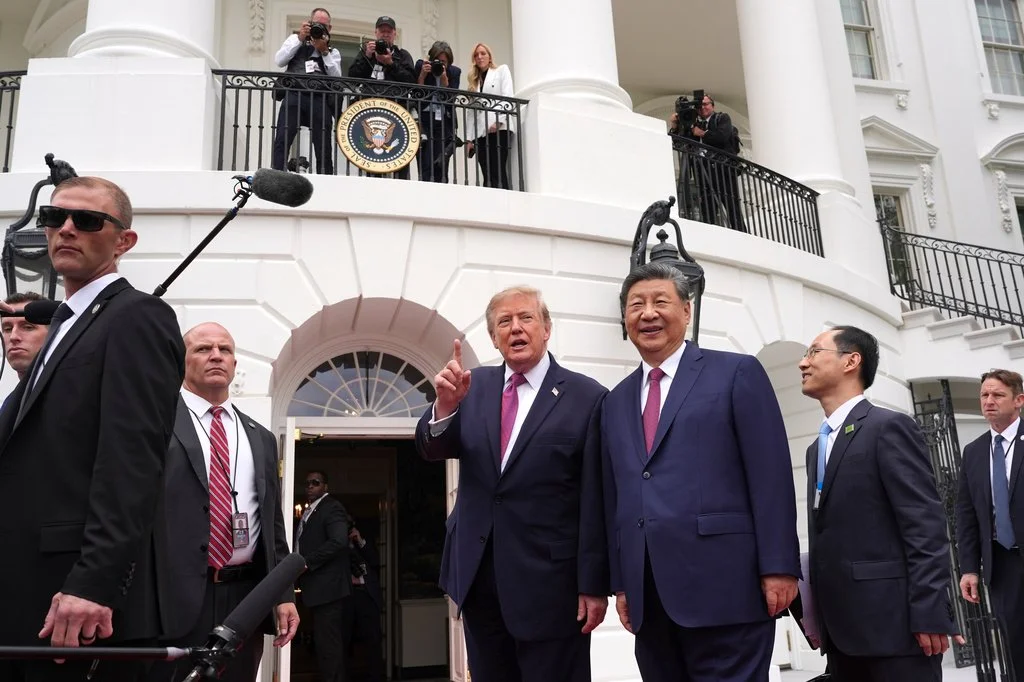
President Donald Trump, center left, speaks to reporters during a tour of the South Lawn of the White House with China's President Xi Jinping, center right, Thursday, Sept. 24, 2026, in Washington. (AP Photo/Alex Brandon)
The two sides agreed to hold a “dialogue” on artificial intelligence’s risks and benefits, with the next round of discussions scheduled for November. As part of this planned meeting, both leaders agreed to hold future conversations to establish a communication channel for AI-related incidents. In addition, the two sides agreed to support each other in hosting the Asia-Pacific Economic Cooperation leaders’ meeting and the Group of 20 summit, signaling possible friendly cooperation. This is contrasted with Trump’s later sentiments on ruling out any sort of joint venture with China in artificial intelligence.
Heavily establishing the AI landscape as a binary hegemonic competition, Trump articulated that the possibility of a US-China joint AI venture would lead to “giving a lot of secrets that we [US] have that they [China] would want to have, or anybody else.” Trump further solidified this binary competition by following the defensive rhetoric with “Frankly, there is nobody in third place…it’s all between us and China.”
With the US’s theatrical post-war hegemonic stardom, this kind of new technology-based competition, which shapes the US’s offensive foreign-policy posture, is not new. By many accounts, this emerging dynamic between Xi and Trump resembles the US-USSR power rivalry at the height of the Cold War over arms-control agreements.
Anthropic’s warning that AI could pose “existential risks to humanity” in its IPO prospectus adds urgency to calls for US-China dialogue on AI safety. Yet, as the Council on Foreign Relations (CFR) argues, a binding agreement governing AI development remains unlikely under current strategic conditions, and it would lack precedent in the history of arms control.
Chris McGuire, a Senior Fellow for China and Emerging Technologies at CFR, argues persuasively that a peaceful power transition, or even the retention of US dominance, hinges on changing the political and psychological landscape of how China assesses its position in the AI industry.
Right now, the US has a clear, although not “dominant,” lead over China in AI. As reported by Trump’s AI czar David Sacks: "China is not years and years behind us in AI. Maybe they’re three to six months. It’s a very close race." Nonetheless, the US remains ahead, but China’s AI capabilities are competitive and, more importantly, China believes it can surpass the US. If this rhetoric, that the US faces a power whose threat hinges on its “belief” of success, seems familiar, it is because it is. It rings the same tune that the US parroted for its rationale for weapons of mass destruction in World War II against Japan and for the dedicated national effort toward the victory of liberal democracy in the Cold War.
In the landscape of AI, both the U.S. and China correctly view AI leadership as strategically existential, which means the U.S.'s top priority is maintaining leadership in technology, and China’s top priority is obtaining it. For both countries, mitigating AI risks is a crucial objective, but secondary to AI leadership, which they see as crucial to sovereignty and dominance.
It is a simple game theory calculus.
In the bargaining model of war, conflicting expectations of victory can eliminate the bargaining range of mutually beneficial agreements and explain the presence of war, even given the irrationality of its existence, with respect to acquiring the maximum shared prosperity over the “desired good,” in this case that “good” being “AI.”
Mathematically, it works out as follows: Imagine two countries disputing 100 units of strategic advantage. War would destroy 20 units, leaving 80 for the winner.
Each country believes it has a 70% chance of victory:
Each country’s perceived expected pay off from war=0.70(80)+0.30(0)=56
Each state therefore demands at least 56 units to accept peace. But their combined demands total 112, and only 100 exist. There is no mutually acceptable division.
The problem is their incompatible expectations: in this winner-takes-all model, both cannot actually have a 70% chance of winning. Nevertheless, each evaluates settlement against its own estimate.
In the AI case, Washington seeks to preserve its technological advantage, while Beijing remains unwilling to surrender the prospect of overtaking it. The bargaining model would unfold as follows, under the logic that states weigh the benefits of an agreement against what they expect to gain by continuing to compete.
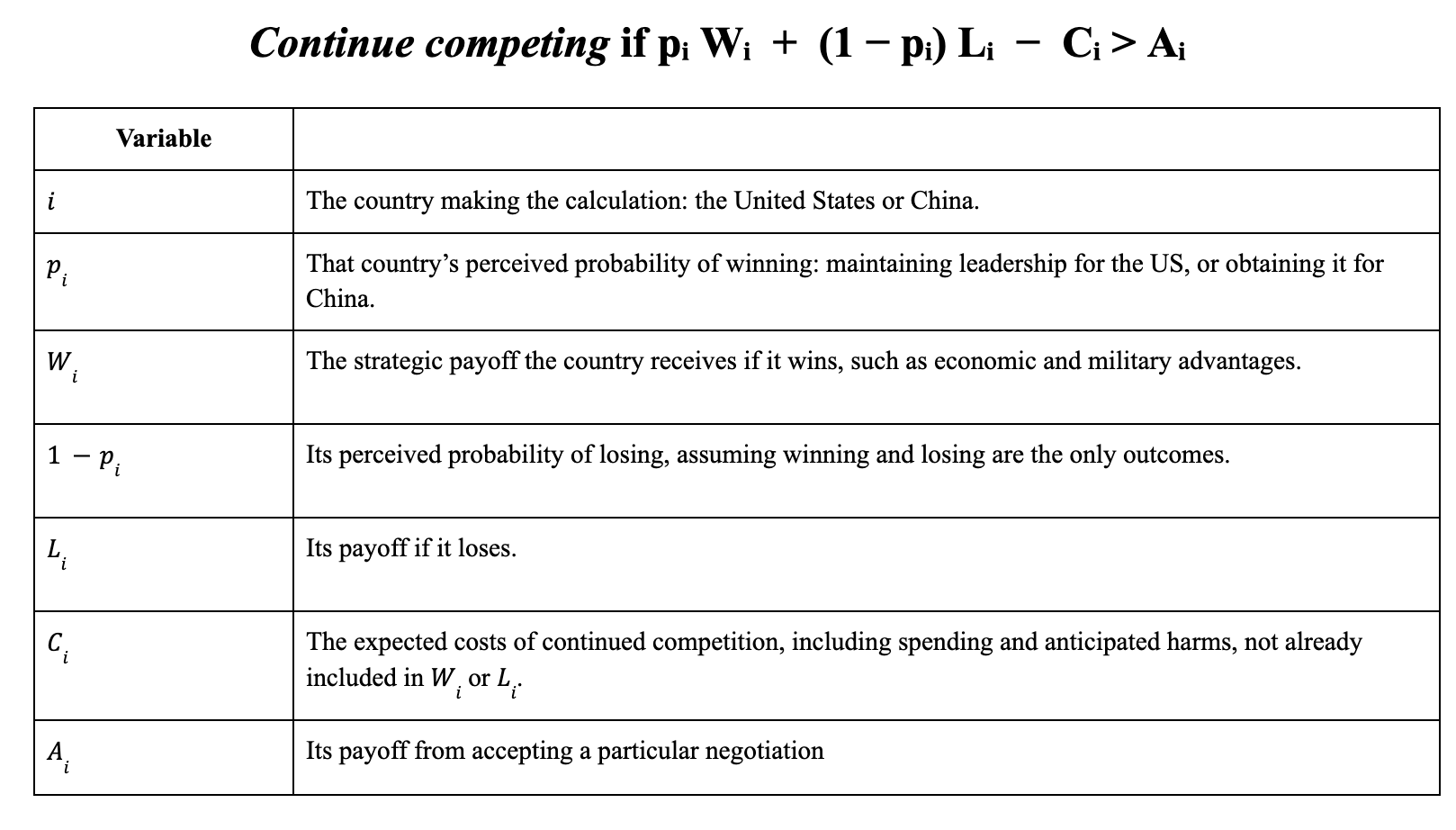
If both nations’ estimates of prevailing over the other remain high, an incompatible bargaining range appears, and conflict becomes more appealing than diplomacy. Because both the US and China view AI as existential to their sovereignty and hegemonic power, we can understand it as a “winner takes all” model. As a result, this strategic posture leans towards conflict being rational given the critical national security of AI, but logically unconducive to reaching an arms control agreement.
Historically, there is no precedent in which “two states of unequal strength concluded an arms control agreement to regulate a strategically critical technology that either caused the leader to cede its overall strategic advantage or that constrained the trailing state’s development and deployment of that technology before that state had concluded the race was lost.” What this means, McGuire argues, is that in order to make an AI arms control agreement possible, the US must take first steps to cause China to conclude that it will not be able to catch up to the US in AI (reducing their pCN) and should strategically strike a deal sooner for their own interests.
Following the precedents of the Cold War and many US-Russia arms control agreements, this shift in psychological outlook seems to be the key to moving the needle toward Trump's hopes in the competition for AI power.
The 1987 Intermediate-Range Nuclear Forces (INF) Treaty illustrates this logic. In it, Washington and Moscow were required to eliminate their ground-launched missiles with ranges between 500 and 5,500 kilometers, while leaving sea- and air-launched systems unrestricted. The Soviet Union ultimately destroyed 1,846 missiles, compared to 846 for the United States. The asymmetrical treaty result preserved U.S. advantages by eliminating a category in which Moscow had originally held superiority.
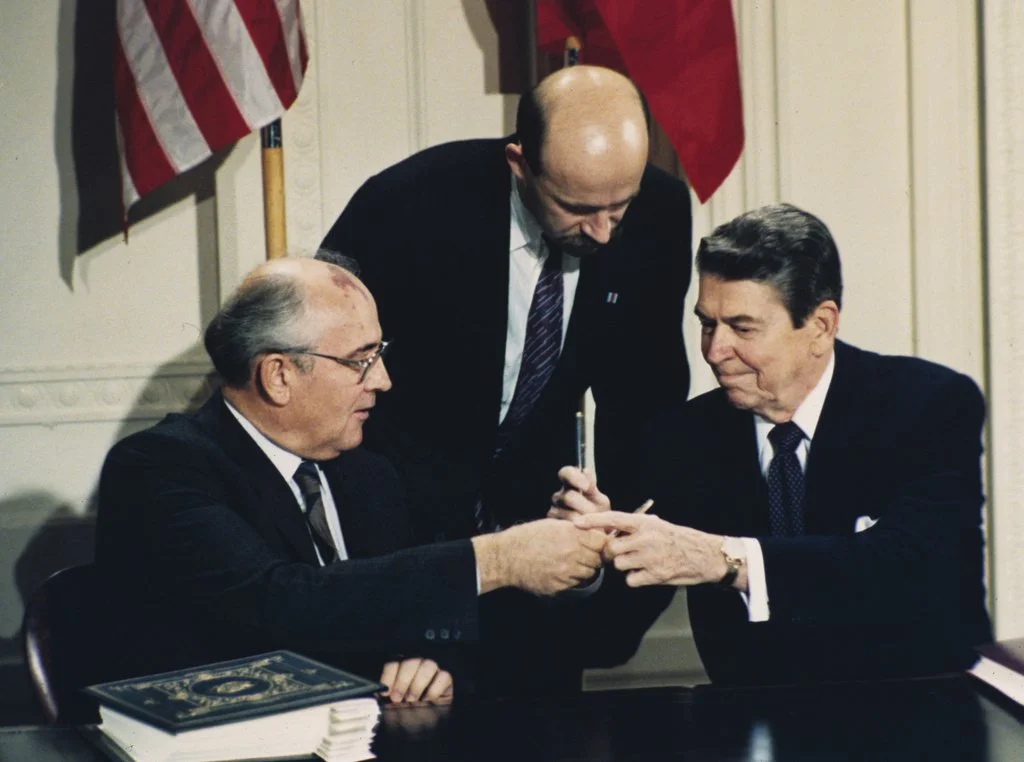
U.S. President Ronald Reagan, right, and Soviet leader Mikhail Gorbachev exchange pens at a signing ceremony of the Intermediate Range Nuclear Forces Treaty in the White House East Room in Washington, D.C., on Dec. 8, 1987. Both countries withdrew from the treaty in 2019, blaming each other for violations. On Tuesday, Nov. 7, 2023, Russia pulled out of the Treaty of Conventional Armed Forces in Europe and NATO member countries froze their participation in the pact, which was aimed at preventing the massing of forces at or near their mutual borders, raising fresh questions about the future of arms control agreements in Europe. (AP Photo/Bob Daugherty)
In McGuire’s position, Gorbachev logically accepted these terms because he judged continued competition increasingly costly and unlikely to improve the Soviet Union’s strategic position. In bargaining terms, the expected payoff from continuing the arms race had fallen below the value of a negotiated agreement.
In application to AI: Beijing will only become pliable to any AI limits that may preserve American lead if it concludes that continued competition would leave China worse off, economically or technologically. This condition has not yet been met, and China still sees itself within competitive reach of the US.
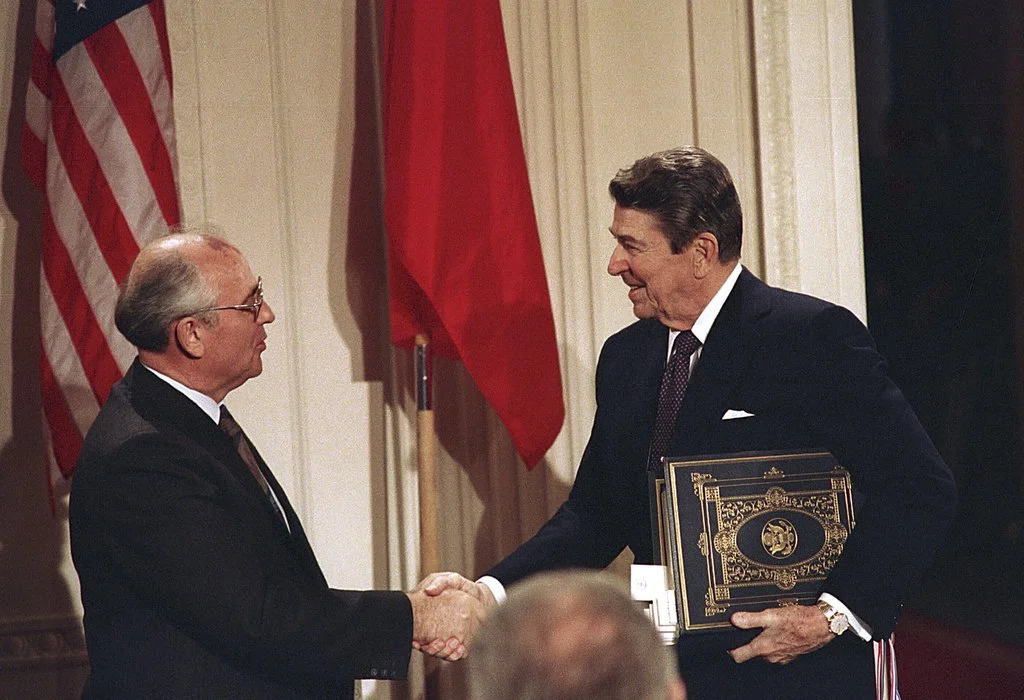
In this Dec. 8, 1987, file photo, U.S. President Ronald Reagan, right, shakes hands with Soviet leader Mikhail Gorbachev after the two leaders signed the Intermediate Range Nuclear Forces Treaty to eliminate intermediate-range missiles during a ceremony in the White House East Room in Washington. (AP Photo/Bob Daugherty)
This leaves Xi and Trump in a position that puts pressure on November’s upcoming discussion and puts both leaders’ economic moves under scrutiny in the coming months. As US foreign diplomacy becomes increasingly unpredictable, with heuristics holding greater sway over Trump-led policy, the freezing of joint US-China AI cooperation casts a shadow over a burgeoning example of the US coming to a head once again in formidable hegemonic competition.