
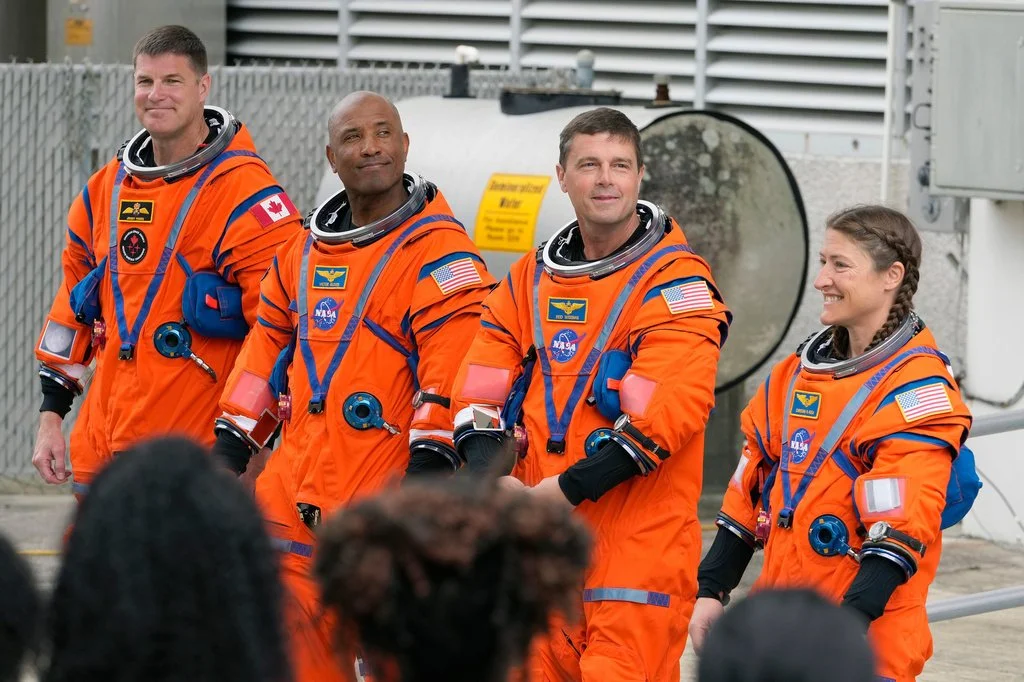
Astronauts, from left, Mission Specialist Jeremy Hansen, of Canada,, Pilot Victor Glover, Commander Reid Wiseman, and Mission Specialist Christina Koch pose for a photo after leaving the Operations and Checkout Building for a trip to Launch Pad 39-B and a planned liftoff on NASA's Artemis II moon rocket at the Kennedy Space Center Wednesday, April 1, 2026, in Cape Canaveral, Fla. (AP Photo/Chris O'Meara)
Artemis II splashed down on Friday, April 11, 2026, concluding a record-breaking mission that brought the Canadian-American alliance to new heights. Serving as Artemis II’s Mission Specialist, astronaut Jeremy Hansen became the first Canadian, and first non-American, to participate in a lunar mission, marking a lighter moment in U.S.-Canadian relations. These ties have been strained under U.S. President Donald Trump amid ongoing trade tensions between the two countries.
Hansen’s inclusion aboard Artemis II was more than just symbolic, it stemmed from a formal partnership between NASA and the Canadian Space Agency (CSA). In 2020, NASA and the CSA finalized their partnership on Lunar Gateway, the lunar-orbiting outpost tied to the broader Artemis program.
Under this agreement, Canada committed to providing the Gateway’s external robotics system, including Canadarm3, along with robotic interfaces for its modules. In return, NASA granted Canada two astronaut flight opportunities: one on a future Gateway mission and one specifically aboard Artemis II.
As articulated by NASA Administrator Jim Bridenstine, “Canada was the first international partner to commit to advancing the Gateway in early 2019, they signed the Artemis Accords in October, and now we’re excited to formalize this partnership for lunar exploration.” He added, “This agreement represents an evolution of our cooperation with CSA providing the next generation of robotics that have supported decades of missions in space on the space shuttle and International Space Station, and now, for Artemis.”
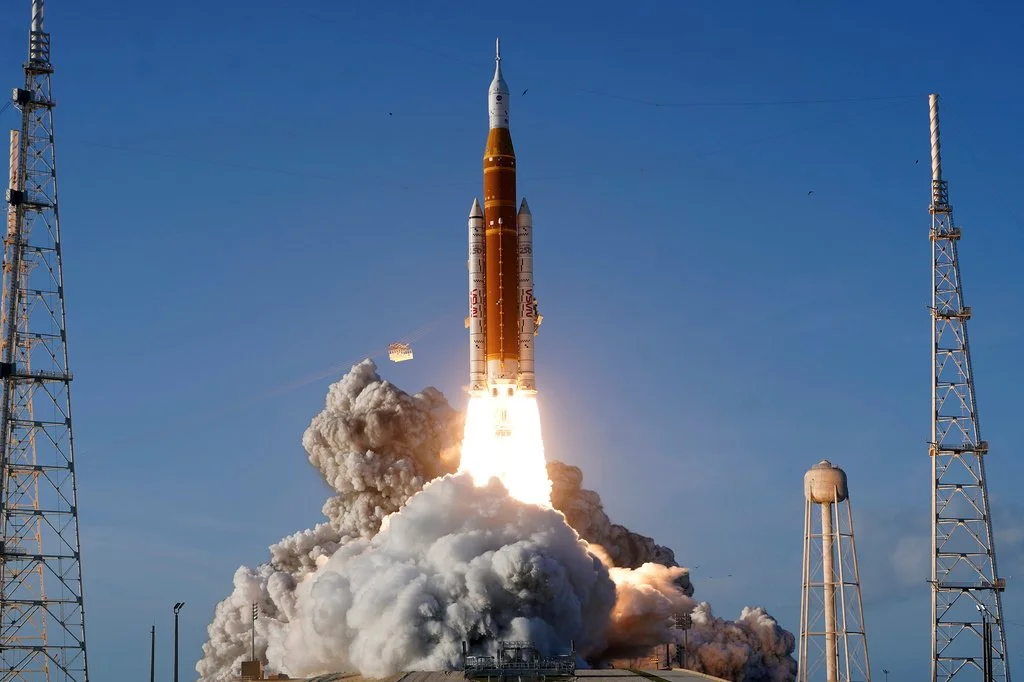
NASA's Artemis II moon rocket lifts off from the Kennedy Space Center's Launch Pad 39-B Wednesday, April 1, 2026, in Cape Canaveral, Fla. (AP Photo/Chris O'Meara)
As articulated by NASA Administrator Jim Bridenstine, “Canada was the first international partner to commit to advancing the Gateway in early 2019, they signed the Artemis Accords in October, and now we’re excited to formalize this partnership for lunar exploration.” He added, “This agreement represents an evolution of our cooperation with CSA providing the next generation of robotics that have supported decades of missions in space on the space shuttle and International Space Station, and now, for Artemis.”
Jeremy Hansen, a 50-year-old colonel in the Royal Canadian Air Force, became the first non-US citizen to fly on a lunar mission, marking an important milestone in joint-space exploration between the US and Canada. Training alongside his American crewmates, which included: Mission Commander Reid Wiseman, Mission Pilot Victor Glover, and Mission Specialist Christina Koch, Hansen had been preparing for the mission since 2023, ultimately helping push the boundaries of human spaceflight.
The mission, which featured around the clock coverage of the astronauts aboard the Orion spacecraft, also included live streamed calls with both President Donald Trump and Prime Minister Mark Carney. Trump spoke with the astronauts on April 6, praising them for having “made history” after the crew traveled farther from Earth than any humans before them. The White House also noted that he congratulated the astronauts for circling the Moon for the first time in more than half a century. Carney spoke with the crew on April 8, placing particular emphasis on Canadian astronaut Jeremy Hansen stating “Canadians couldn’t be more proud of you personally, both this mission and our collaboration with the United States.”
Taken together, the two calls highlight Artemis II’s diplomatic dimension, reminding audiences at home and allies abroad of the enduring friendship between the United States and Canada. As the product of years of bilateral cooperation in lunar exploration, the mission’s multinational crew underscores the resilience of the U.S.-Canadian alliance amid continued political tension across North America.