
Gulf Sovereign Wealth Funds Buy Into Egypt as Debt Crisis Deepens
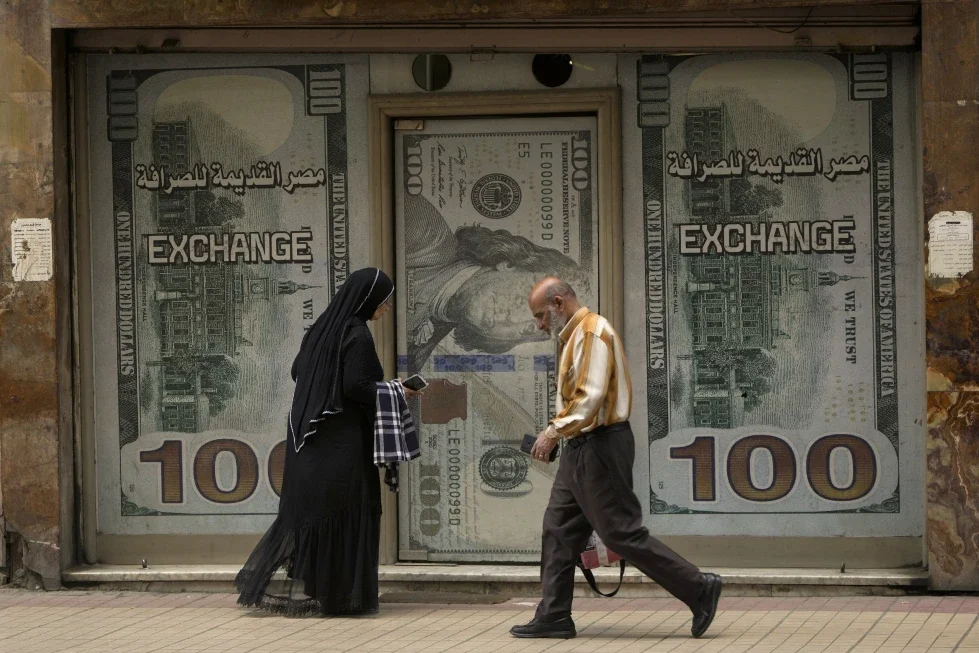
Egyptians walk past an exchange office in Cairo, Egypt, Wednesday, March 6, 2024. The Egyptian pound is sliding against foreign currencies, inching closer to EGP 50 to the U.S. dollar on Monday, Aug. 5, after a recent hike in subway fares and fuel prices. (AP Photo/Amr Nabil, File)
In February 2024, the United Arab Emirates signed a $35 billion investment agreement with Egypt to develop Ras al Hikma on the Mediterranean coast, marking one of the largest foreign investments in the country’s history.
In recent years, Egypt has faced severe financial pressure. The country’s external debt has surpassed 42 percent of GDP, while debt servicing obligations approach $40 billion annually, according to a Washington Institute analysis of Egypt’s debt crisis.
Since 2022, Cairo has confronted a worsening debt crisis and foreign currency shortage. In response, Gulf sovereign wealth funds have invested billions in Egyptian state assets, purchasing stakes in banks, logistics firms, and development projects while financing large infrastructure initiatives. For Egypt, these investments provide critical foreign currency that helps support efforts to stabilize the economy. Yet they also raise questions about whether growing Gulf ownership of strategic assets could shift political leverage within the Middle East.
Tourism revenues have declined amid regional instability, and income from the Suez Canal has fallen. With Cairo under pressure to seek large inflows of foreign capital, Gulf sovereign wealth funds have stepped in. Abu Dhabi’s ADQ and Saudi Arabia’s Public Investment Fund have purchased significant stakes in Egyptian companies across sectors such as banking, logistics, and fertilizer production. In one transaction, ADQ bought roughly 18 percent of Commercial International Bank, Egypt’s largest private bank, for about $911 million. Saudi investors also acquired shares in several Egyptian firms worth around $1.3 billion.
These purchases form part of a broader shift in Gulf economic policy. Earlier support to Egypt often came in the form of grants or central bank deposits. Today, Gulf states increasingly seek commercial returns. According to an Atlantic Council analysis of Gulf investment strategy, sovereign wealth funds from Saudi Arabia and the United Arab Emirates have moved toward equity investments in strategic sectors rather than providing unconditional financial aid. This reflects a wider shift toward market-based investments that generate long-term returns.
The scale of Gulf involvement became clearer in February 2024, when a major UAE led investment deal targeted development along Egypt’s Mediterranean coast. The deal includes a $24 billion land purchase and the conversion of $11 billion in Emirati deposits held in Egypt’s central bank. Soon after, the International Monetary Fund expanded its support package for Egypt from $3 billion to $8 billion.
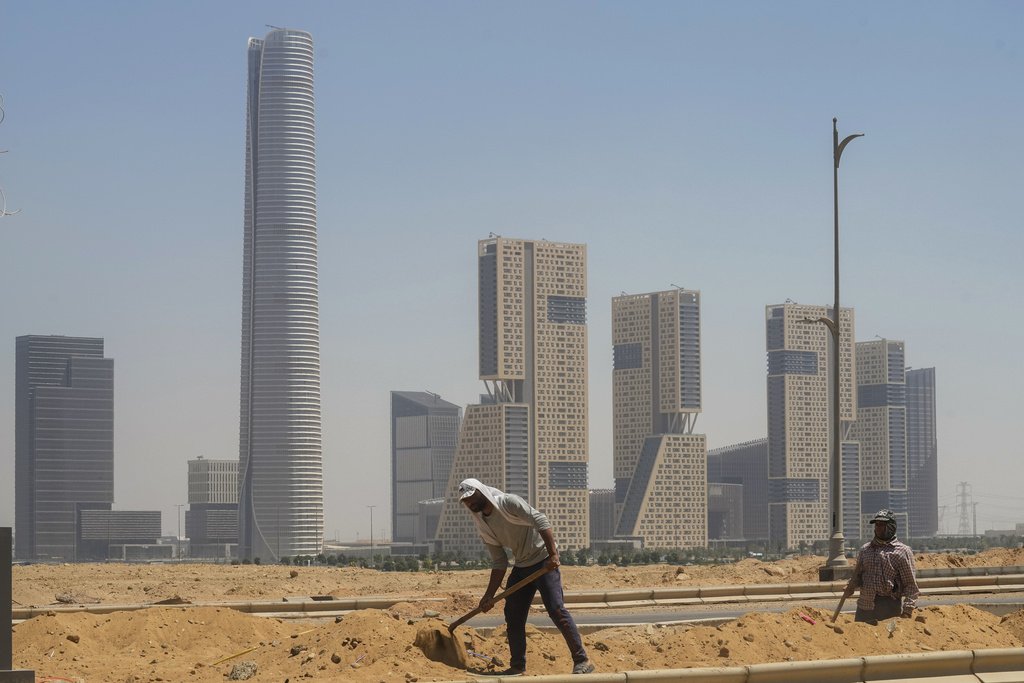
Egyptian workers dig in a pavement at the New Administrative Capital (NAC), just outside Cairo, Egypt, Wednesday, Aug. 14, 2024. (AP Photo/Amr Nabil)
Supporters of Gulf investments argue that Gulf investments stabilize Egypt and strengthen regional alliances. Egypt remains a key diplomatic and military actor in the Middle East, and Gulf governments often view its stability as essential for regional security. Thus, according to the Atlantic Council, Gulf investment in Egypt reflects efforts to support stability and advance broader regional interests.
Supporters argue that Gulf investments stabilize Egypt and strengthen regional alliances. Egypt remains the Arab world’s most populous country and a key diplomatic and military actor, and Gulf leaders often view its stability as essential for regional security. Analysts note that these investments may also create new forms of influence. Gulf sovereign wealth funds now hold significant stakes in key sectors such as infrastructure, banking, and energy. According to Control Risks, sovereign funds can shape policy indirectly by gaining influence in strategic industries within partner economies, meaning economic leverage can translate into political leverage. Past experience suggests this influence can matter. During earlier financial crises, Gulf financial support was often coordinated with broader reform efforts, including International Monetary Fund programs that required currency devaluation, subsidy cuts, and fiscal restructuring.
The shift from grants to equity investments may deepen this dynamic because ownership ties Gulf states more directly to Egypt’s economic trajectory.
For Egypt, the trade-off is clear. Analysts at the Atlantic Council note that Gulf investment provides much-needed capital and can help restore confidence in financial markets, while also increasing external influence over parts of the national economy.
The outcome will depend on how Cairo manages these partnerships. If investments lead to growth and job creation, they could reinforce regional cooperation and economic integration. If economic dependence grows too strong, however, the balance of influence within the Middle East may gradually shift toward the Gulf states.