
Op-Ed: The Iran War and Its Implications On the Gulf Countries
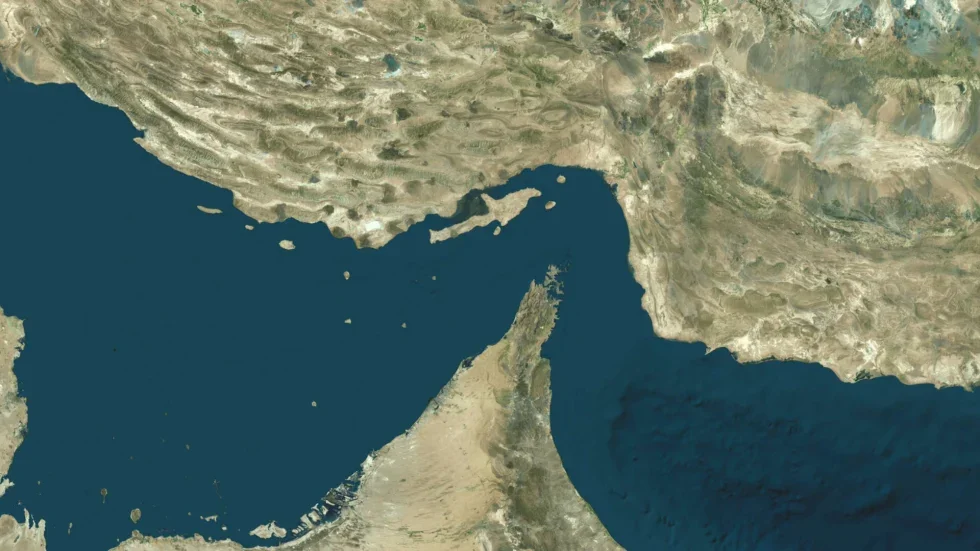
Satellite image of the Strait of Hormuz. (Mapcreator.io/AP News)
Since the beginning of the war between Iran and the United States in February 2026, Iran’s Gulf State Neighbours, namely Kuwait, Bahrain, Qatar, Saudi Arabia, Oman, and the UAE, have been hit by more than 500 missiles and drones from Iran. These strikes have hit a wide variety of targets, including energy facilities, military bases, diplomatic missions, and civilian buildings. For the countries that were hit, these strikes could not have come at a worse time. The Gulf States such as UAE and Qatar, keen to diversify their economy, have pursued a path of rapid economic and political liberalization. Their oil revenues were invested with a particular emphasis on the service sector in order to diversify their source of revenue away from oil, and to a certain extent, they were quite successful. These states have leveraged a highly transactional and pragmatic approach to foreign policy, attempting to diplomatically and militarily balance between the US, Iran, and Israel. These approaches gave the Gulf States years of peace that positioned them as a crucial hub of commerce that connected the Western market with the East. During these peaceful years, the Gulf states built themselves as a safe haven for transnational capital, and the overflow of cash helped build once remote fishing towns like Doha and Dubai into glamorous metropolises that attracted some of the world’s most cutting-edge sectors, such as cryptocurrency and AI. This model of growth is referred to as the “Gulf Model”. Yet, on Feb. 28 2026, the party was abruptly ended by the sound of sirens.
The war embodied the Gulf States’ worst-case scenario: a crisis of confidence. The closure of airspace over the Gulf, the targeting of energy facilities like offshore oil and gas rigs, and most importantly, pictures of luxurious hotels and high-rises up in flames from Iranian drone attacks highlighting to international investors the enormous risks associated with investing in The Gulf States, an “oasis” that looks increasingly volatile. The UAE, for example, was hit especially hard, taking almost as many Iranian strikes as Israel. Iranian strikes on Emirati cities like Dubai and Abu Dhabi gravely tarnished the reputations of these cities as islands of stability in the Middle East, which had historically served as the basis of the UAE’s economic diversification.
Over three-quarters of the UAE’s economic productivity comes from non-oil sources, and the source of this growth comes from investors’ confidence in the UAE’s ability to protect their investments and consumption. In the present, no matter how many missiles and drones the Emirati military shoots down, the environment of instability that now blankets the UAE and the Persian Gulf is crystal clear. Investors also know that the Gulf States have very little say in when and how this war will end. With a regional war on their doorsteps, it is clear that the Gulf States are no longer safe. This then raises the fear of capital outflow, potentially pronouncing the death of the Gulf Model, this is not the result of any inherent error the Gulf countries made, but was the result of a rapid change in geopolitical winds that heightened the risk of war.
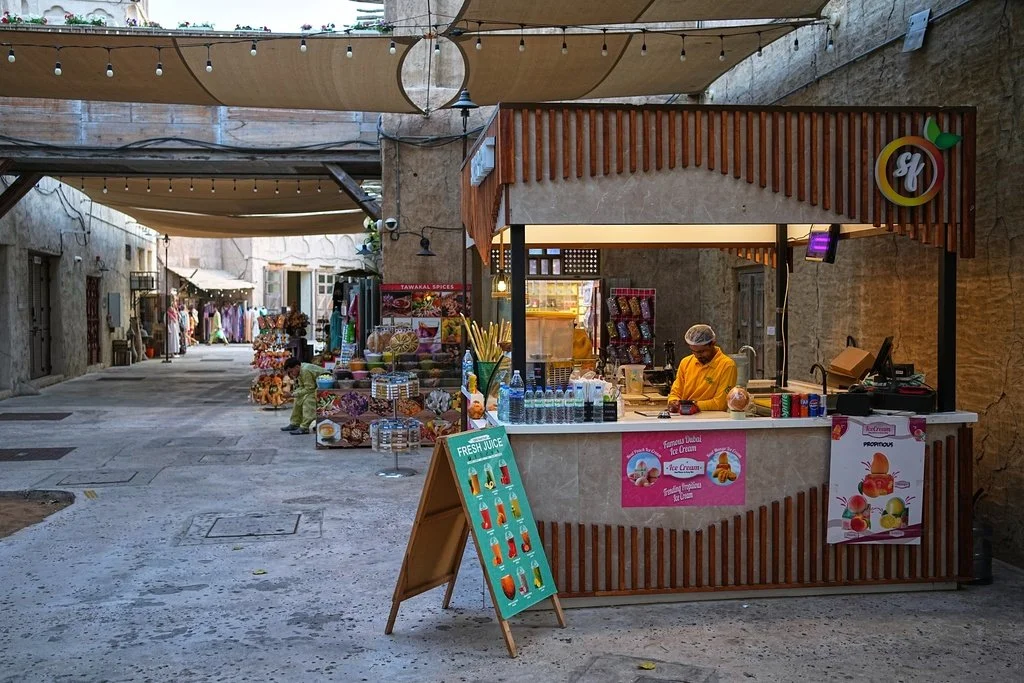
A soda shop vendor waits for customers at the empty Al Seef market next to the historic Al Fahidi neighborhood along Dubai Creek, one of Dubai's main tourist areas, in Dubai, United Arab Emirates, Friday, March 13, 2026, as tourism slows amid regional tensions linked to the Iran war. (AP Photo/Fatima Shbair)
The Iran War may also alter the security calculus of the Gulf states. As longstanding security allies of the US, the Gulf States host bases for the US military and equip their forces with primarily American weapons. For them, this alliance once meant US protection and a system of collective security between the US and its Gulf partners. Yet, states that hosted American bases were struck especially hard by Iran for a reason: to quote Iranian foreign minister Abbas Aragchi, "We have attacked American targets and American bases, American installations, which are unfortunately located in the soils of our neighbors”. As American troops are preoccupied with their airstrikes in Iran while emptying their bases in the Gulf, American assets are increasingly becoming risks rather than assets for the Gulf States. Therefore, it is foreseeable that after the war, governments of the Gulf are certain to reassess their security relationship with the US, and that may mean the termination of certain US security presence in the Gulf as these presences are now more of a liability rather than assets.
As missiles fly over the waters of the Persian Gulf, the Emirs and Kings of the Gulf States wake up to find themselves engulfed in a regional war with global consequences. Though the Gulf states made significant inroads in economic development and geopolitical balancing, these states will have to put in great effort to convince investors to stay in an ever more volatile region. When hostilities cease for the time being, the Gulf States may also find it fitting to re-evaluate their security partnership with the US, and that may involve some candid and honest negotiations with their longstanding ally.