
Lebanon Confronts Hezbollah as War With Israel Escalates
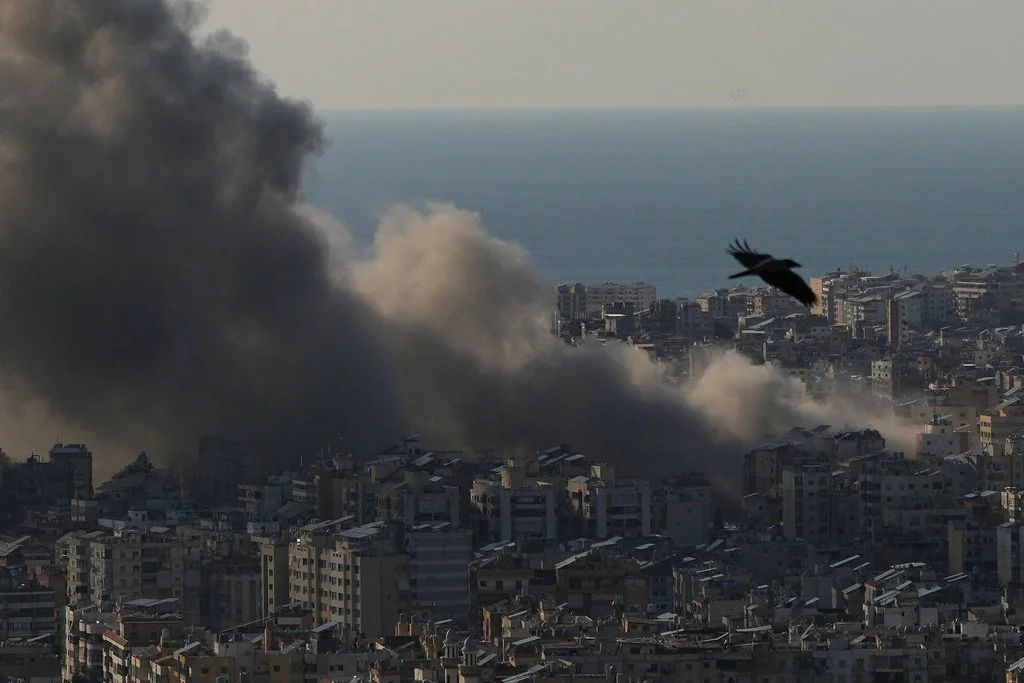
Smoke rises following Israeli airstrikes on Dahiyeh, a southern suburb of Beirut, Lebanon, Monday, March 2, 2026. (AP Photo/Hassan Ammar)
March 2, 2026—Beirut— Lebanese Prime Minister Nawaf Salam banned Hezbollah’s military response to the Iran war, claiming that any military operations led by Hezbollah would be illegal and not in the primary interest of Lebanon. The announcement comes after the American-Israeli assassination of Ayatollah Ali Khamenei and Hezbollah’s attack on Israeli military positions in Israel. The Iranian-backed group defended its attacks as support of Iran and defence of the Lebanese people against Israeli and US aggression. Despite the ban, fighting between Hezbollah and Israel has only intensified, with widespread destruction to Lebanon’s infrastructure and over a thousand civilian deaths and two thousand injuries.
Hezbollah is a non-state paramilitary group based in southern Lebanon. For the last two decades, Hezbollah and Israel have constantly skirmished along Lebanon’s southern border. Since Oct. 7, 2023, Hezbollah and Israel have escalated and expanded the conflict, which has affected much more of Lebanon. For decades, Lebanon has operated under a political structure in which a powerful armed organization has operated alongside, and sometimes independently of, the state. Hezbollah emerged in the early 1980s during Israel’s occupation of southern Lebanon. Originally formed as a resistance movement against Israeli forces operating in southern Lebanon, the organization was developed with the support of Iran’s Islamic Revolutionary Guard Corps (IRGC). Over the last 40 years, Hezbollah has evolved into a sophisticated organization. In addition to maintaining its non-state armed wing, the group has developed its own political party and funded social institutions. It built schools, hospitals, and social networks, particularly within Lebanon’s Shia communities in the south of Lebanon, where the group has established a strong base. Over time, Hezbollah’s investments, political campaigns, and ties to the IRGC have made the organization known as the most well-armed and powerful non-state military force in the world.
Hezbollah’s unusual role as both a political party and an armed force is rooted in the political settlement that ended Lebanon’s civil war. The War lasted from 1975 to 1990 and left the nation devastated. The conflict ended through the Taif Agreement, which restructured Lebanon’s political institutions while maintaining the original sectarian power-sharing arrangement among the nation's three major religious communities (Shia Muslims, Sunni Muslims, and Maronite Christians). Under this system, political authority is distributed among these groups. The presidency is reserved for a Maronite Christian, the prime ministership for a Sunni Muslim, and the parliamentary speakership for a Shia Muslim. The arrangement, designed to prevent any one group from dominating the political system, further divided the nation along religious lines. The Taif Agreement also called for the disarmament of militias that had operated during the civil war. Most armed groups were eventually dismantled, but Hezbollah remained an exception. They argued that the weapons were necessary to continue resisting Israel’s presence in Southern Lebanon, as Israel maintained military positions in parts of Lebanon until 2000.
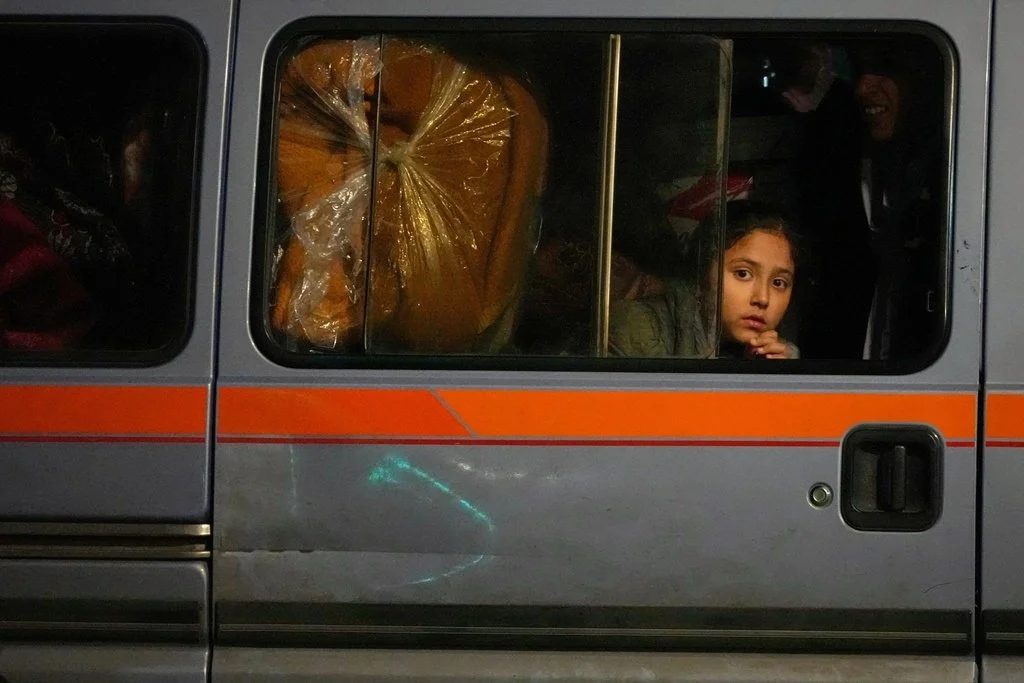
A girl sits in a van as displaced families fleeing Israeli strikes in southern Lebanon arrive in the southern port city of Sidon, early Monday, March 2, 2026. (AP Photo/Mohammed Zaatari)
Since then, Hezbollah has expanded both its military capabilities and its political influence. Now, Hezbollah is better armed than the Lebanese Armed Forces, which are underfunded and ill-equipped. However, since 2025, when Hezbollah was initially significantly weakened by Israeli strikes, Lebanon has moved to limit Hezbollah. Notably, Lebanese President Joseph Aoun and Prime Minister Nawaf Salam have both spoken out against Hezbollah, stating their disarmament as an aim of the state. Throughout 2025 and into January 2026, the Lebanese state claimed to have completed the first phase of disarming the group. Yet as the Middle East degrades into conflict, Lebanon finds itself at the heart of the war. On March 2, Hezbollah fired six missiles toward Israel, responding to American and Israeli actions against Iran. This act brought Lebanon into the regional US-Israel-Iran war. Often, Hezbollah’s actions have drawn Lebanon into conflict, complicating the state’s ability to control its defense policy and decisions over escalation. While problematic for the state, Hezbollah has remained relatively popular in Lebanon, mainly in the Shia population; it has also maintained significant support from Sunni and Christian groups, yet a majority also sees Hezbollah as the cause of Lebanon's political instability. In a push to limit Hezbollah and possibly reach peace negotiations, Nawaf Salam banned Hezbollah's military action. In the eyes of the state, Hezbollah has lost its invincible image, and with a weakened Iran, Lebanon seeks a solution to Hezbollah, which is both essential and problematic. Yet even a weakened Hezbollah remains far stronger than the nation's armed forces, which lack both resources and capabilities. Attempting to disarm Hezbollah forcibly could risk Lebanon’s stability and the possibility of a return to civil war. At the same time, failing to assert the state's authority could continue to lead Lebanon down a dangerous path of Hezbollah dominance and regional conflict. The war now unfolding across the region may ultimately reshape Lebanon’s political landscape more than it will Iran’s.