
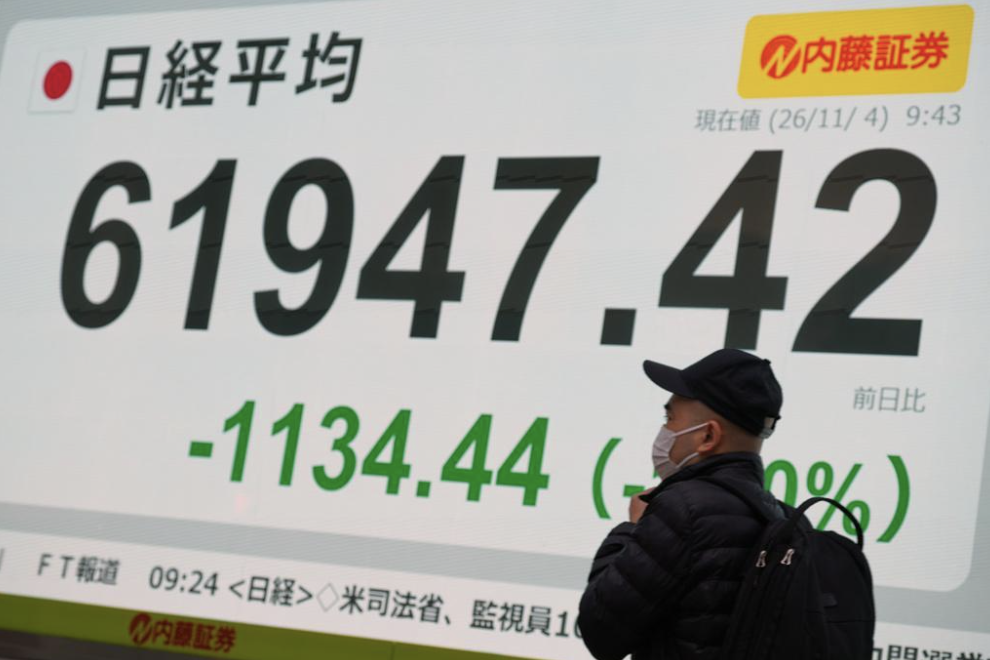
A person walks in front of an electronic stock board showing Japan's Nikkei index at a securities firm Wednesday, Nov. 4, 2026, in Tokyo. (AP Photo/Eugene Hoshiko)
On Nov. 12, the dollar was at 159.94 yen. Near 160, you can have all of the options barriers, stop losses, and corporate hedging coming into play at the same time, which makes a quick move very difficult to manage. As the pair got close to that level, Japan's top currency man Atsushi Mimura described the recent movement as being quite excessive and reminded traders of Japan's intervention over the summer.
The timing was absolutely critical. Two days prior, US inflation came in better than expected, giving investors yet another reason to anticipate a rate hike from the Fed. Higher US rates make the dollar more attractive. Japan's warning, of course, made it all the riskier to bet against the yen.
I think Tokyo is absolutely right to get involved when the yen is falling so rapidly that importers are finding it impossible to buy dollars or hedge at a viable price. The BOJ is in a different position. It should be raising rates when the data on wages, consumption, and inflation suggest that Japan does, in fact, need a tighter policy stance.
Intervention Works Best When the Market Moves Too Quickly
Japan spent 15.4 trillion yen buying yen on July 30, 31, and August 3. The US Treasury also bought some yen on the 31st. The NY Fed notes the yen strengthened from about 164 to about 155 between the 30th and the 3rd of August. It was back at around 160 by the 12th of November. The operation did a lot to stem the immediate sell-off, and much of the gain disappeared over the subsequent months.
The Finance Minister decides when to intervene, and the BOJ does the trading on the Minister's instructions. The US and Japanese governments have agreed that intervention is to be used to deal with excessive volatility or disorderly movements in the currency. For the traders, 160 is the number that brings intervention into view. For the Finance Ministry, the key question is how fast the yen is falling and whether businesses can still trade at a reasonable price.
A slow weakening of the yen is a very different thing from a sudden move. In the case of a gradual fall, the importers have time to go in and buy dollars in advance, adjust their hedges, and raise prices in the next quarter. In the case of a sharp selloff, the dealers may be tempted to widen the spread between their buy and sell prices. That makes hedging more expensive at the very moment when importers need it most.
Official warnings can also alter trader behavior prior to Japan actually buying a yen. An investor shorting the currency has to balance the trade's return against the risk that Japan will step in and the yen will suddenly strengthen. That risk could well cause traders to take their profits earlier or to employ less leverage.
For me, the best test of the summer intervention was whether importers could in fact hedge more easily in the days that followed. Did the bid-ask spreads narrow? Could companies go and buy the dollars they needed without having to move the price as much? The rebound from 164 to 155 is a very clear illustration of how rapidly the selloff reversed. To answer the other questions, you'd need the data on spreads and liquidity.
The Dollar’s Advantage Is Visible in the Bond Market
Oct: Fed at 3.75-4%, BOJ at 1.25%. That's a 2.5 to 2.75pp gap. Dollar assets have the yield advantage as long as the market expects US rates to remain well above Japanese rates. So even if both of them go up in Dec, the yen's reaction will be determined by how much further the market expects each of them to go.
US consumer prices rose 0.4% in October. Core prices (excluding food and energy) up 0.3% for the third month running. The two-year Treasury yield is up about 18 bps, and the 10-year is up about 13bps. Both yields went up, but the bigger move at the front of the curve suggests investors are rethinking how much the Fed will tighten.
That explains the renewed yen pressure in November. Still, I wouldn't want to go too far on one inflation report. Falling fuel prices could help ease inflation pressures, and tighter credit could, of course, reduce spending, particularly among companies that are already highly leveraged. The Fed could raise rates in December and then become more cautious.
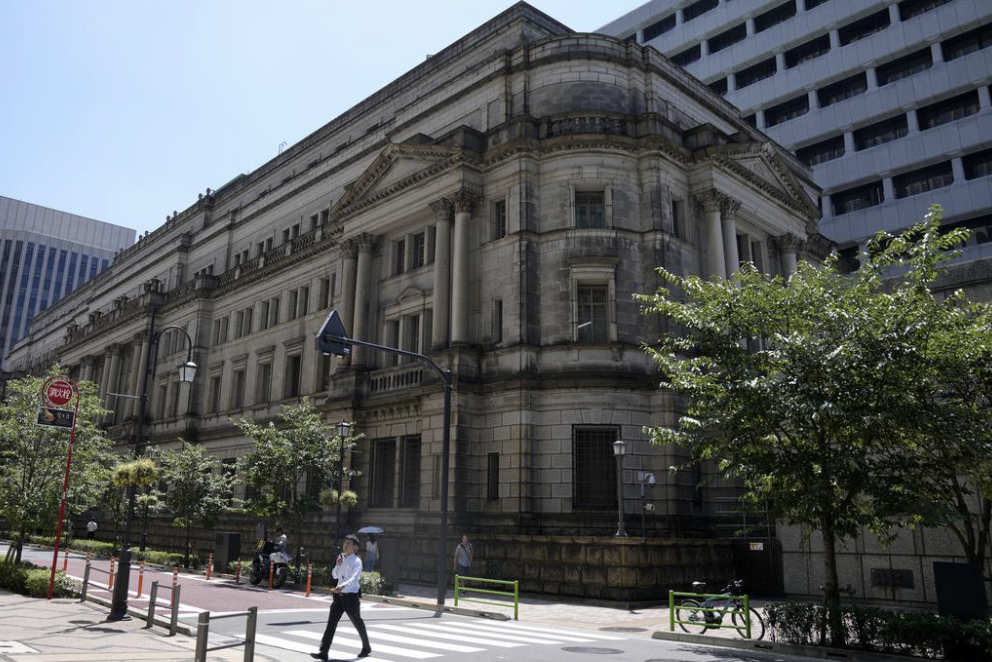
The headquarters of Bank of Japan (BOJ) is seen in Tokyo, on Aug. 18, 2023. (AP Photo/Shuji Kajiyama, File)
The BOJ Needs a Stronger Case for Another Rate Hike
The September meeting in Japan is a perfect example of why a BOJ rate hike doesn't necessarily strengthen the yen. The BOJ did, in fact, raise its policy rate by 25bps to 1.25%, as expected. Two board members voted against the hike, and the yen fell as investors questioned whether further hikes were coming. When a hike is already priced in, what the BOJ says about the next meeting is more important than the hike itself.
There's a fairly strong case for another hike. The BOJ's October outlook cited a moderate rise in wages and prices as firms passed higher labor costs on to consumers. If that continues, then Japan could finally be on the path to developing the kind of domestic inflation the Bank has spent so many years trying to achieve.
Household demand is not at all convincing. Inflation-adjusted household spending was down 6.8% in September on the year. A single month can be all over the place, but that's a pretty substantial drop. The issue for me is whether wage gains are actually reaching enough households to underpin spending. If the gains are only happening at the larger firms or simply aren't keeping pace with the cost of living, then higher borrowing costs could well dampen demand before the recovery is really on its feet.
Import prices make the decision more complicated. Japan’s import price index rose 24.8 percent in yen terms in October from a year earlier, compared with 19.2 percent on a contract currency basis. That gap shows how much faster import prices rose when measured in yen.
A stronger yen would reduce the cost of imported energy and food. A BOJ rate hike would help to strengthen the yen, and the hike would in itself make it more expensive for households and firms to borrow. Both of those are important. I'd probably put more emphasis on whether services prices continue to rise as pressure from import prices eases. That would give the BOJ a better sense of the extent to which inflation is actually coming from within Japan.
A Yen Rally Can Affect Markets Outside Japan
Investors often borrow yen at fairly low rates and convert it into dollars to buy higher-yielding assets overseas. That's the classic yen carry trade. A forward hedge will generally reflect the interest rate differential between the two currencies. You can leave some of the currency exposure unhedged to keep more of the interest income, but a big move in the yen can obviously wipe it all out.
When leveraged investors are all unwinding their carry trades at the same time, they can be selling foreign equities and bonds and buying yen to repay their loans. That buying of the yen can push it even higher, and that in turn puts pressure on other investors to exit their positions. As more exit, the pressure to sell can spread across the markets.
Aug 2024 was a case in point as to how fast that can happen. Weak US economic data had already caused some unease in the markets, and the unwinding of the leveraged positions exacerbated the selloff. For the BOJ, that’s a reason to be clear about what would justify another hike. If the market knows how the board is looking at the wage, spending, and services inflation data, then they can adjust their positions as the data comes in.
What Could Change the Outlook in December
The Fed’s meeting is scheduled for Dec. 8-9, and the BOJ meeting is scheduled for Dec. 17-18. The order is important. By the time the BOJ meeting comes around, investors will have had a full week to react to the Fed's comments on rates in early 2027.
My baseline is that a widely anticipated quarter-point BOJ hike would provide the yen with only modest support if the Fed is signaling further tightening. After both meetings, I'd be looking at whether the short end of the US and Japanese yields come any closer together and whether the yen actually holds on to any of the initial support.
For another hike, I’d want to see wage gains reach more households, spending hold up after inflation, and services prices keep rising. If the yen sells off so quickly in the meantime that importers struggle to hedge, that’s when the finance ministry should step in.