

People rally in downtown Madrid, Spain, to honor the memory of Maria del Carmen Abascal, 87, whose eviction from her home sparked nationwide protests, Thursday, Oct. 8, 2026. (AP Photo/Manu Fernandez)
The 87-year-old María del Carmen Abascal had lived in her Madrid apartment for 70 years before she was evicted in September. She was carried out on a stretcher and later hospitalized. She died at Madrid’s Gregorio Marañón Hospital on October 7, before she could return home.
The legal dispute over her lease started in 2020 after the real estate company Urbagestión acquired her apartment. The new landlord sought to charge her €2,650 in monthly rent, up from the €500 she had been paying. The amount was later lowered to €1,650 , still €300 more than her monthly pension. Urbagestión, however, has disputed the account of a 430 percent increase, maintaining that her lease had legally expired.
Abascal’s case mobilized thousands of people who took to the streets, demanding that the Spanish government address the housing crisis. After days of protests, Prime Minister Pedro Sánchez’s Socialist Workers’ Party-led government announced emergency measures to protect vulnerable tenants, extend rental contracts and limit real-estate speculation. The government lacked a parliamentary majority, and opposition from several parties blocked the measures. Sánchez then called an early election for November 29.
Across Europe, rent policy is no longer only about the price of a home. It is also about the trade-off between providing immediate relief to existing tenants and ensuring that enough housing is built for future ones. That makes rent policy a question of political power, and of whether parties with opposing views on the rental market can govern together.
In Sweden, where voters went to the polls in September, the Left Party has made a two-year rent freeze one of its key demands ahead of government-formation talks. In the past, the party has made clear that it considers rent policy a political red line. In 2021, the Left Party turned against its closest parliamentary ally, withdrawing support for the Social Democratic-led government over a proposal to introduce market-based rents for newly built apartments, helping bring the government down.
The Netherlands shows why the politics of rent cannot be reduced to a simple left-right divide. In 2025, the government’s spring budget negotiations included a proposed freeze on social rents for 2025 and 2026. Housing associations warned that the measure would undermine their ability to build and renovate homes. The freeze was withdrawn after the Council of State raised legal concerns. The coalition collapsed on the same day over asylum policy.
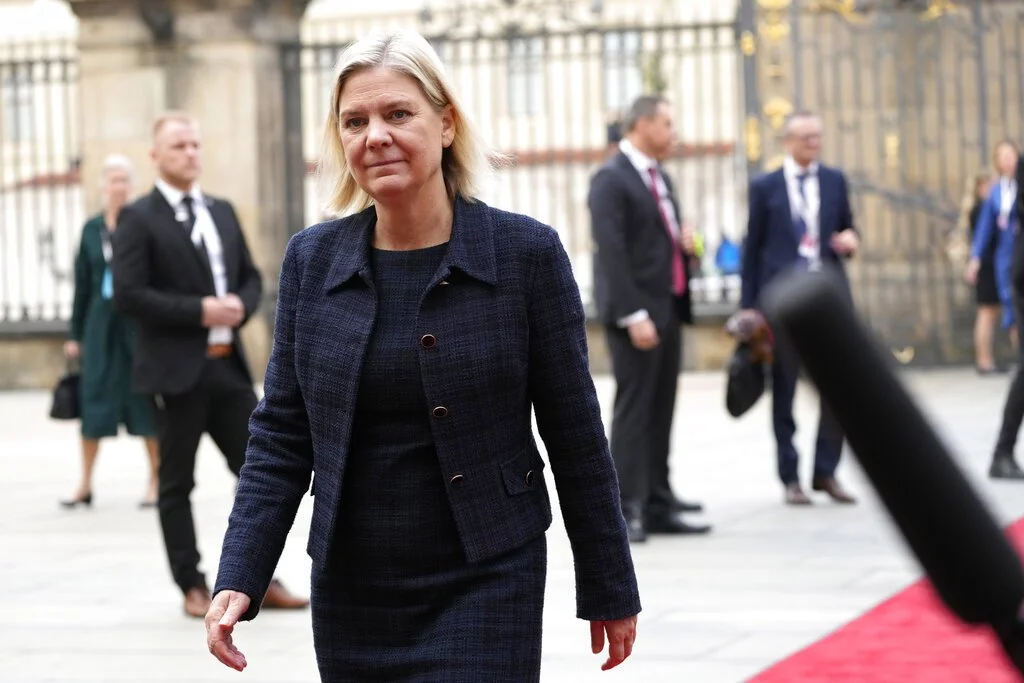
Swedish Social Democratic leader Magdalena Andersson has been seeking to form a government after the September 13 election. The Left Party, part of the center-left bloc, has made a two-year rent freeze one of its key demands. (AP Photo/Darko Bandic)
Renters represent a significant electoral constituency. In Spain, around one in five households live in rental housing. In Sweden, around one-third of households do. In the Netherlands, four in ten homes are rental. Housing costs are among the most immediate economic pressures voters experience each month, and, unlike interest rates or global energy prices, they are pressures governments can address relatively directly.
But rent politics is ultimately about distribution: who benefits from lower housing costs, and who bears the cost. The political challenge is to navigate that tension and form governments capable of addressing it. Without falling apart in the meantime.