
Renewed Conflict in Ethiopia Threatens Pretoria Peace Agreement
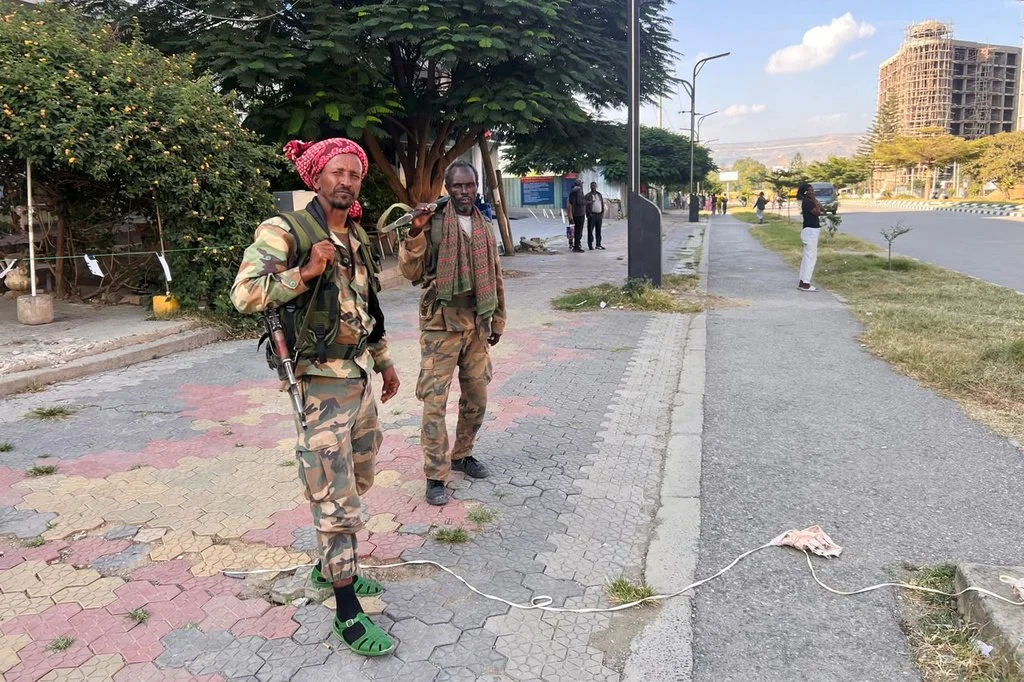
Tigray Peace Force fighters stand in a road after entering Mekelle, in Ethiopia’s Tigray region, Sunday, Oct. 4, 2026. (AP Photo/Filmon Equar Hailu)
The peace that ended Tigray’s devastating war in 2022 is under severe strain. Nearly four years after the Pretoria Agreement brought an end to the large-scale fighting, violence has erupted again in northern Ethiopia between Tigrayan forces and the Ethiopian government. The renewed fighting is rooted in unresolved political and territorial disputes the peace agreement failed to settle. A newly formed alliance between seven armed political groups now aims to remove Prime Minister Abiy Ahmed’s government and establish an inclusive transitional government.
The conflict dates back to Nov. 4, 2020, when Prime Minister Abiy Ahmed launched military operations against the Tigray People’s Liberation Front, known as the TPLF. Ethiopia’s federal system is largely organized around ethnic groups, subdivided into 12 ethnically based regional states, with regional governments holding significant political power. This system has contributed to recurring disputes between different regions over political authority and territory. For 27 years, the Ethiopian People’s Revolutionary Democratic Front dominated national politics under TPLF leadership.
When Abiy took office in 2018, following widespread anti-government protests, his administration moved to restructure Ethiopian politics and reduce the influence of the TPLF. Under TPLF rule, Ethiopia faced concerns regarding human rights violations and threats to democracy. Abiy dissolved the EPRDF and formed the Prosperity Party, which the TPLF refused to join. Abiy also reached a peace agreement with neighboring Eritrea, ending a long-standing territorial dispute between the two nations.
Tensions escalated further in 2020 when the TPLF defied the central government’s decision to postpone regional elections due to the coronavirus pandemic. Federal authorities declared the regional election illegal, deepening the dispute. Tigray officials warned any intervention by the federal government would be a “declaration of war.”
On Nov. 4, 2020, Tigrayan forces seized the federal army’s Northern Command Headquarters in Tigray. Prime Minister Abiy stated that “the last red line had been crossed” and declared a military offensive and a six-month state of emergency in Tigray. The conflict lasted for two years, bringing widespread violence, mass displacement, and a deteriorating humanitarian crisis. In November 2022, the Ethiopian government and the TPLF signed the Cessation of Hostilities Agreement (CoHA) in Pretoria, South Africa. The agreement halted large-scale fighting, mandated the restoration of services and reconciliation.
However, critical underlying grievances remained unaddressed. Contested land in western Tigray stayed under the control of neighbouring Amhara forces and displaced hundreds of thousands of ethnic Tigrayan people. At the same time, the federal government accused the TPLF of only handing over old weaponry to the African Union and of hiding its arms. The TPLF insists on regaining western Tigray and those displaced from the region.
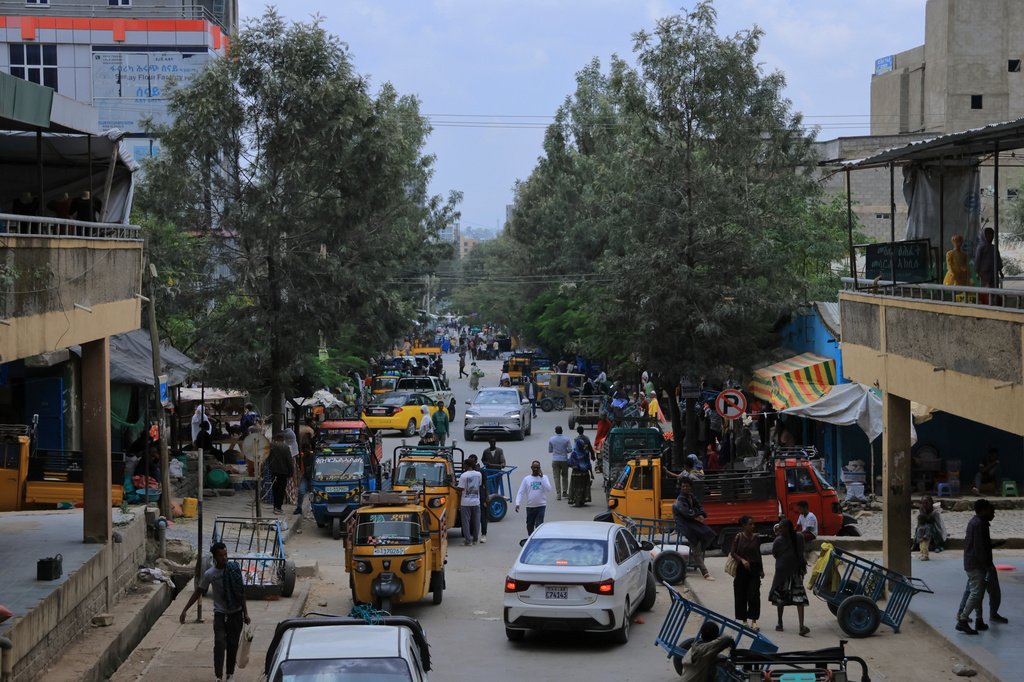
People walk in Mekelle, the capital of Ethiopia's Tigray region, as fighting escalates with the central government, Thursday, Sept. 24, 2026. (AP Photo)
Those tensions have now violently resurfaced. In late September 2026, fighting broke out again across northern Tigray between regional forces and Ethiopia’s national army. The government has accused the TPLF of launching an “all-out offensive,” and the regional forces of seizing federally controlled airports. The Tigray regional government responded that it was countering a federal invasion.
The renewed fighting also comes as several armed groups have begun to coordinate against Abiy’s government. On Sept. 20, the TPLF announced an alliance with six other armed groups, including the Oromo Liberation Army and the Amhara Fano national movement, forming the Ethiopian People’s Forces Alliance for Survival. Fano, which had sided with the federal government during the 2020-2022 war, is now part of the new alliance. The alliance has called for the removal of Abiy’s administration and the creation of an inclusive transitional government.
This also marks a shift in Eritrea’s relationship with Ethiopia. Eritrea previously signed a peace agreement with Abiy’s government and fought alongside federal forces during the 2020-2022 Tigray war. The Ethiopian federal government is now accusing Eritrea of backing the TPLF and has closed its embassy in Asmara. Relations between the two countries have continued to worsen, driven by disputes over access to the Red Sea. The African Union and the United Nations have called for dialogue and de-escalation to avoid returning to a full-scale war.