
List of African Nations in Third-Country Deportation Agreements with the US Continues to Grow
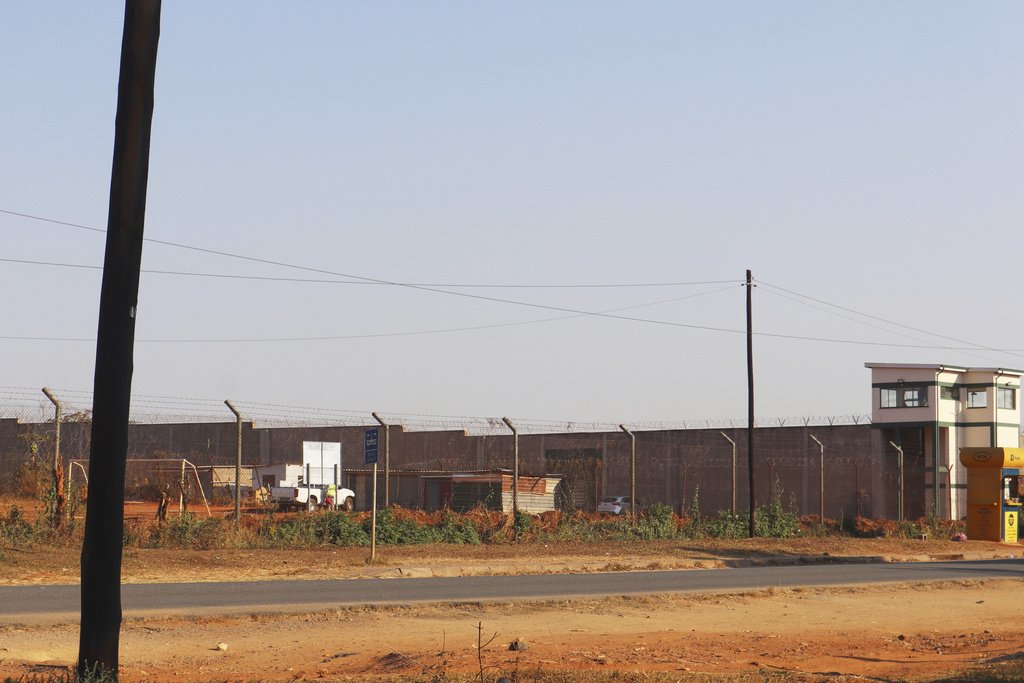
Matsapha Correctional Complex is seen in Matsapha, near Mbabane, Eswatini, Thursday, July 17, 2025. (AP Photo/Uncredited)
Over the past year, more than a dozen African countries have agreed to bilateral deals with the US to receive third-country nationals, individuals whose citizenship is neither US nor from the countries the Trump administration is deporting them to. The US has sent over 500 of such individuals to various African countries on the growing list of nations with migration agreements, including Burundi, the Central African Republic, the Democratic Republic of Congo, Equatorial Guinea, Eswatini, Ghana, Rwanda, and South Sudan, as well as others in Central and South America. While early flights out of the US carried individuals with serious crime convictions, many of the recent deportees are asylum seekers who face persecution in their countries of origin.
Third-country deportation has long been established as a method of border externalization, but not associated with the manner and scale in which it is now being conducted by the US government. Since the shutdown of the US Agency for International Development (USAID) and reorganization of the State Department, the nation’s foreign policy has undergone a significant shift. The America First agenda, which prioritizes domestic value over humanitarian need, is now the guiding force of US foreign assistance and immigration management. In this era of US global strategy, it’s unlikely that countries on either side are making migration agreements out of a sense of altruism.
Reports from the US Senate Committee on Foreign Relations in February claim the US is using a ‘web of bilateral arrangements’ and financial payments to pressure governments into accepting deportees with no ties to their country, and that these arrangements are estimated to cost over $40 million.
In return for the reception of deportees, many of whom held refugee status in the US and can not return to their home countries, African governments have received direct payments as well as indirect aid through payments to international organizations that support migrants in third countries. Total payments range from $7.5 million to Rwanda and $9 million to Uganda, to $85 million to the Central African Republic. Ugandan human rights lawyer Nicholas Opio shared with The Associated Press, “We are sacrificing human beings for political expediency, in this case because Uganda wants to be in the good books of the United States.”
Countries with histories of political and economic instability potentially hold less bargaining power when it comes to their partnerships with the US, also rendering them less suitable for vulnerable migrants to live in for those same reasons.
South Sudan, which the US had deportation arrangements with, has been in a state of severe political instability since 2013 and is nearing “full-scale famine” according to the Council on Foreign Relations. China also holds major stakes in the country because of its oil reserves, positioning South Sudan between the pulls of two global powers. Likewise, the Central African Republic is in Russia’s sphere of influence, with a Russian national security advisor and close ties with the now-dismantled Wagner Group. The Central African Republic is also one of the poorest countries in the world, and the State Department has advised Americans against visiting the country “for any reason.”
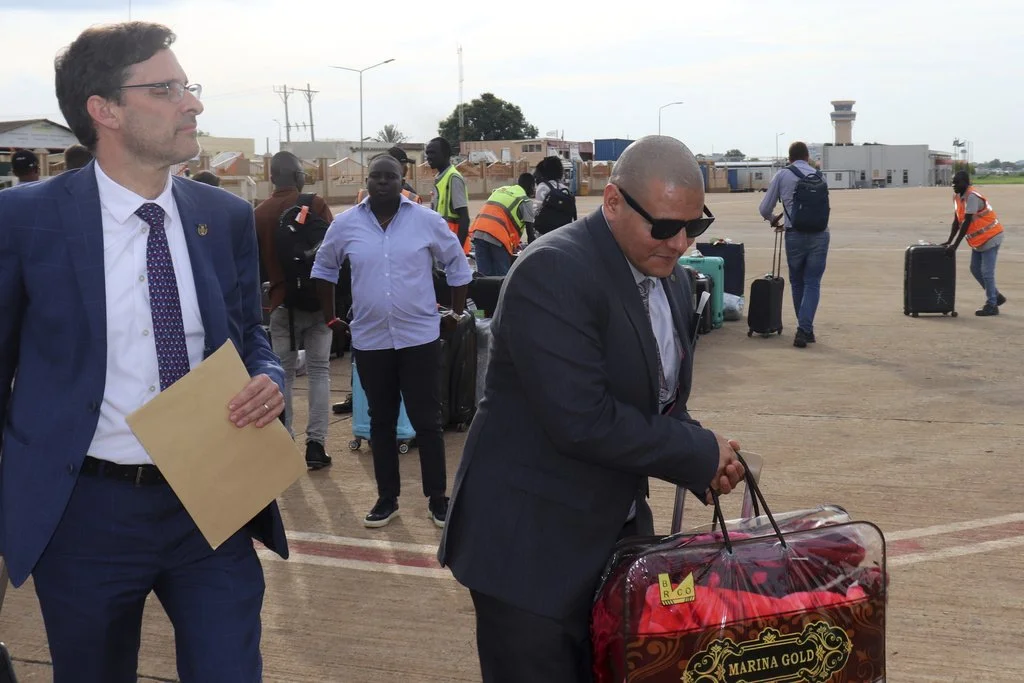
Jesus Munoz Gutierrez, a Mexican migrant deported months ago to South Sudan by the United States under an immigration crackdown, is repatriated to his home country at Juba Airport in South Sudan, Saturday, Sept. 6, 2025. (AP Photo/Deng Machol)
There are also potential third-country deportation agreements between African countries and the EU. In May of 2026, 45 European countries signed an endorsement of plans to send unwanted asylum seekers to “third country hubs.” Since then, the EU seems to remain in an exploratory phase, although preliminary discussions with the Rwandan government have recently continued with some EU member states. This follows a failed third-country deportation deal between Rwanda and the United Kingdom in 2022, which was quickly struck down by the UK Supreme Court for breaking international non-refoulement laws—the same international laws that critics of the US’s recent deportation deals claim the country is violating by sending individuals to territories that don’t guarantee safety.
Although the US is pursuing deals with a growing number of African states, there are some, such as Burkina Faso and Nigeria, that have refused to accept deportees from the US. As a relatively stable character in the global economy, Nigeria may hold a stronger position than many of its neighbors. In an interview with Nigeria's Channels TV, Nigerian Foreign Minister Yusef Tuggar said, "We have enough problems of our own. We cannot accept Venezuelan deportees to Nigeria, for crying out loud." Tuggar also suggested that the US’s tariffs and visa restrictions on Nigerian travelers were pressure tactics.
Many international organizations, including Human Rights Watch and Amnesty International, have condemned the mass third-country deportations for violating human rights and international law. Various lawsuits have highlighted the dangers of expelling people to places where they could face persecution or be returned to the very countries they originally fled from. Third-country arrangements have also been under fire for their lack of transparency, both for the public and for those being forcefully deported.
The African Commission on Human and Peoples’ Rights adopted a resolution in November of 2025 calling on African countries to not enter migration partnerships that “entail a real risk of serious human rights violations,” and promoting “African alternatives to asymmetrical partnerships.”
While the US Supreme Court recently ruled in favor of allowing Trump to continue these deportations until the case is reevaluated in December, questions of transparency and humanitarian grounds remain.