
Guinea’s Military Government Dissolves 40 Political Parties
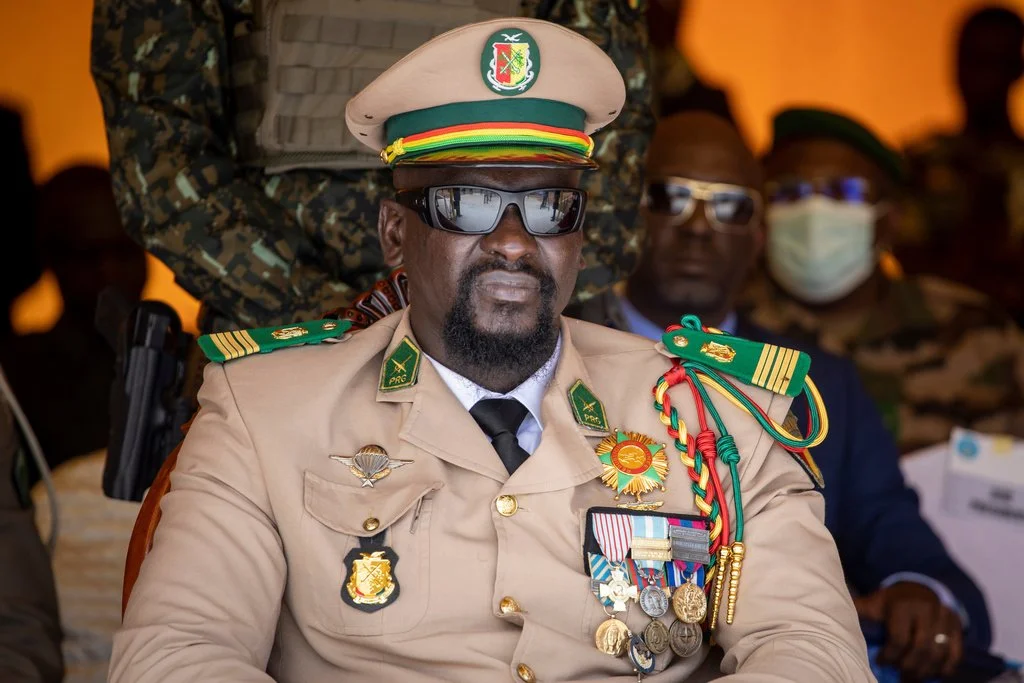
FILE - Guinea's junta leader Col. Mamady Doumbouya watches over an independence day military parade in Bamako, Mali on Sept. 22, 2022. (AP Photo, File)
On Friday, March 6, 2026, Guinea’s Ministry of Territorial Administration and Decentralization dissolved 40 of the country’s political parties. The political parties’ headquarters and local offices have been closed. The assets of the parties have been frozen. The use of acronyms, names, and logos referencing the parties became illegal. The ministry reasoned that the decree was necessary since the parties had failed to meet legal obligations; a claim disputed by the dissolved parties.
Three of Guinea’s largest political parties, the Union of Democratic Forces of Guinea (UFDG), the Rally of the Guinean People (RPG), and the Union of Republican Forces (UFR), had already been suspended since Aug. 2025, and are now dissolved. The Aug. 2025 suspension was prompted by concerns that the three parties could pose a challenge to Guinea’s President Mamady Doumbouya in an upcoming election; Doumbouya feared the opposition candidates were credible threats to his power and wanted them eliminated. Doumbouya won a presidential election in Dec. 2025 without any strong opposition, securing him the presidency for the next seven years.
Mamady Doumbouya is a former military officer who came to power following a 2021 coup d’etat against the previous government. After the coup, Doumbouya was placed in charge of Guinea’s new transitional military government. However, since Doumbouya’s government gained power, it has outlawed protests, shut down the media, and been prosecuting activists and political opposition leaders– efforts to consolidate Doumbouya’s power and stop the transition to democracy.
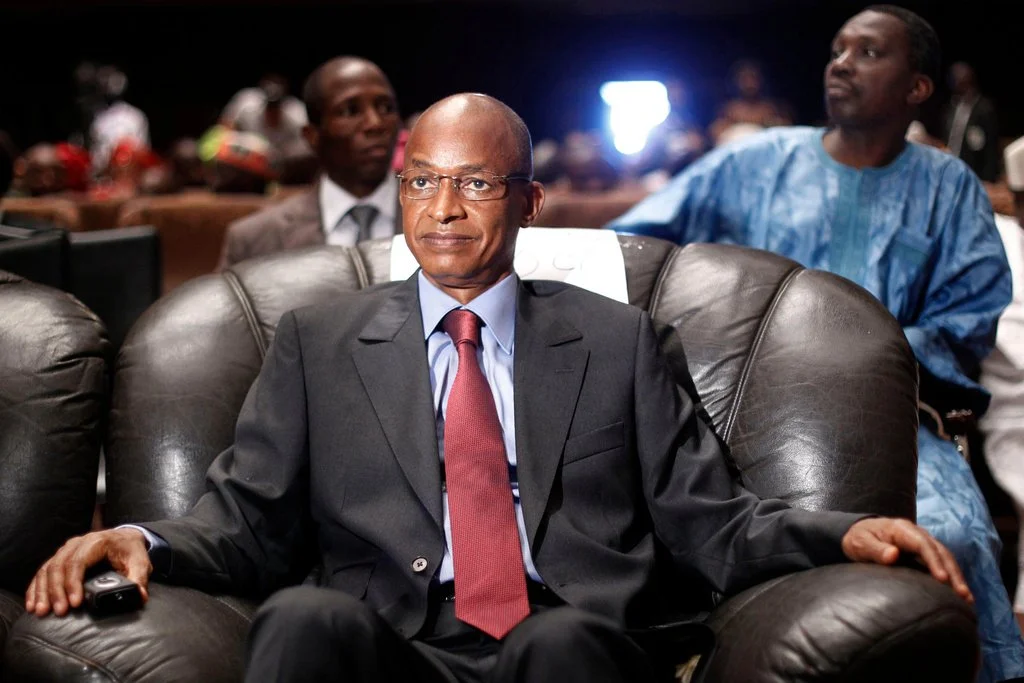
FILE - Cellou Dalein Diallo sits at the People's Hall in Conakry, Guinea, Sept 21, 2010. (AP Photo/Jerome Delay, file)
Furthermore, on Sunday, March 8, 2026, Cellou Dalein Diallo, Guinea’s main opposition leader and member of the Union of Democratic Forces of Guinea, posted a video on social media condemning President Doumbouya’s actions. Diallo said that through the government’s actions, “war has been openly declared” on Doumbuya’s opposition, and that “direct resistance” is the only option to fight against Doumbouya. Diallo referred to the current government as a “malevolent clique” that wants to “rewrite the country’s history” and get rid of any opposition that will “overshadow his nascent one-party state.” Diallo went as far as calling for an uprising of “all Guineans who cherish liberty and justice” to come together and “bring an end” to Doumbouya’s regime. Currently, due to Doumbouya’s disapproval of political rivals, Diallo is pushing for a revolution against this regime while he’s in exile.
There have been several coup d’état in West African nations, where transitional military governments have been put into place, supposedly before the government takes a democratic form. However, democracy seems unlikely due to the growing dictator-like power of military officers put in charge of the juntas. Due to the growing power of the transitional governments, there’s been much discontent among the general public due to problems such as economic issues and corrupt elections. Similarly to Guinea, Burkina Faso’s junta government, which came to power through a coup d’état, banned all political parties on Jan. 29, 2026.
The first major coup d’état in the West African region took place in Aug. 2020 in Mali, where a military government seized power in Bamako, the nation’s capital. Between Aug. 2020 and Aug. 2024, there had been at least 10 coup attempts in Central and West Africa. In Aug. 2023, a coup d’etat took place in Gabon, against President Ali Bongo Ondimba, successfully ending the Bongo family’s 56-year regime. Coups became prevalent as resentment of France began to grow, especially due to the long history of French colonialism in West Africa. French colonization in Africa became rampant towards the end of the nineteenth century. From 1895 to 1958, France grouped their colonies in Africa together into “French West Africa”, which included Guinea, Cote D'Ivoire, Benin, Niger, Senegal, Mali, Mauritania, and Burkina Faso. The colonized African nations were exploited by the French, and the oppression has a long-lasting impact and is one of the major reasons for modern-day instability in West Africa. New military governments used popular opinions of resistance against the French and demanded that French and US forces leave the region.
Now, many West African countries are relying on the Africa Corps, a part of the Russian government, to help West African military forces. Previously, the Wagner Group, a Russian paramilitary force, had been providing services to African nations. The Wagner Group, a private company contracted by the Kremlin, was used as a way to serve Russian interests in Africa without being directly held accountable under the Russian government. However, the Wagner Group withdrew from Africa in June 2025, and the Africa Corps, an entity of the Russian government, took their place. Now, since accountability falls directly under the Kremlin, the Africa Corps has less freedom than the Wagner Group did to pursue their interests, but nearly 80 percent of the Africa Corps were former Wagner Group members.
Overall, without a strong opposition force in Guinea, Doumbouya’s government remains intact and continues to grow stronger. Guinea’s coup d’état and current military government reflect a widespread pattern in the West African region, and the unfolding events have close ties to the impact of French colonialism in the region. Due to the dissolvement of opposing political parties, President Mamady Doumbouya’s power will continue to grow. Without any credible resistance to Doumbouya’s powers, a transition from military government to democracy seems highly unlikely.