
The Return of Rhinos to Uganda’s Kipedo National Park
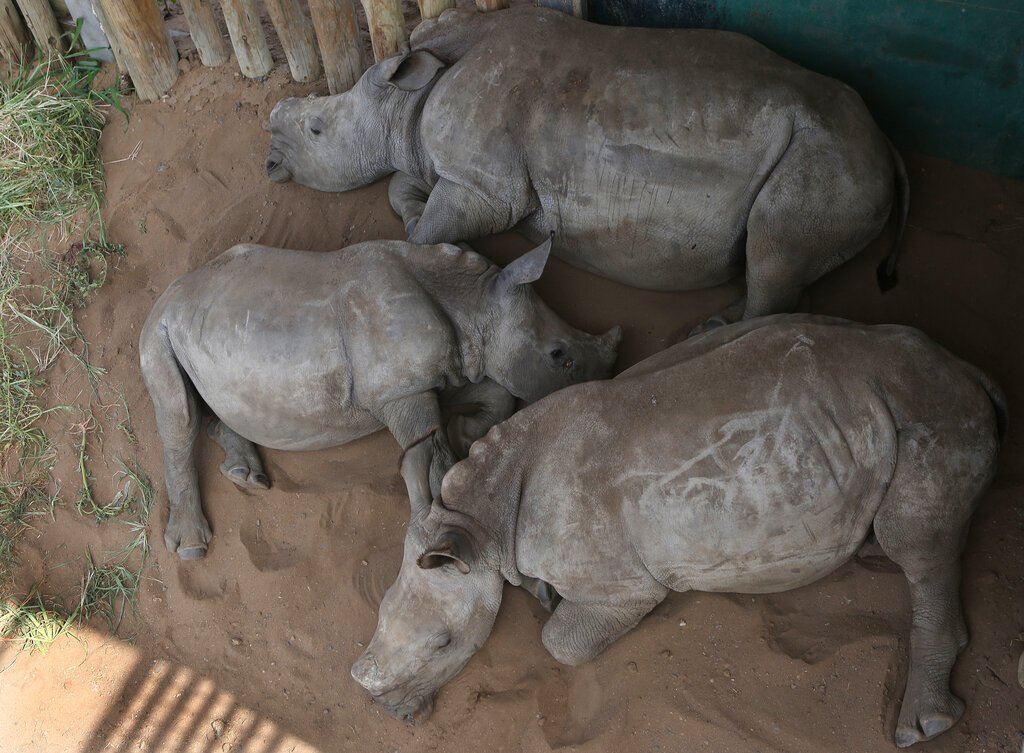
In this photo taken Monday, Feb. 15, 2016 young rhinos nap in an enclosure at a rhino orphanage in the Hluhluwe-iMfolozi Game Reserve in the KwaZulu Natal province South Africa. Rhino calves that have lost their mothers are especially vulnerable and can spend several years under the care of conservationists before being released back into the wild. (AP Photo/Denis Farrell)
On March 17, 2026, Rhinos finally returned to Uganda’s Kidepo Valley National Park for the first time since their disappearance from the wild in 1983, more than four decades ago. This reintroduction marks a transition period for wildlife conservationists, who are describing this event as a national victory and a testament to how East African countries are reshaping wildlife protection.
Two southern white rhinos were moved this week from the Ziwa Rhino Sanctuary, where rhinos have found themselves during their time away from the wild. Ziwa began breeding southern white rhinos in 2005 after Uganda’s native rhinos had been hunted to extinction in the wild. From Ziwa, the rhinos were moved to the newly created sanctuary inside Kidepo Park.
Ugandan officials say the translocation is just the first step of a broader plan to build a sustainable and healthy wild population of the animal in the park. “This occasion symbolizes the start of a renewed chapter for rhinos in Kidepo Valley National Park,” said James Musinguzi, executive director of the Uganda Wildlife Authority, thanking conservation partners for the funding and logistics that made the move possible.
Inside Kidepo, authorities have carved out a secure shelter for the rhinos in the Narus Valley, where the animals will be closely monitored before being granted greater freedom to roam. The effort is part of Uganda’s National Rhino Conservation and Management Strategy, which aims to expand rhinos’ range, strengthen genetic diversity, and ultimately reintroduce the animals to other protected areas such as Murchison Falls National Park and Ajai Wildlife Reserve. Officials say the program is dependent on tighter enforcement of Uganda’s wildlife laws, which have now been updated to ensure poaching and trafficking of protected species result in tough penalties.
Uganda’s move is rather innovative as neighboring countries experiment with different approaches to keeping endangered species alive amid increasing pressure from poaching, habitat loss, and climate stress. In Kenya, authorities have leaned heavily on a system of community and private conservancies alongside national parks, giving local landowners and communities a specific role in protecting wildlife and sharing tourism revenue. Kenya’s Wildlife Conservation and Management Act recognizes community conservancies and provides a clear framework for their management and support. The country, like Uganda, has also imposed strict penalties for poaching and illegal trade of these protected species.
Tanzania is another testament to the wildlife conservation movement surging through the region. Tanzania, home to the Serengeti and other diverse ecosystems, has, in recent years, focused on large, state-managed protected areas backed by paramilitary-style ranger units to deter poachers and traders. Over the past decade, these specialized anti-poaching operations have helped elephant and rhino communities through laws that classify serious wildlife offenses alongside economic and organized crime, allowing for serious penalties. These laws include management areas, closed seasons, and restrictions on use and access. These laws help to amplify conservation efforts as they create a stricter environment for respecting the outlined rules.
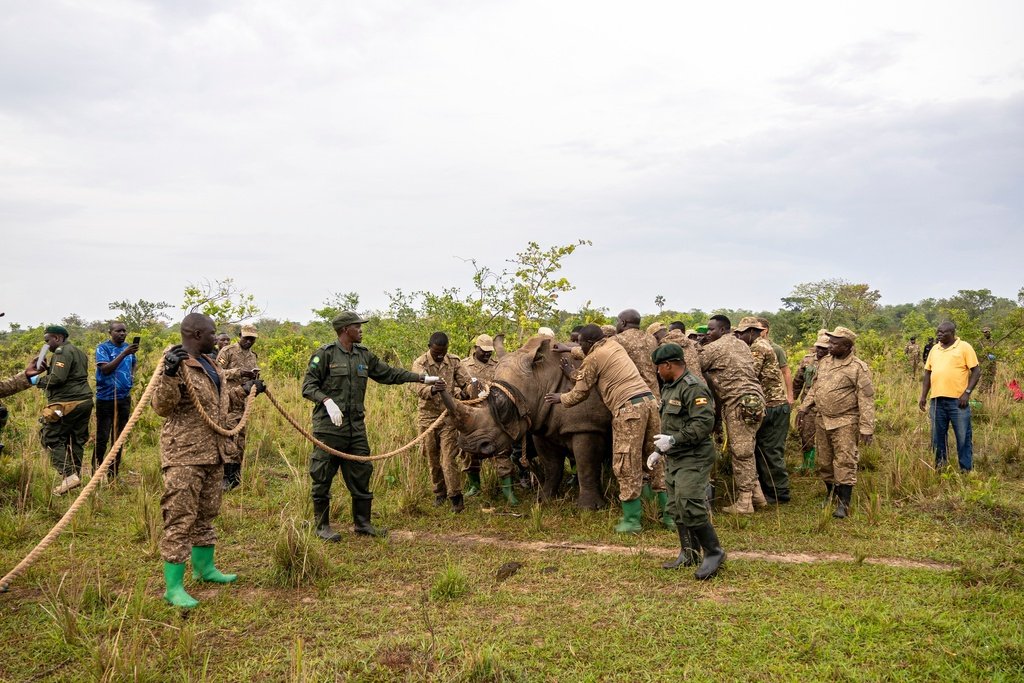
Rangers prepare a rhinoceros at Ziwa Rhino Sanctuary to be transported to Kidepo Valley National Park in north-eastern Uganda, Thursday, March 19, 2026. (AP Photo/Moses Dipak)
In contrast, fragile states such as South Sudan and the Democratic Republic of Congo struggle to enforce wildlife laws on the ground even when protections exist on paper. After years of conflict, limited budgets, and weak institutions in these regions, many wildlife parks are understaffed and under-equipped, leaving conservation efforts often in vain. This draws attention to the broader issue of political conflict and unrest within Sub-Saharan Africa. Without proper leadership, the endangered species within these regions will continue to diminish. As cross-border species move between countries with different capacities and legal regimes, calls for stronger regional cooperation, transboundary conservation areas, and harmonized penalties for wildlife crime are needed.
Underlying all these efforts is the persistent threat of poaching driven by international demand for products such as rhino horn. Conservation groups say horns are trafficked mainly to parts of East and Southeast Asia, where they are used in traditional medicine and as status symbols, fetching prices on black markets that attract well-armed criminal networks. That pressure is what emptied Kidepo of rhinos more than 40 years ago and what Ugandan officials say they must now guard against with fences, ranger patrols, intelligence sharing, and stricter prosecutions.
For Uganda, the triumphant sight of rhinos stepping back into the plains of the Kidepo National Park after nearly 42 years is a powerful symbol of recovery while also serving as a reminder of how fragile that recovery remains and that steps still need to be taken. Whether this reintroduction becomes a turning point will depend not only on one park, but on how countries across Africa align their policies and sustain the political motivation needed to keep some of the continent’s most threatened animals from disappearing once again.