
Ethiopian and Kenyan-driven growth projects success for the East African Region
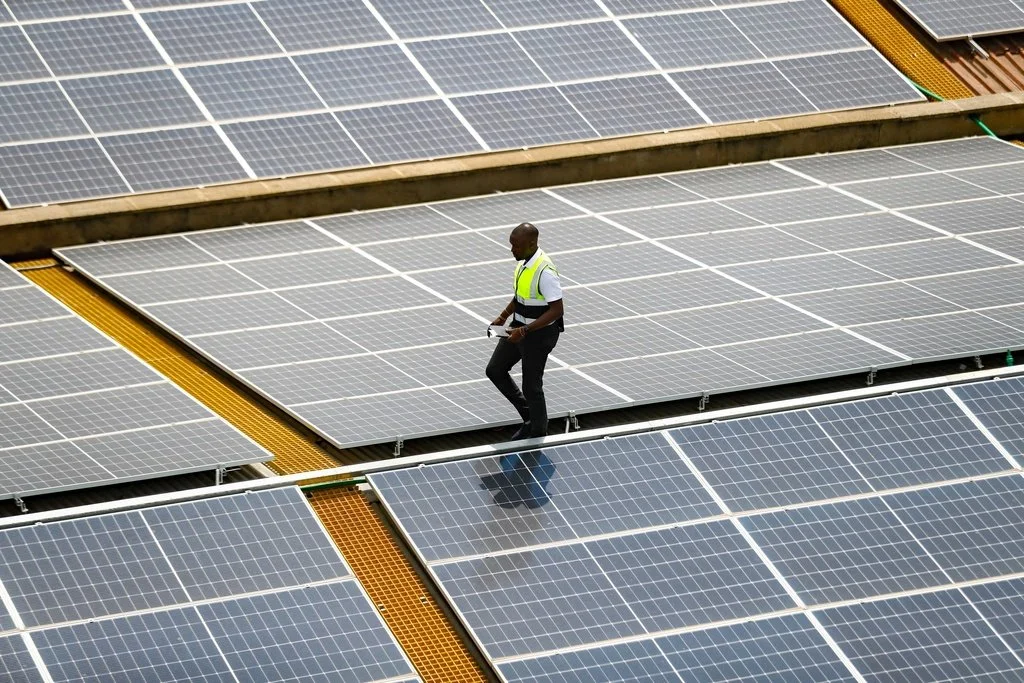
FILE - Mark Munyua, CP solar's technician, examines solar panels on the roof of a company in Nairobi, Kenya, Sept. 1, 2023. (AP Photo/Brian Inganga, File)
Global economic output is forecast to grow by only 2.7 percent in 2026, slightly below the 2.8 percent estimate for 2025 and well below the pre-COVID average of 3.2 percent. Inflation, geopolitical scatter, and the product of aggressive American tariffs have had lasting impacts. Conversely, East Africa has a different story to tell.Africa’s economic numbers in 2026 are characterized by pros and cons. Economic growth across the continent is projected to rise to 4 percent in 2026 and 4.1 percent in 2027, which is up from 2024’s 3.5 percent and 2025’s 3.9 percent. This shows signs of macroeconomic stability through, buoyed by continued consumer and investment spending. Africa is currently growing nearly twice the global average (2.7 percent), which is a great achievement for an underestimated continent in global economics. Simultaneously, at least 22 African countries are in positions of debt. Public debt rose from around 30 percent of GDP in 2013 to nearly 60 percent by 2024. This has resulted in a negative trade-off: countries growing their economies are also weakening their long-term growth through unstable public investment.
The sub-regional picture is also uneven. Southern African economies are projected to grow by only two percent in 2026, and Central Africa at three percent. Political instability is still prevailing in parts of Central and West Africa which impacts economic stability. Currency volatility, and heavy deficits are obstacles Africa needs to overpower. On the other hand, East Africa emerges as a standout leader driving growth. Two drivers, Ethiopia and Kenya — pioneers in renewable energy — are leading the East African region to a projected 5.8 percent growth rate in 2026. This puts East Africa’s economic growth above any of the continent’s sub-regions, while doubling the global growth average.

FILE - Ethiopia's Prime Minister Abiy Ahmed Ali delivers a speech during the inauguration of the Grand Ethiopian Renaissance Dam, in Benishangul-Gumuz, Ethiopia, Sept. 9, 2025. (AP Photo, File)
The UN projects Ethiopia and Kenya to grow by 6.3 percent in 2026 and 5.1 percent, respectively. Ethiopia is focusing on hydropower expansion through large dam projects, which support electricity generation for industrial use. Kenya is reducing its carbon exposure while enhancing cost competitiveness through its geothermal presence in the Rift Valley. Ethiopia has laid plans to create Africa’s largest airport, Bishofu International Airport, with a $12.5 billion investment. The vision behind this heavy investment is to anchor aviation and exports, expanding the country’s tourism industry and global trade prospects. Kenya can be viewed as a more established economy, branching into agriculture, tourism, finance, and manufacturing. Kenya has consistently shown resilience when any sector falls short and provides this sub-region much-needed stability. Regional integration has added a brand new layer of momentum for these two machines. Intra-African trade grew by 8.5 percent in 2025, exceeding export growth outside the continent. An example is Kenya’s tea exports hitting a record of $1.7 billion in 2025, which was $300 million higher than the previous year.
Perhaps one of the most important factors was Trump’s “Liberation Day” tariff schedule. On April 2, 2025, the Trump Administration implemented various tariffs on 190 countries and territories, with a universal 10 percent duty. Following this, most of Southern Africa (South Africa was slapped with a 30 percent tariff) and West Africa were hit harshly by these tariffs, affecting their export revenues and causing a rippling effect on many nations’ economies. With this in mind, East Africa’s story was different; East Africa, and more specifically Ethiopia and Kenya, were spared with a mild 10 percent baseline rate. This positively impacted the region as it produced an uptick in exports sent to the United States. Ethiopia saw a 95 percent rise, and Kenya a 22 percent increase in exports to the United States. These numbers reflect a reality where Americans are no longer able to buy cheap Chinese goods with punishing tariffs and have turned to East African suppliers for their wants and needs.
East Africa’s economic growth in 2026 is more than just a number. It reflects a region that has invested in energy infrastructure, enhanced regional integration, and capitalized on the scope of global trade flows. Ethiopia and Kenya are headline countries in East Africa’s success, but credit is due to many others in the region, such as Uganda’s coffee and Tanzania’s posts, which show solid momentum across the region. The broader African picture is a more worrying topic. Through debt distress and political unrest, the continent still has many obstacles to overcome, but with help from East Africa and sub-regional integration, one could see improvements popping up across the continent.