
The UN Recognizes the Enslavement of African People as the “Gravest Crime Against Humanity”
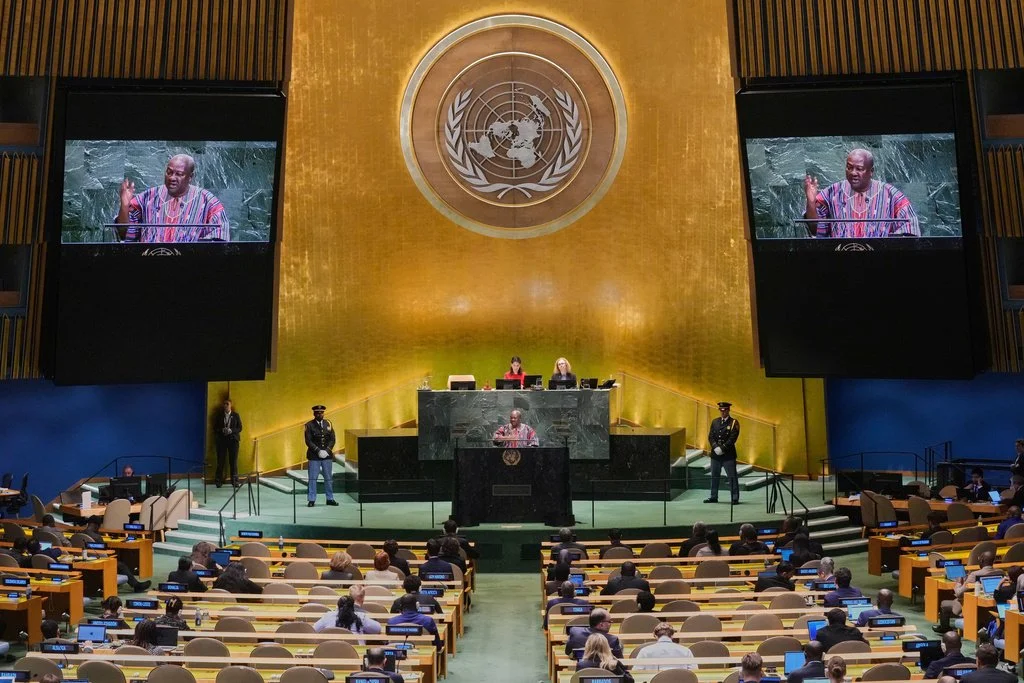
Ghana President John Dramani Mahama addresses the 80th session of the United Nations General Assembly, Thursday, Sept. 25, 2025. (AP Photo/Richard Drew)
On March 25, 2026, the United Nations General Assembly voted to recognize the enslavement of African people as the “gravest crime against humanity.” Ghana proposed the resolution, and of the 193 UN members, the vote was 123 to 3, with 52 nations abstaining. The resolution was supported by the African Union and Caribbean nations. However, the 3 members against the resolution were the US, Israel, and Argentina, and amongst the abstaining nations were the UK and all 27 European Union countries.
The resolution calls upon the perpetrating governments of the transatlantic trade of enslaved people to pay reparations to the nations they exploited and for the return of stolen cultural artifacts to their countries of origin. Yet, many of the nations involved in the trade of enslaved people, such as the UK, have continuously rejected the proposition of paying reparations. They argue that it’s unjust for present-day institutions to be held accountable for the wrongdoings of past institutions. Unsurprisingly, only a single European nation, the Netherlands, has issued a formal apology for slavery.
Ghanaian president, John Mahama, suggested the resolution as a way to do what is “right for the memory of the millions who suffered” from the trade of enslaved people and for those who continue to be affected by slavery’s aftermath. The resolution was also part of a wider effort of the African Union, which declared that the years 2026 to 2035 would be known as the “Decade of Action on Reparations”. In 2019, Ghana launched an initiative to reconnect those affected by the African diaspora to their ancestral home by encouraging people of African descent to reside in Ghana.
Unfortunately, the aftermath of slavery continues to impact African people throughout the world, in ways such as racial inequality and the underdevelopment of nations affected by the trade of enslaved people. From 1500 to 1800, about 12 to 15 million African people were captured, brought to the Americas, and enslaved. Once enslaved, people often formed families under duress, particularly due to the widespread sexual abuse of enslaved women, which majorly contributed to generational slavery. Millions upon millions of African people and their ancestors had been forced into facing the effects of slavery for numerous generations, racism, and exploitation led by the perpetrators of slavery, who profited from the dehumanizing and atrocious treatment of enslaved people.
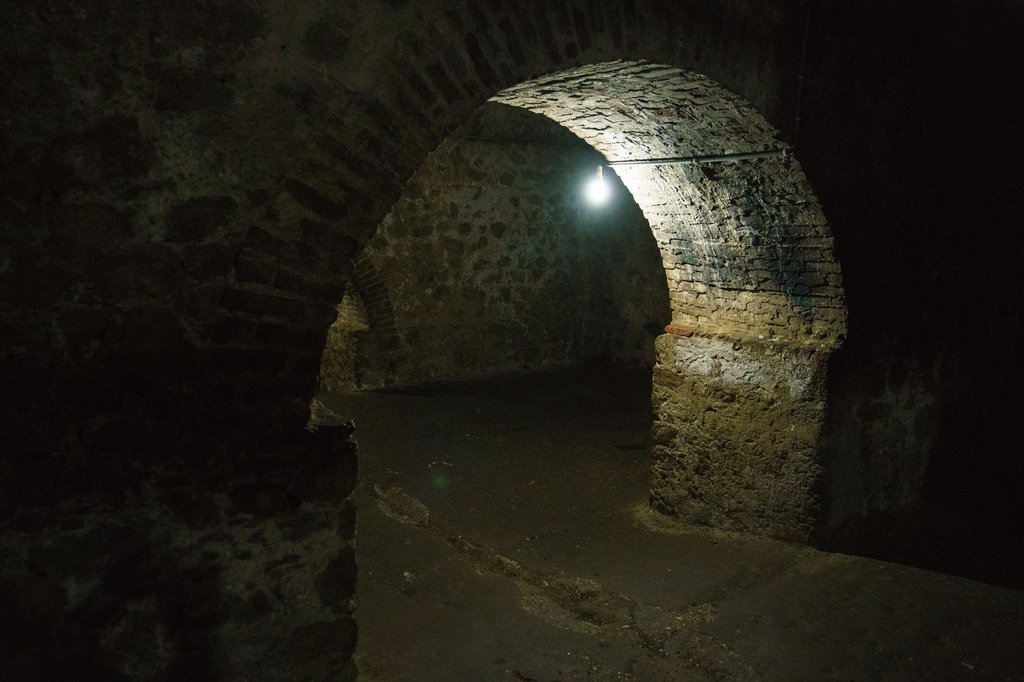
A dungeon at Cape Coast Castle, a "slave castle" used in the trans-Atlantic slave trade, is seen in Cape Coast, Ghana, Oct. 3, 2018. (AP Photo/Carolyn Kaster, File)
One particularly horrifying aspect of slavery was the journey from Africa to the Americas, known as the Middle Passage. About two million enslaved African people died on this route. Before boarding ships, enslaved African people were forced into barracks and dungeons, and faced examination where they were sexually assaulted. Aboard ships, there were countless sexual attacks against women and girls, where enslavers would rape and abuse them. Enslaved people on ships were chained together in overcrowded rooms where ceilings were so low that it was impossible to sit upright. This miserable journey could take anywhere from a couple of weeks to months.
There are innumerable stories of cruelty and human suffering in the Middle Passage, but one particularly brutal account was aboard the Zong ship. The Zong sailed from Ghana to Jamaica in 1781, holding approximately 470 enslaved African people. The overcrowding created an unsafe and dangerous environment on the ship. While on the journey, sickness spread throughout the vessel, and the British captors controlling the ship brutally massacred 130 enslaved African people by throwing them overboard. The enslavers thought that massacring the enslaved people would lead to an insurance payout since they had insurance on their “cargo;” The enslaved African people weren’t even viewed as humans but rather as objects that could be insured. After the massacre, none of the British captors on the ship were ever prosecuted for murdering so many people.
As the transatlantic trade of enslaved people concluded in the 1800s, European nations, such as Britain, France, Belgium, Germany, and Portugal, began dividing pieces of Africa among themselves. At the Berlin Conference of 1884 to 1885, no African nations were present or invited to participate, and the 14 Western nations present drew up a rough idea of new African colonies. The conference resulted in the ratification of the General Act of 38 clauses, which legalized and closed the partitioning of Africa. Most African nations remained under colonial rule until African leaders fought for independence between the 1950s and 1970s. Even after liberalization, civil wars ensued, and military governments put in place blocked economic development.
Therefore, the UN resolution recognizing the enslavement of African people as the “gravest crime against humanity” is rooted in the atrocities committed against African people for over 500 years. As European countries have continued to grow their political and economic institutions by exploiting African people, African nations have struggled to gain independence and form their own institutions due to oppression and racism. The enslaved labor of the hundreds of millions of Africans throughout the Americas and Europe built our modern-day world. Atrocity after atrocity was committed against the African people, and there has been little to no accountability for the perpetrators. How are African nations expected to have stable economic development and governments if they have faced over half a millennium of exploitation?