
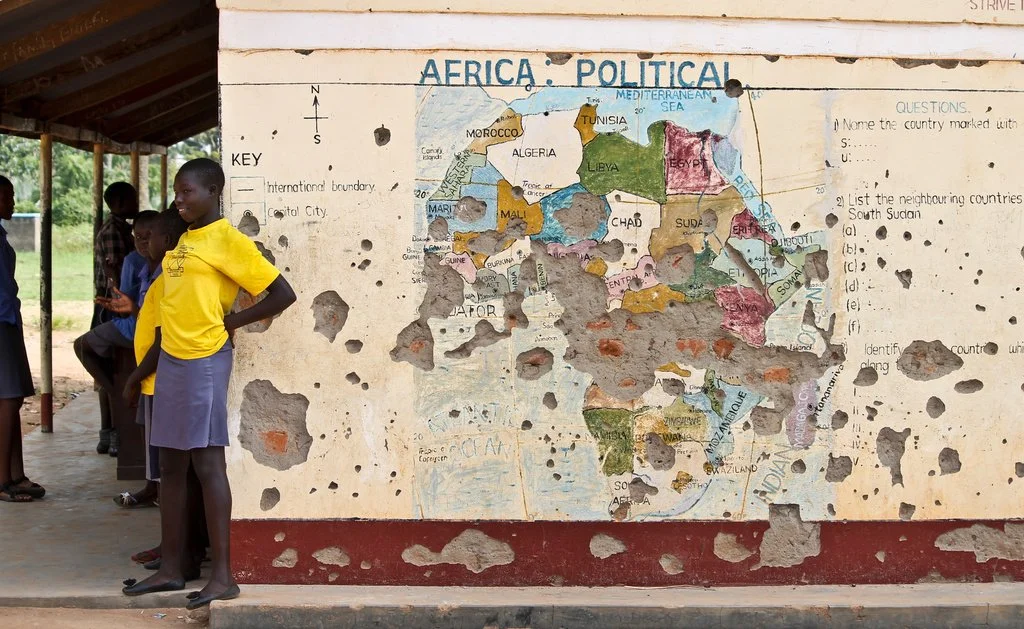
In this photo taken Nov. 15, 2016, students line up outside a classroom with a map of Africa on its wall, in Yei, in southern South Sudan. (AP Photo/Justin Lynch, file)
Following the continued conflict in South Sudan, an insurgent raid on a remote village on March 1 left at least 169 people dead. This devastating event exposed, once again, the fragility of the country’s peace process and the wider instability that Sub-Saharan Africa faces. The attack raises urgent questions about what governments and international organizations can do to de-escalate the conflict and prevent South Sudan from entering back into a full-blown civil war. The conflict leads to these worries as the violence directly threatens the peace treaty the country came to in 2018. This threat to peace worries many as it is an all too familiar showing of a breach in the fragile peace system that's failures helped lead to the devastating 2013 civil war. This fear is extremely concerning to many civilians whose safety is at risk, even in remote villages such as Abiemnom county.
Authorities say insurgents stormed a village in Abiemnom county early on March 1, leaving at least 169 people dead, including about 90 civilians. Among the dead were women, children, and dozens of government soldiers. Local officials described the assault as coordinated and organized.The insurgents burned homes and marketplaces, and overwhelmed security forces within several hours of distressing violence. After the raid, roughly 1,000 residents fled to a nearby base of the UN Mission in South Sudan (UNMISS), where peacekeepers patrolled to deter further attacks and provide protection for the displaced members of the Abiemnom area.
The brutal killings that occurred on March 1 are among the latest in a broader pattern of escalating violence that has affected South Sudan in recent months. Humanitarian groups and rights organizations warn that civilians experience a majority of the conflict's impacts, facing indiscriminate attacks, mass displacement, and restricted access to food, water, and medical aid.
Along with the March 1 attack, South Sudan’s current crisis is rooted in its restless history since its independence in 2011. When the country broke away from Sudan in 2011, it quickly entered a civil war in 2013 after a political dispute between President Salva Kiir and the former Vice President, Riek Machar. The dispute reached a headway in 2013 where soldiers from the Dinka ethnic group aligned with Kiir, and those from the Nuer ethnic group aligned with Machar. In the 2013 civil war, an estimated 400,000 people died, and millions were displaced. Leaders signed a revitalized peace agreement in 2018 that created a fragile power-sharing government. However, implementation of that deal has been shaky, leaving key security arrangements incomplete, a permanent constitution unfinished, and delayed elections.
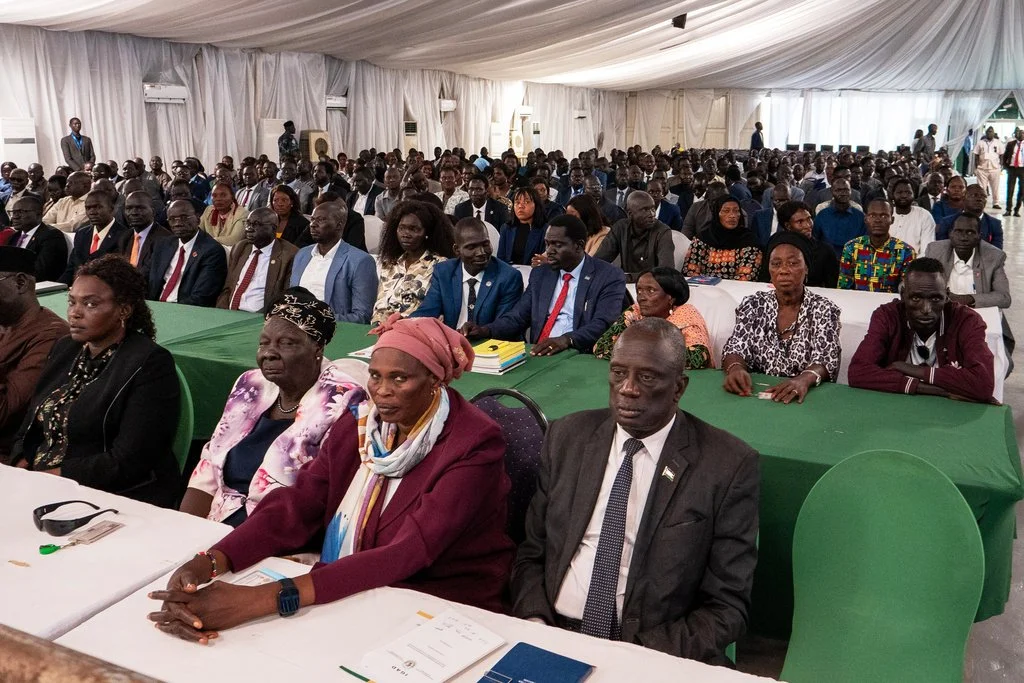
Members of the public follow court proceedings for South Sudan's suspended First Vice President Riek Machar and seven others charged with murder, treason, and crimes against humanity at the Freedom Hall in Juba, South Sudan, Wednesday, Sep. 24, 2025. (AP Photo/Florence Miettaux)
International monitors, including a UN inquiry and human rights organizations, say South Sudan’s political and military elites are “systematically dismantling” the peace agreement through continued abuses, obstruction of reforms, and manipulation of security forces for personal and factional gain. Fighting has intensified in states such as Jonglei, Upper Nile, and Unity, where government troops, allied militias, and opposition groups have violently clashed over territory, resources, and local power. The March 1 massacre in Abiemnom fits with a wider pattern of localized violence that has clear national political roots.
From an international relations perspective, South Sudan’s ongoing conflict has importance well beyond its borders. The country sits in East and Central Africa, bordering the states of Sudan, Ethiopia, Kenya, Uganda, the Democratic Republic of Congo and the Central African Republic. The instability within South Sudan can easily spill over into these bordering countries through refugee movements, arms trafficking, and cross-border militia activity. Analysts warn that renewed war in South Sudan could interact with Sudan’s own conflict to the north, creating a larger regional security crisis with opportunities for external powers to back rival factions.
Governments worldwide still have options to help de-escalate the conflict. Diplomatically, they can push South Sudan’s leaders to recommit to the 2018 peace deal and establish this recommitment with clear timelines for elections, security sector reform, and constitutional changes, enforced by penalizing those who choose to neglect the commitment. That those who choose to neglect their commitment will face political and financial consequences. Strengthening sanctions and the arms embargo against individuals with the networks responsible for the ongoing abuses can raise the cost of violence. This diminishes the expected payoffs of continued fighting on the aggressors’ behalf.
On the ground, adequate funding and political backing for UNMISS remain crucial so peacekeepers can protect civilians, maintain safe sites like the one that sheltered Abiemnom survivors, and monitor violations across contested areas.
The March 1 attack in Abiemnom is a poignant reminder that the state of South Sudan is an ongoing crisis that is rapidly evolving in ways that threaten both its people and stability within Sub-Saharan Africa. How foreign governments, international organizations, and regional actors respond will shape whether the country steps back from the brink or descends into another catastrophic civil war with devastating consequences for international peace and security.