
A New Scramble: Critical Minerals and Competition in Sub-Saharan Africa
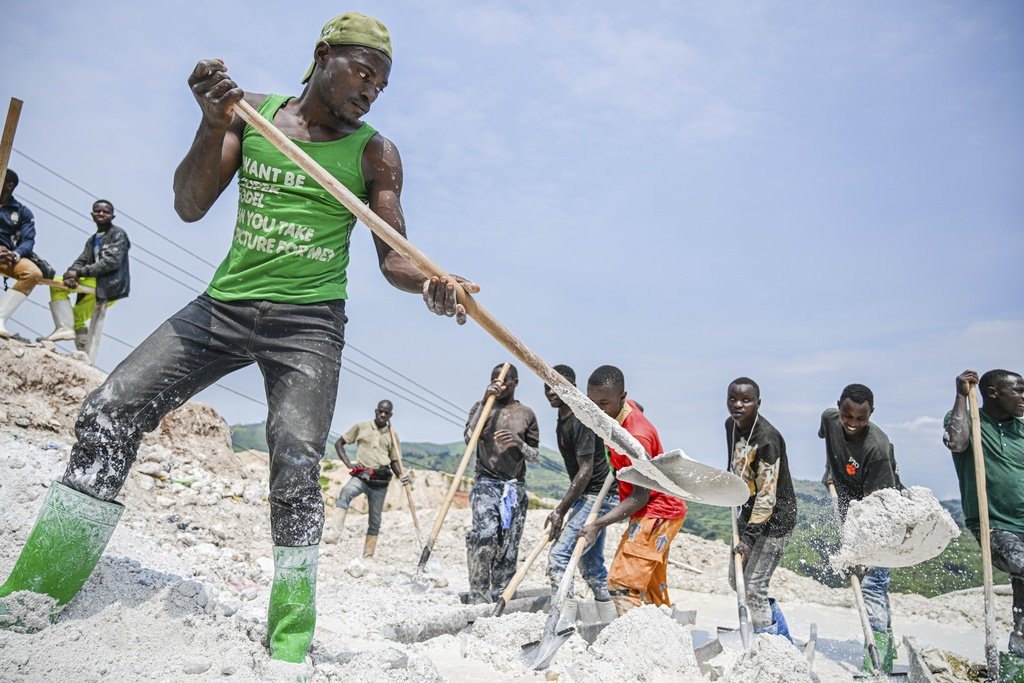
Miners work at the D4 Gakombe coltan quarry in Rubaya, Democratic Republic of Congo, on Friday, May 9, 2025. (AP Photo/Moses Sawasawa)
Sub-Saharan Africa has long sat atop one of the more strategically useful resources in the world. The continent of Africa holds approximately 30% of global mineral reserves. Some of these include cobalt, platinum, copper, and lithium, which are all vital for the production of electric vehicles, renewable energy projects, and general industrial expansion. Yet despite this quantity of resources, Africa only acquires around 10% of the value generated from mining exports. This feeds into one of Africa’s structural issues, a continent that exports raw resources rather than manufactured, final goods. Selling raw resources rather than finished goods greatly reduces the revenue received from exports, a reality that Africa lives with. As of 2026, the United States, China, and the Gulf States are integral in this battle, with each nation employing a different strategy to do so. The question is not who wins the battle, but whether African countries can leverage the competition itself to reap the rewards of their own resource generation and wealth.
Sub-Saharan Africa’s structural problems are foundational and date back to colonial-era trade structures that positioned the continent as a raw resources supplier. A large amount of precious metal leaves an African port at a very low price, and within months, it functions as an input for a device or machine in an American, European, or Chinese factory. This is the issue plaguing African mineral exports. With the high demand that minerals possess, African nations have a degree of bargaining power that has not been obtained before.
China was the first nation to build pillars in African nations. Chinese companies control more than 72% of copper and cobalt mines in the Democratic Republic of Congo. Many minerals across the world frequently travel through Chinese refineries, which displays Beijing’s supply chain leverage beyond mine ownership. A major shift has been in Chinese lending, where net transfers to sub-Saharan Africa have recently been negative, reflecting a step away from large-scale infrastructure investment. In early 2026, South Africa signed an Economic Partnership Framework Agreement (EPFA) with China to grant duty-free access for mining exports and counter the 30% U.S. tariff imposed.
The United States, on the other hand, has pivoted aggressively. In December 2025, Washington signed an agreement with the Democratic Republic of Congo (DRC) to give American firms access to priority mining sites in direct competition with Chinese forces. Additionally, the current administration has launched the “Vault” project with the goal of increasing American mineral reserves, backed by $10 billion in Export-Import Bank of the United States (EXIM) financing. However, the same administration has imposed a 30% tariff on South Africa and gutted USAID Programs, which are actions that incentivize Africa to hedge towards Beijing.
The Gulf states represent a very recent and overlooked shift in the geopolitical landscape. Between 2012 and 2022, these nations have invested over $100 billion in African markets, led by the UAE at $59.4 billion, which overtook both the U.S. and China as Africa’s largest investor by raw value. Gulf states arrive with less political clouding than other nations, making them more appealing for partnership. The Gulf states, as a third pole for Africa, are beneficial as Qatar focuses on aviation and energy, Saudi Arabia pursues food security for the region, and the UAE controls ports and infrastructure within the sector.
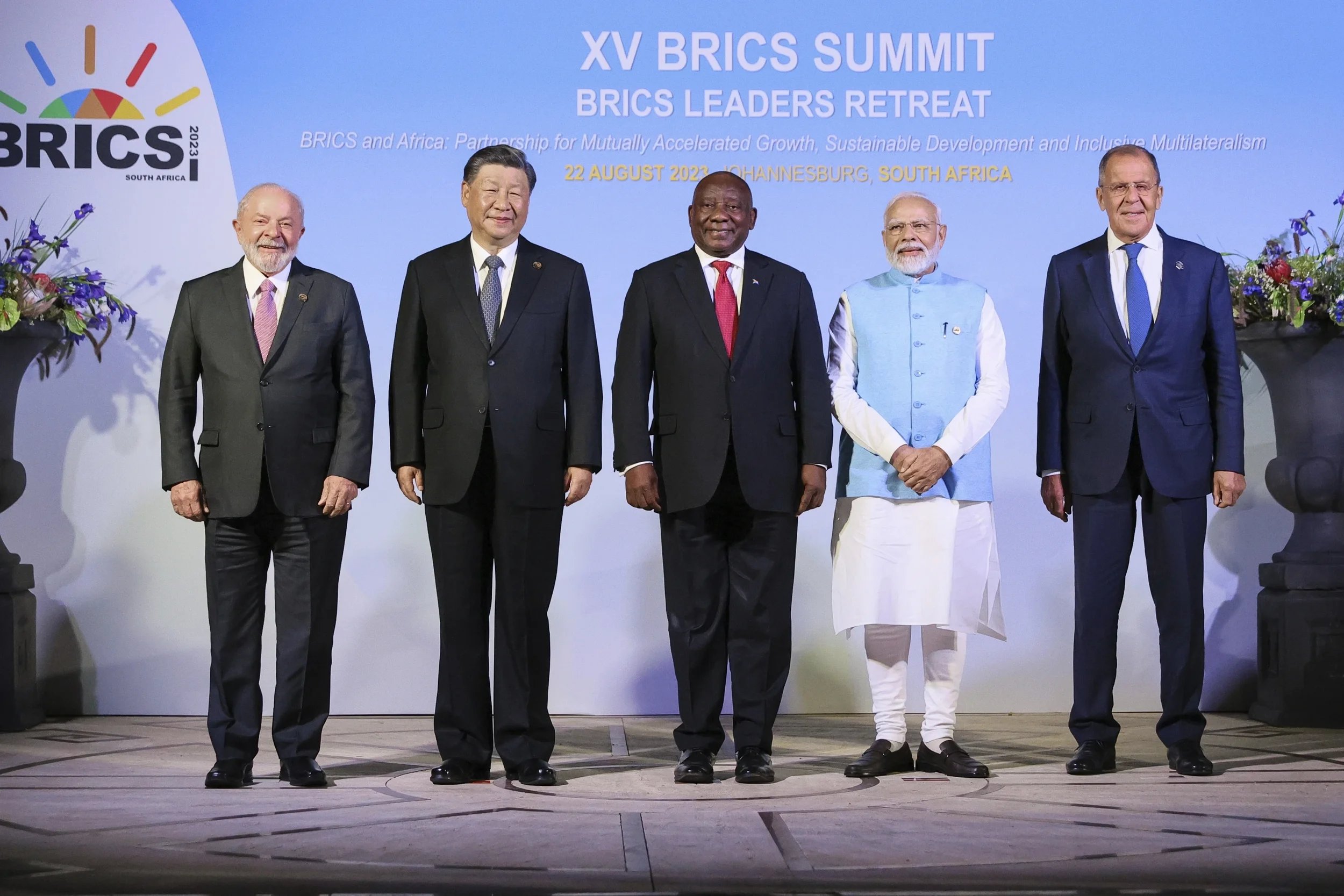
In this photo released by the Russian Foreign Ministry Press Service, Brazilian President Luiz Inacio Lula da Silva, Chinese President Xi Jinping, South African President Cyril Ramaphosa, Indian Prime Minister Narendra Modi and Russian Foreign Minister Sergey Lavrov pose for a photo on the sideline of the BRICS group of emerging economies three-day summit in Johannesburg, South Africa, Tuesday, Aug. 22, 2023. (Russian Foreign Ministry Press Service via AP)
African governments are making decisions with the right information, but it is uncertain whether these decisions can turn into opportunities Guinea, as an example, is using its position as the biggest exporter of bauxite to leverage its talks with both the U.S. and China. Several countries are passing new laws to ensure that mining companies process a floor amount before exporting, generating more revenue. As African nations become more informed of their available options, there is a phenomenon that economists call the tragedy of the commons, and it explains why the situation is precarious. When a shared resource is polarized, each actor has an incentive to extract it as quickly as possible to beat their competitors, even when a collective restraint would prove better for all parties involved. This captures the situation: the U.S., China, and the Gulf states are all racing to gain maximum mineral access with little incentive to collaborate or invest in local industry that would benefit African nations. African governments are in the same predicament. African countries also strive to maximize revenue to support opportunities to develop and build strong domestic structure.
The fight over Africa’s critical minerals in 2026 is unique and puts the region in a new position. The amount of investment and polarization of power as countries compete for access to these goods, combined with a greater demand for precious metals, has given African governments real negotiating power for the first time in a while. New policy implementation has shown Africa’s intention to capitalize on its growing leverage. Africa still earns only a fraction of what its minerals are worth. The U.S. and China still maintain presence and control over much of sub-Saharan Africa’s mineral resources and operations. This, however, could become a turning point for African expansion or a highway opportunity for another nation’s economic rise within the next decade.