
Pope Leo’s Ten-Day Tour of Africa
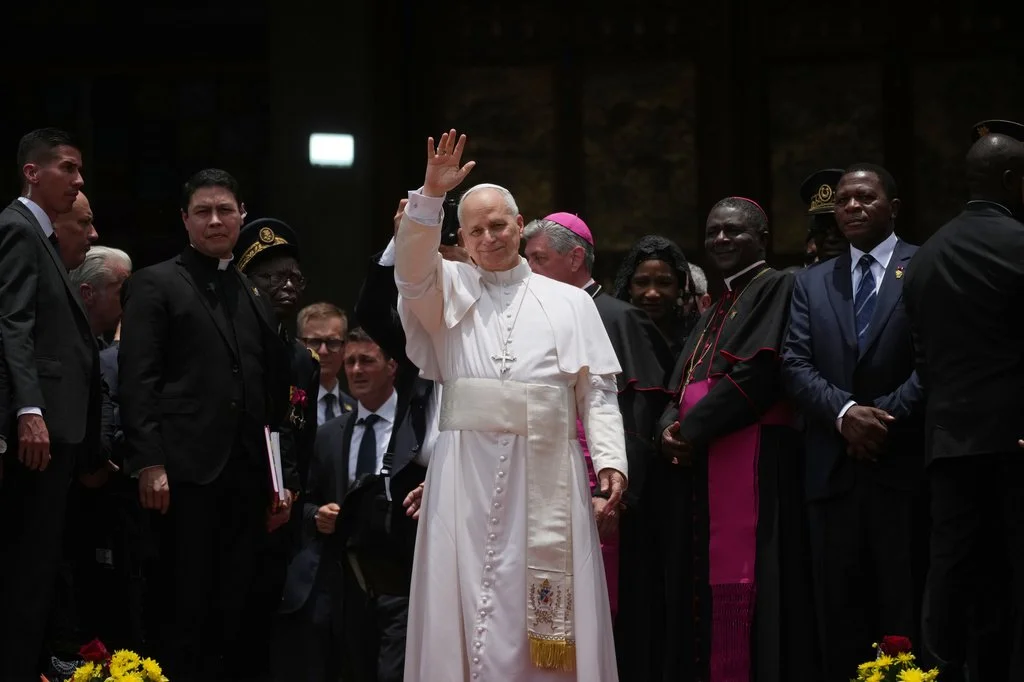
Pope Leo XIV leaves at the end of a meeting for peace at Saint Joseph's Cathedral in Bamenda, Cameroon, with the local community Thursday, April 16, 2026, on the fourth day of his 11-day pastoral visit to Africa. (AP Photo/Andrew Medichini)
On Monday, April 13, 2026, Pope Leo XIV began his 10-day tour to Africa, where he’ll visit Algeria, Angola, Cameroon, and Equatorial Guinea. In Africa, Catholicism is growing faster than on any other continent; there are about 288 million African Catholics. Despite Catholicism’s popularity in Africa, Pope Leo will have to tackle deep ideological issues between the Catholic Church and cultural norms, such as polygamy, along with competition with other religions, such as Islam. During his tour of Africa, Pope Leo will meet with people impacted by numerous issues, including war, poverty, climate change, and authoritarian governments.
Pope Leo’s first stop was Algeria, which is where the namesake of Leo’s former religious order, St. Augustine, was the bishop of an ancient city now known as Annaba. Leo’s second stop, Cameroon, is an impoverished nation that’s had the same authoritarian leader for over four decades. Leo’s third stop, Angola, has a large Catholic following, with about forty percent of the nation’s population identifying as Catholic. Finally, his last stop is Equatorial Guinea, which is a small nation of less than two million that’s ruled by an authoritarian leader known for committing human rights violations.
Coincidentally, Pope Leo’s trip has fallen between his feud with U.S. President Donald Trump. Due to the U.S. government’s declaration of war on Iran, Leo condemned the “absurd and inhumane violence” in the Middle East. In response to Leo’s criticism, President Trump said Leo was “terrible on foreign policy” and “weak on crime.” Another point of tension was Mr. Trump’s threat to eliminate “a whole civilization” in Iran, to which Leo responded that a “threat against the whole population of Iran” was “really not acceptable.” Additionally, another controversy that unfolded was when Mr. Trump posted an AI image of himself as Jesus Christ, which caused much of a divide among his supporters and deepened the feud between Washington and the Vatican.
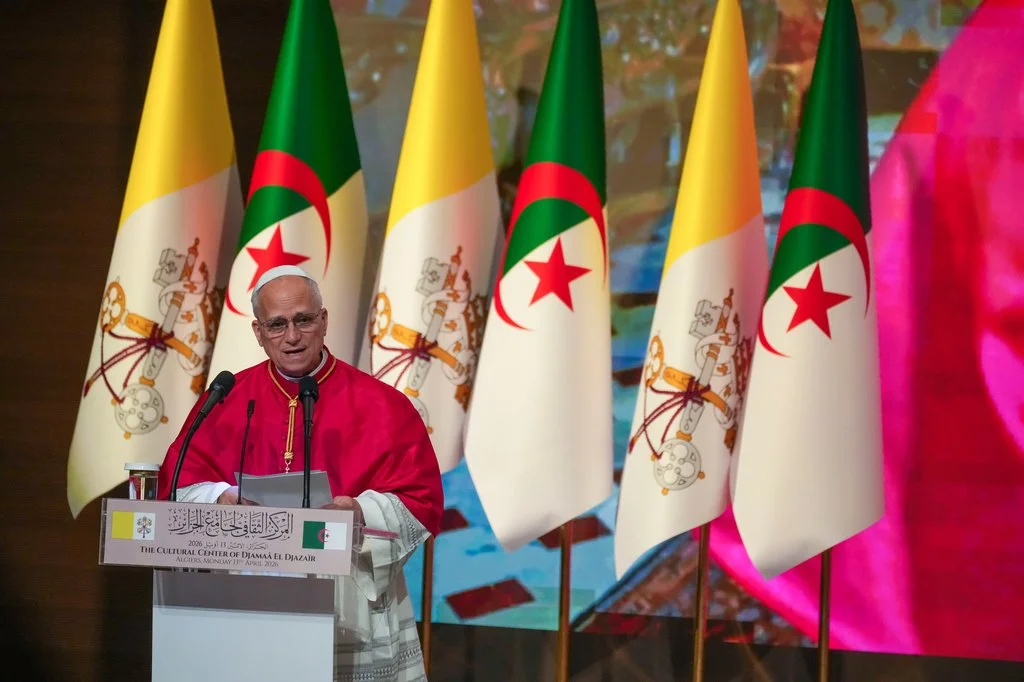
Pope Leo XIV addresses Algerian authorities, members of the civil society, and diplomatic corps at the Djamaa el Djazair Conference Center in Algiers, Monday, April 13, 2026, on the first day of an 11-day apostolic journey to Africa. (AP Photo/Andrew Medichini)
Furthermore, Leo’s trip to Africa highlights a difference between Pope Leo and his predecessor, Pope Francis. Oftentimes, Pope Francis was outspoken in his beliefs, and he advocated for gay marriage, allowing for priests to bless the marriages of same-sex couples. However, allowing gay marriage is frowned upon due to cultural norms in multiple African countries. This has driven a wedge between the Catholic Church and African governments. On the other hand, Pope Leo is reserved compared to Francis, considering he advocates for causes such as ending wars, immigration, and peace, yet has some conservative views. One of Leo’s conservative views is that marriage should only be between men and women, which is an opinion held by many conservative, traditional African governments. Yet, Leo hasn’t repealed the abilities of priests to bless same-sex couples, which has been a source of conflict between the Catholic Church and conservative, traditional African cultural norms.
Additionally, on April 15, 2026, Pope Leo gave a speech in St. Joseph’s Cathedral in Bamenda, Cameroon. Leo criticized those who attempt to justify waging war by citing religious reasons. Specifically, he said: “The masters of war pretend not to know that it takes only a moment to destroy, yet often a lifetime is not enough to rebuild.” There’s much speculation that, in addition to calling out authoritarian leaders in Africa, Leo was also calling out Mr. Trump and the U.S. war against Iran.
Overall, Pope Leo’s tour of Africa provides Leo with the opportunity to connect with those most affected by poverty and oppression. Leo can also use this trip to focus on rifts between the Catholic Church and cultural norms, while learning more about Africa, the continent where Christianity is spreading the fastest. The tour is one of Leo’s first international appearances since becoming Pope in 2025, succeeding Francis, and allows Leo to showcase his own leadership style.