
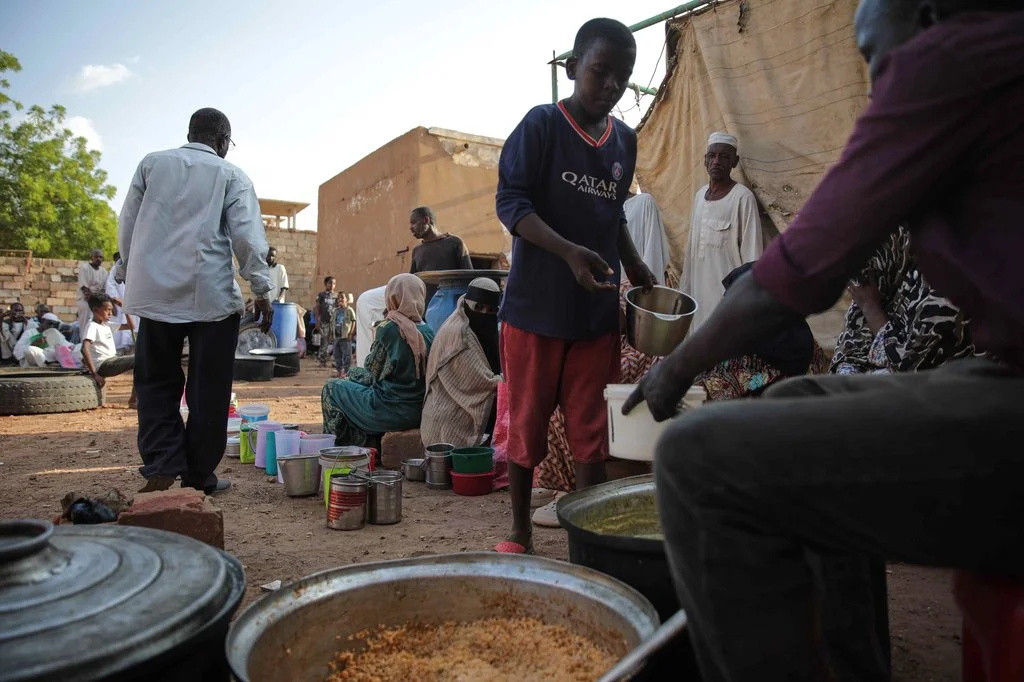
A boy holds a food container while waiting to receive donated food at a community kitchen in Khartoum, Sudan, Wednesday, Sept. 23, 2026. (AP Photo/Marwan Ali)
Sudan has endured repeated periods of famine and severe food insecurity throughout its history, often associated with drought and environmental shocks. However, the current hunger crisis has a different origin: war. In April 2023, fighting erupted between the Sudanese Armed Forces (SAF) and the paramilitary Rapid Support Forces (RSF), plunging the country into a civil war.
Even before the conflict, Sudan was already facing a severe humanitarian crisis with approximately 15.8 million people in need of humanitarian assistance. Since then, millions of people have been displaced, agricultural production disrupted, and access to food and assistance severely restricted. Now, the scale of the emergency has drastically grown, with an estimated 14 million people displaced and 33.7 million people facing a deep humanitarian crisis.
With approximately 200 million acres of arable land and abundant water resources from the Nile, the country possesses many of the natural resources necessary to sustain its population. However, this potential has been weakened by decades of underinvestment in agriculture, weak policies, and limited access to modern farming techniques. The ongoing war has worsened these challenges, displacing farmers from their lands and restricting access to essential resources.
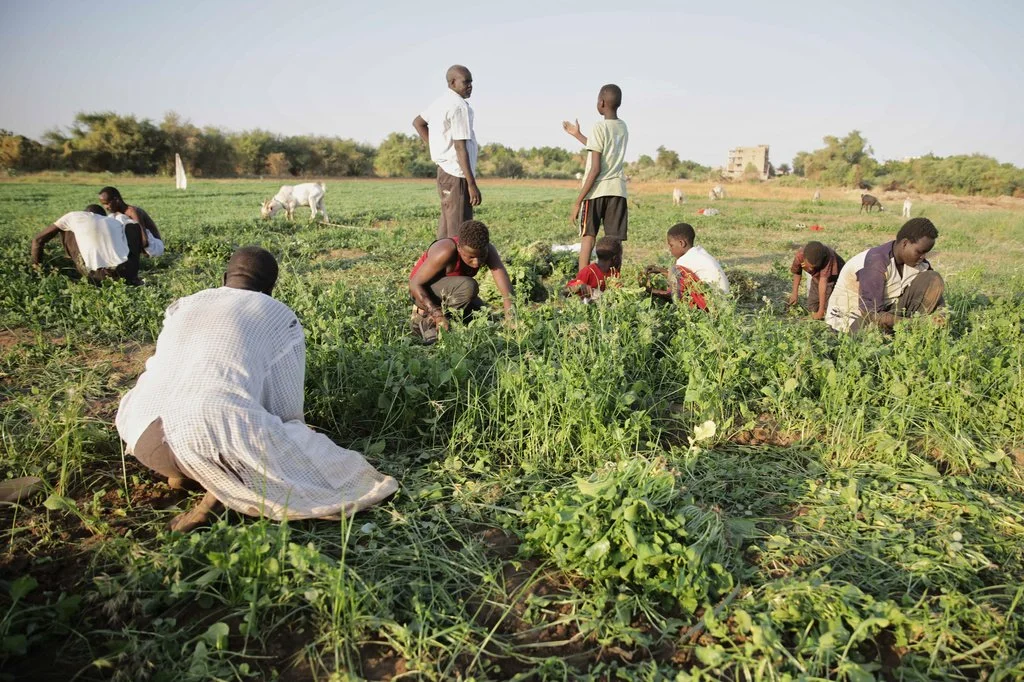
Farmers harvest arugula crop in Khartoum, Sudan, Monday, Oct. 5, 2026. (AP Photo/Marwan Ali)
Known as the country’s “breadbasket,” Sudan’s fertile plains, once characterized by rich vegetation and productive agricultural land, have been devastated by the war. The destruction of the Gezira Scheme, one of the world’s largest irrigation projects, has led to massive food shortages across the country. Historically producing half of the country’s wheat, wheat production in Gezira has plummeted by 58 percent during the 2023-2024 season. The European Union Agency for Asylum documented RSF fighters diverting irrigation channels and flooding agricultural lands. World Food Programme warehouses in Gezira State were looted in 2023, with food supplies sufficient to feed 1.5 million people for a month stolen.
Prices for transportation and essential goods have skyrocketed, quadrupling the prices before the war. The United Nations Development Programme (UNDP) estimated a loss of $6.4bn in GDP in 2023 alone, while the economy shrank by more than 40 percent. The conflict has contributed to the collapse of the Sudanese pound, driven by declining government revenues, damage to the banking system, and the looting and smuggling of valuable resources, including gold and gum arabic. The depreciation of the Sudanese pound has worsened inflation, increasing the cost of essential goods and contributing to unaffordable living conditions for millions of people.
A Sudanese aid worker and economics researcher, Maryan Ibrahim, noted, “Humanitarian assistance alone cannot solve Sudan’s economic crisis. A sustainable response requires humanitarian access, support for local markets and agriculture, and the restoration of banking and public services.”
Sudan’s famine crisis is not driven by domestic conflict alone. Wider geopolitical tensions such as the closure of the Strait of Hormuz this February have greatly contributed to the country’s deteriorating humanitarian condition. As Sudan relies on fertiliser imports from Gulf countries, the closure has driven up the costs, making fertilisers unaffordable for farmers. This threatens agricultural productivity and deepens food insecurity in a country already devastated by its ongoing civil war.
Many international organizations have released statements warning of the growing risk of famine in Sudan, urging humanitarian operations and access to food-insecure communities. The United Nations Human Rights Office of the High Commissioner (OHCHR) has emphasized the need for a stronger framework for accountability and prevention, while the World Food Programme (WFP) calls for unimpeded and sustained humanitarian access to prevent further loss of life.