
“Save Phuket”: Israel's Foreign Tourism Presence in Thailand
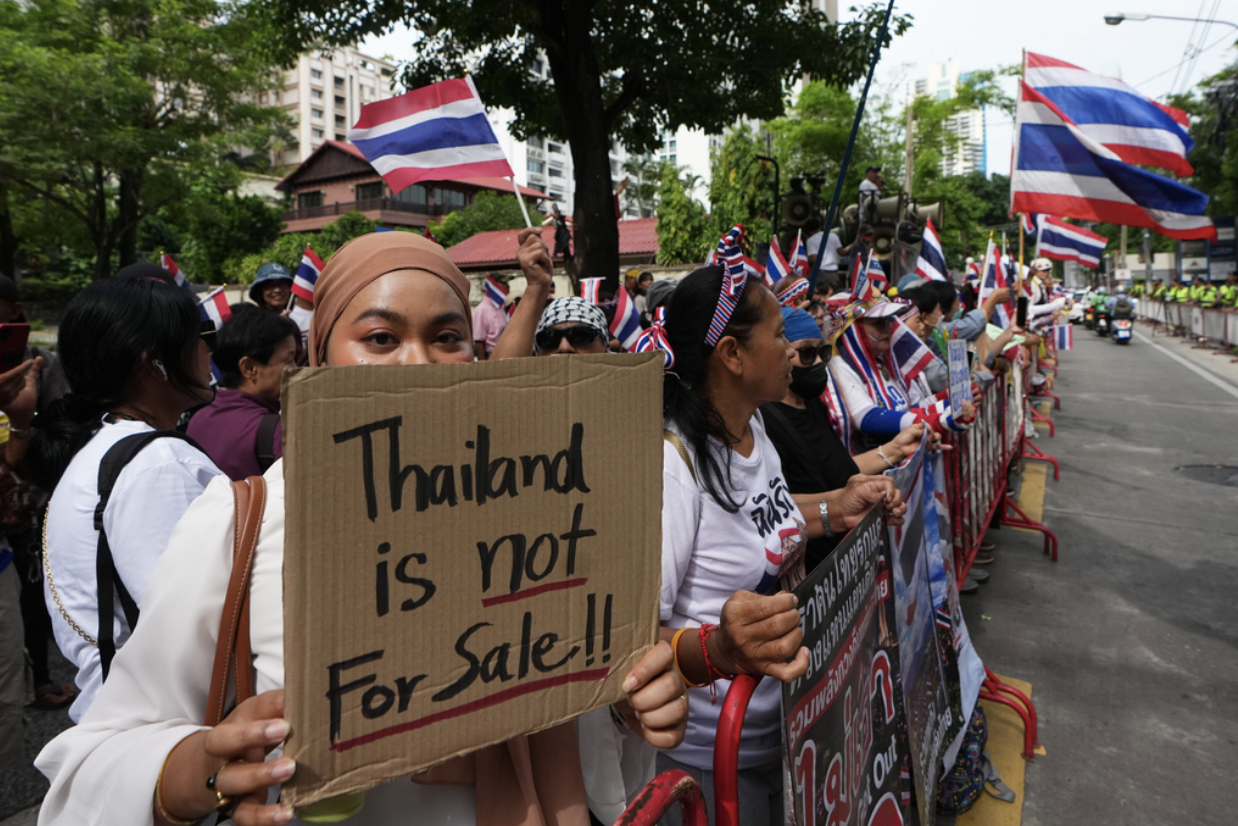
Protesters holding signs attend a demonstration demanding an end to alleged land-grabbing by foreigners, in front of Israeli Embassy in Bangkok, Thailand, Thursday, Sept. 10, 2026. (AP Photo/Sakchai Lalit)
Since 2022, opposition to Israeli tourists in Thailand has gained momentum. Tourism is a vital part of Thailand’s economy, making up roughly 12% of its GDP and creating a heavy dependence on international visitors. In 2025, Thailand ranked eighth among the world’s most visited countries and was the most visited country in Southeast Asia, welcoming 32.97 million tourists.
In recent years, there have been growing numbers of Israeli tourists in Thailand. In the first eight months of 2026, 277,000 Israelis traveled to Thailand, marking a 7% increase from the previous year and following a 45% surge in 2024. Israeli tourists contributed $1.2 billion to Thailand’s $48 billion tourist industry. These figures have sparked debate over the impact Israelis have on local Thai communities.
While tourists often flock to Bangkok and Chiang Mai, Israeli tourists have begun to explore additional destinations including Phuket, Koh Phangan, and Pai. Their expanded outreach is contributing to overcrowding in already heavily visited areas. However, some residents feel that certain attitudes toward Thai culture and customs are becoming increasingly widespread.
Kreng jai is a significant Thai cultural concept that emphasizes consideration, deference, and reluctance to impose. Further, the Asia News Network illustrates, “It’s more than just being polite—it’s a mindset, a way of thinking that reflects a desire not to inconvenience or embarrass others”. To foreigners, the concept can be misrepresented as shyness or passivity, understating its importance.
Some Thai residents have expressed frustration with what they perceive as certain Israeli tourists' disregard for kreng jai. Reported behaviors include aggressive haggling, inappropriate clothing, loud socializing at night, refusal to pay restaurant bills, and seemingly aggressive gestures. As frustration builds within Thailand's largely non-confrontational culture, some residents feel they have reached a breaking point. The Israeli Times spoke to an Israeli man residing in Pai stating, “Then what happens is that at some point they can’t take any more and it explodes”.
Tensions continue to grow amongst Thai locals and Israeli tourists, generating two diverging perspectives. The question arises: why are Israelis so drawn to Thailand?
Israel enforces mandatory military conscription for citizens, making Thailand an attractive destination for many young Israelis who have completed their military service.Thailand is known for its beaches, food, nightlife, and culture, offering young Israelis an environment to decompress. Additionally, Thailand's reputation for hospitality and historically limited anti-Israel and antisemitic sentiment may contribute to its appeal. Both countries have a cordial history, making these tensions a potential harm to their relationship. Thai Foreign Minister Sihasak Phuangketkeow and Israel’s Ambassador to Thailand, Alona Fischer-Kamm, met in September to discuss rising tensions. “If we do not do anything to this matter, it will affect the relations between two countries”.
Thai residents have varying perspectives, originating from direct encounters or awareness of alleged incidents. Some residents object to the behavior of individual tourists rather than their nationality, emphasizing that all visitors should respect local customs and cultural traditions. A member of the Pai Tourist Police stated, “This issue isn’t exclusive to Israelis; if any group, regardless of where they come from, acts in this manner, it would be equally problematic.” Others are less forgiving, opposing the presence of Israeli tourists altogether. Rooted in the dismay over Israel-Palestine conflicts. Thailand remains neutral, with the Thai Ministry of Foreign Affairs supporting a two-state solution to coexist.
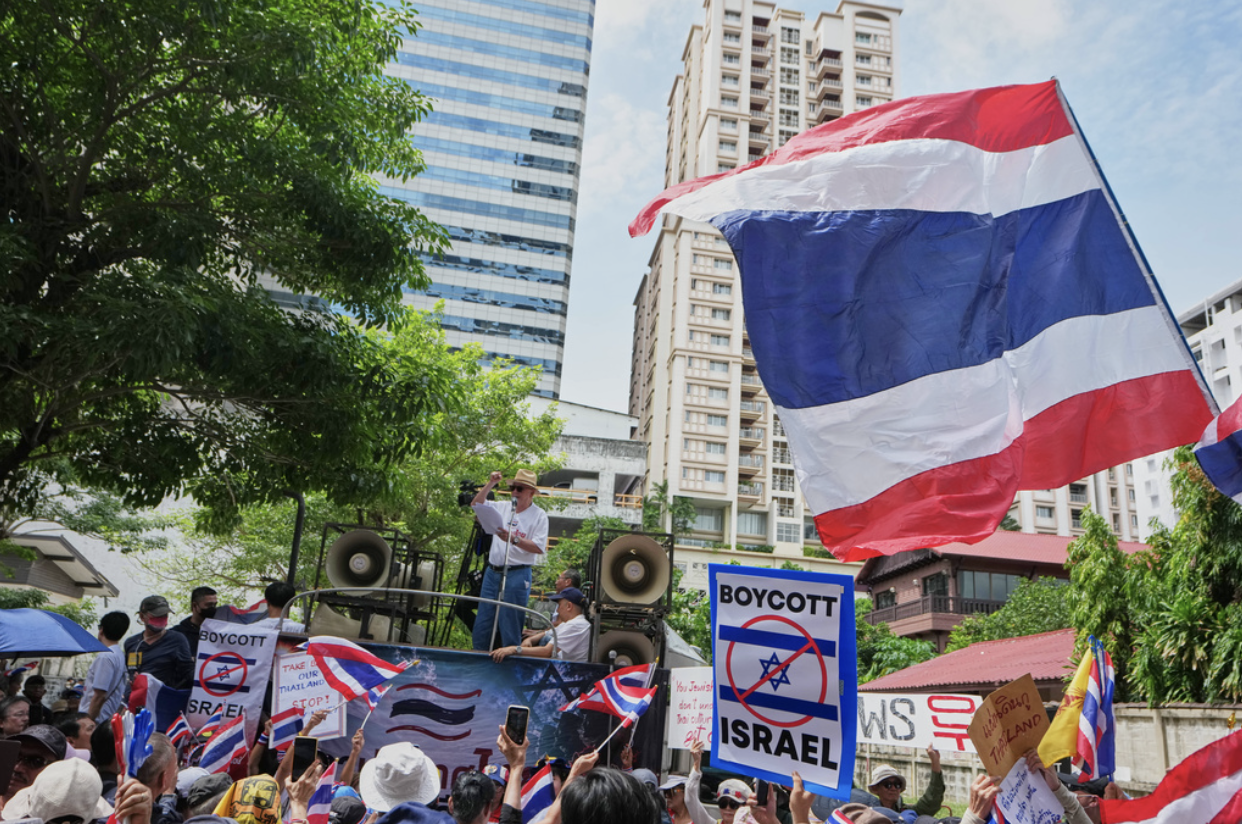
A media owner and political activist, Sondhi Limthongkul speaks to a crowd of followers, demanding an end to alleged land-grabbing by foreigners, in front of Israeli Embassy in Bangkok, Thailand, Thursday, Sept. 10, 2026. (AP Photo/Sakchai Lalit)
From signs displayed in businesses citing “No Israelis” due to previous behavior inside the establishments to the deportation of an Israeli tourist over verbal and physical threats to a Thai resident displaying a Palestinian flag, the number of Israeli tourists applying for visa extensions has increased. The Thailand Immigration Bureau reports that, out of 8,000 foreign tourists, 2,627 were Israeli nationals, reflecting the continued strengthening of Thailand-Israel relations.
The Thai government has since responded to such events. This September, Thai Foreign Minister Sihasak Phuangketkeow spoke to reporters in Bangkok, “Thailand is a country that welcomes tourists, but at the same time, our hospitality doesn’t mean that tourists, regardless of their nationality, can do whatever they want in Thailand.” As conflict continues, the question remains: How can relations between Thai locals and Israeli tourists improve amid tension?