
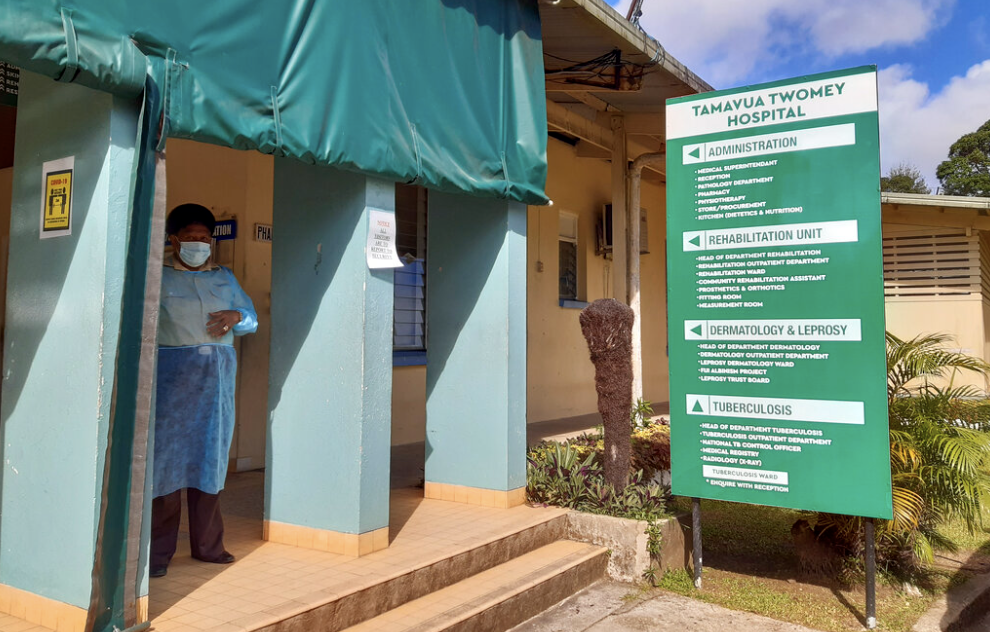
A nurse stands outside Tamara Twomey hospital during a growing coronavirus outbreak, in Suva, Fiji. Only four Pacific islands will be represented by their leaders and most will be forced to send smaller teams in at the forthcoming U.N. climate talks, known as COP26, in Glasgow because of COVID-19 travel restrictions. (AP Photo/Aileen Torres-Bennett)
The Republic of Fiji comprises approximately 300 islands, though its population of nearly 938,000 people inhabits 100 of those islands . In 1970, Fiji gained independence from Britain and the colonial empire formed a heterogeneous population. iTaukei (Indigenous Fijians) comprise 56.8% of the population, Fiji Indians 37.5%, Rotumans 1.2%, and the remaining 4.5% belong to other ethnic groups.
While indigenous Fijians make up slightly over half the population, they account for 90% of HIV cases. In 2021, approximately 1 in 167 people had HIV; current estimates suggest that approximately 1 in 60 adults live with HIV. The 2025 Fiji HIV Surveillance Report recorded, “From 1989 to 2021, Fiji recorded 1,662 cumulative cases. By 2023, this number had risen to 2,077, and by 2024, to 3,660. By the end of 2025, the cumulative number reached 5,676”. Current estimates suggest that between 9,100 and 12,000 people are living with HIV, yet only 39% are aware of their status.
The country’s geographical isolation attracts drug traffickers. Crystal meth has long been readily available in Fiji due to it being a transit stop for the drug trade from South America to Oceania. Consequently, New Zealand and Australia have some of the highest street values of methamphetamine and cocaine. Fiji’s position as an isolated middleman allows drug traffickers to send large-scale shipments through waters with limited oversight, opening the door to ship-to-ship (STS) transfers. The UN labels illicit smuggling as a factor of rising Transnational Organized Crime, as they move to target the Pacific’s transit countries.
However, COVID was a big factor that extended drug use throughout the country. The pandemic severely impacted the islands, as many lost their jobs and were forced to quarantine at home. Fiji’s HIV response team draws another possibility. COVID increasingly enforced global travel regulations and border security, preventing drug shipments from arriving at their final destination. As the drugs remained in Fiji, a new national market emerged primarily devoted to the sale of crystal meth.
Various factors have heightened the country’s drug epidemic in recent years. Fijian culture emphasizes sharing and community gatherings. The communal aspect points to the drugs’ rise, “In Fiji sharing all manner of things is a part of national culture”, stated Dr. Jason Mitchel, head of Fiji’s HIV response taskforce. This practice has prompted users to share needles out of convenience and it allows them to split the cost amongst themselves. “Bluetoothing” is a drug-sharing practice where an individual intravenously injects themself, then withdraws blood and injects it into others. Although needle-syringe programs have emerged across the globe, Fiji’s law enforcement and cultural stigma prevent their formation. Unsafe injecting practices heighten HIV transmission, over 42% of cases arise from drug injection, with an average that one carrier will transmit it to ten people.
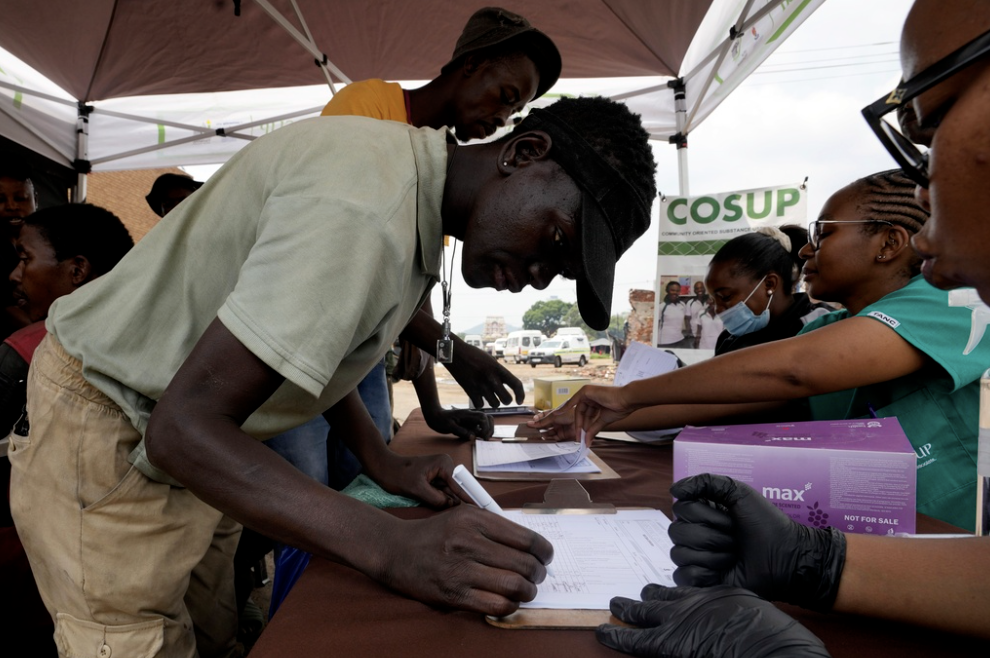
Drug addicts fill out registration forms at a syringe exchange program to receive new sterile syringes, on the outskirts of Pretoria, South Africa, Wednesday, March 5, 2025. (AP Photo/Themba Hadebe)
Sexual encounters vastly contribute to HIV transmission rates in Fiji. UNAIDS reports, “Among cases with a known mode of transmission, over half were linked to sexual transmission”. Despite global efforts towards HIV education and destigmatization, cultural stigma and stereotypes prevail in the nation. The country’s dominant Christian culture and traditional customs have limited HIV education, the 2017 census reports 69.21% of the population are Christian; indigenous Fijians primarily identify as Christian. This coexistence fuels the cycle of stigma around sexual awareness, disproportionately affecting natives. Inadequate sexual education leads some HIV carriers to lack understanding of the disease, how it is transmitted, and treatment options. Fijian HIV activist Christopher Lutukivuya recalls, “Because we’ve been grounded in religious values, that whatever the preacher says about ‘HIV is a sin’ it is seeded in our heart”.
Stigma further affects the ability to get treatment, as many hide their diagnoses from fear of judgment. Lutukivuya chronicles, “He has seen friends turfed out of family homes or made to live in basements, and those who prefer to deny they are sick or take their own lives rather than admit they have HIV”.
Cases of children with HIV are growing, in part through mother-to-child transmission during pregnancy. Mothers often unknowingly contract HIV before or during pregnancy, currently 2 out of 100 pregnant women have HIV. Consequently, babies are born with this chronic disease, increasing the chance of a shorter lifespan. Dr. Jason Mitchell, stated that, “One child under the age of five is dying every month”. Additionally, older children have begun to inject crystal meth, 67% of new cases mainly occur in those aged 15 to 34.
Although mobile testing clinics, foreign aid, and government acceptance are amplifying collective response in Fiji, curbing this epidemic has only just begun. As Fiji’s HIV crisis continues to intensify, devastating communities, sustained intervention remains crucial to slowing transmission.