
India’s Strategic Balancing Act in the Indo-Pacific
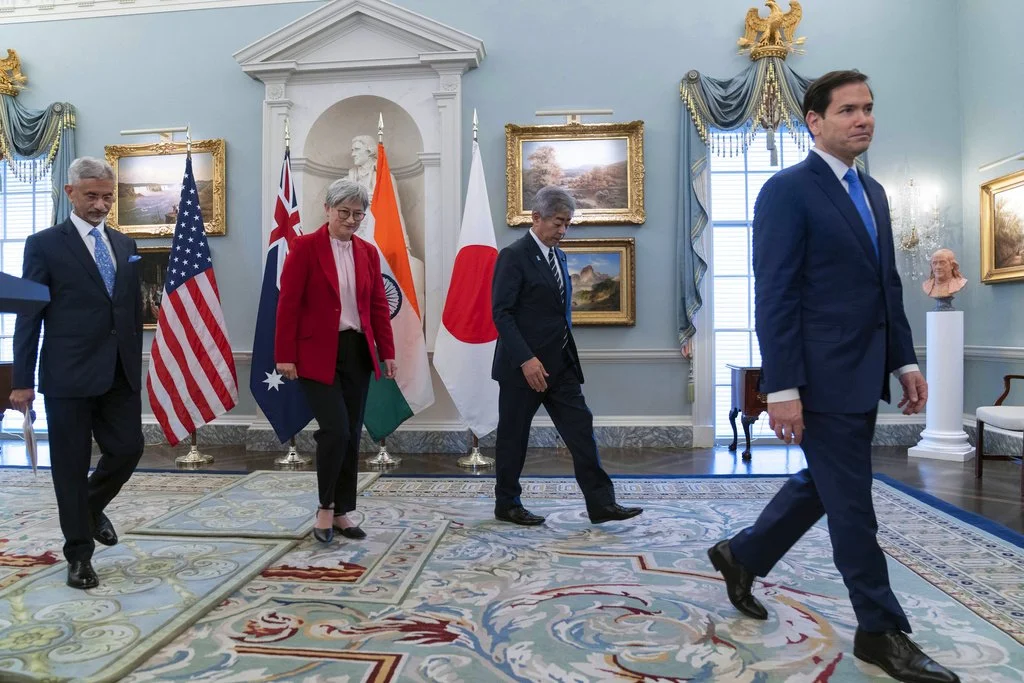
Secretary of State Marco Rubio, right, accompanied from left Indian External Affairs Minister Subrahmanyam Jaishankar, Australian Foreign Minister Penny Wong and Japanese Foreign Minister Iwaya Takeshi leave after speaking to the media during the Indo-Pacific Quad meeting at the State Department in Washington Tuesday, July 1, 2025. (AP Photo/Jose Luis Magana)
India’s long-running broader tensions with China, particularly along the Line of Actual Control (LAC), have become a significant factor in regional security in South Asia. In the new year, conflicts along the Himalayan frontier have prompted New Delhi to bolster both its military posture and its international partnerships. As geopolitical competition intensifies in the Indo-Pacific, India is leveraging its position as a balancing power, helping to improve the multipolar pattern.
The border issue between India and China has been managed for decades, but internal problems increased heavily after the 2020 attacks in eastern Ladakh, leading to the death of numerous soldiers on both sides of the conflict. Moreover, the confrontations marked the most difficult dispute among past border conflicts, illustrating the delicacy of the relationship between the two largest powers in Asia. Since then, both governments have hosted their own diplomatic and military talks aimed at stabilizing the situation, but the underlying conflict remains unresolved.
The continued standoff has pushed India to reexamine its larger security policy. In response, New Delhi has heightened troop deployments in the Himalayan area and invested heavily in border infrastructure and defense modernization. These measures reflect India’s efforts to enhance deterrence and ensure it can respond effectively to future issues along the frontier.
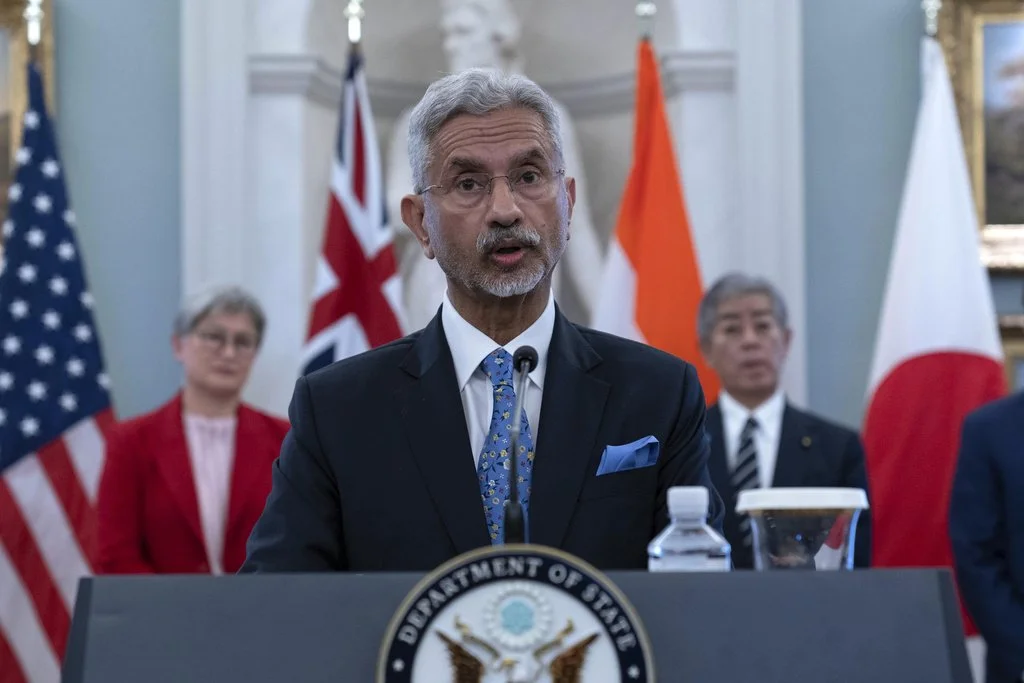
Indian External Affairs Minister Subrahmanyam Jaishankar flanked by from left, Australian Foreign Minister Penny Wong, Japanese Foreign Minister Iwaya Takeshi and Secretary of State Marco Rubio speaks to the media before the Indo-Pacific Quad meeting at the State Department in Washington, Tuesday, July 1, 2025. (AP Photo/Jose Luis Magana)
Simultaneously, India has expanded its partnerships with other countries in response to China’s increasing influence in Asia. One of the most prominent developments is India’s participation in the Quadrilateral Security Dialogue, also known as the Quad, which includes the United States, Japan, and Australia. At the same time, the Quad is not a formal military alliance; it represents an expanding framework for cooperation on issues such as maritime security, technology, and regional stability.
India’s evolving policy also mirrors a wider diplomatic approach often described as “multi-alignment.” Instead of aligning exclusively with a single bloc, India urges maintaining relationships with a broader range of global partners. Analysts note that this strategy leads New Delhi to enhance security collaboration with Western democracies while continuing to involve other powers and regional institutions.
Beyond the land border, maritime security has also become increasingly vital for India. China’s advancing naval presence in the Indian Ocean and its investments in regional infrastructure through the Belt and Road Initiative have raised concerns among policymakers in New Delhi. In response, India has strengthened its naval partnerships with countries in the Indo-Pacific and heightened its own maritime capabilities solely to protect primary sea lanes and regional trade routes.
Altogether, these developments underscore how tensions with China are modifying India’s stance in global politics. Instead of retreating inward, India decided to respond to the crisis by using the LAC as an opportunity to amplify its diplomatic and strategic commitment. By making partnerships long-term, improving strategic autonomy, and reinforcing its military capabilities, India is evolving as a critical proponent in conforming the balance of power through the Indo-Pacific.