
Afghanistan-Pakistan Border Escalation Leaves Civilians Caught in the Crossfire
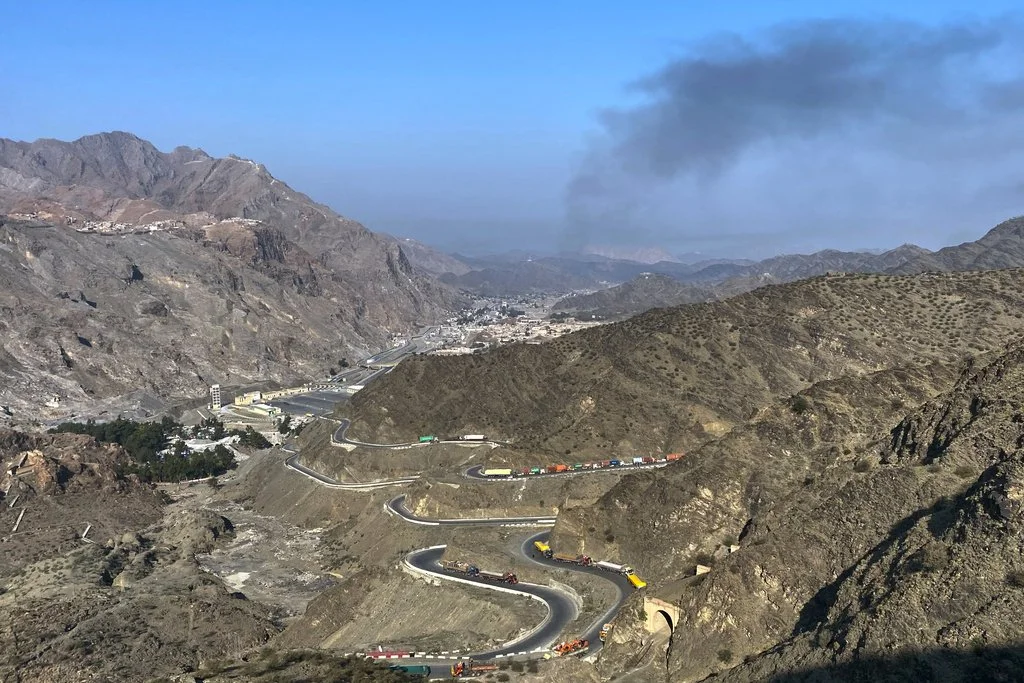
Smoke emits from Afghan side as trucks are parked along roadside following cross-border clashes between Pakistan and Afghan forces, at near Torkham border crossing point, Pakistan, Saturday, Feb. 28, 2026. (AP Photo/Maaz Awan)
Afghanistan and Pakistan have long had tense relations, largely because the Afghan government does not recognize the “Durand Line,” the roughly 2,600-kilometer border drawn in 1893 that runs through ethnic Pashtun areas. The conflict escalated sharply last week when Pakistan reportedly carried out strikes on locations including Kabul, Kandahar and Bagram Air Base, according to analysis from Chatham House. Al Jazeera reported that the neighboring countries are experiencing their “worst fighting in years” after the Taliban struck back against the Pakistani military.
“On Friday [Feb. 27], the relationship between the two countries reached its lowest point in years,” wrote New York Times correspondent Elian Peltier from Islamabad, adding that after Pakistan declared “open war” on the Taliban government, two forces with “wide gaps in weaponry and tactics” now face each other in a confrontation that could “inflict major damage on cities in Afghanistan.”
The border conflict has ignited a humanitarian crisis according to several international organisations. Between 26 February and 2 March 2026, the United Nations Assistance Mission in Afghanistan (UNAMA) recorded at least 146 civilian casualties, including 42 killed and 104 injured. Preliminary reports from the Afghan Ministry of Defense suggest a higher toll, claiming 110 civilians, including 65 women and children, have died since the onset of the latest fighting.
According to the UN’s International Organization for Migration (IOM), military confrontations along the Durand Line have displaced nearly 66,000 people in eastern and southeastern Afghanistan. In Kunar province, secondary displacement has hit families previously uprooted by the 2025 earthquake, forcing many into empty villages with no safe relocation options, as per the IOM.
Al Jazeera reported that the World Food Programme (WFP) was forced to temporarily suspend food distributions and social protection activities in more than 46 districts due to security concerns. This suspension has directly impacted approximately 160,000 people who were already facing “severe food insecurity”.
The International Organisation for Migration also declared that active shelling and airstrikes damaged a transit center in Nangarhar and an emergency hospital at the Torkham border post.
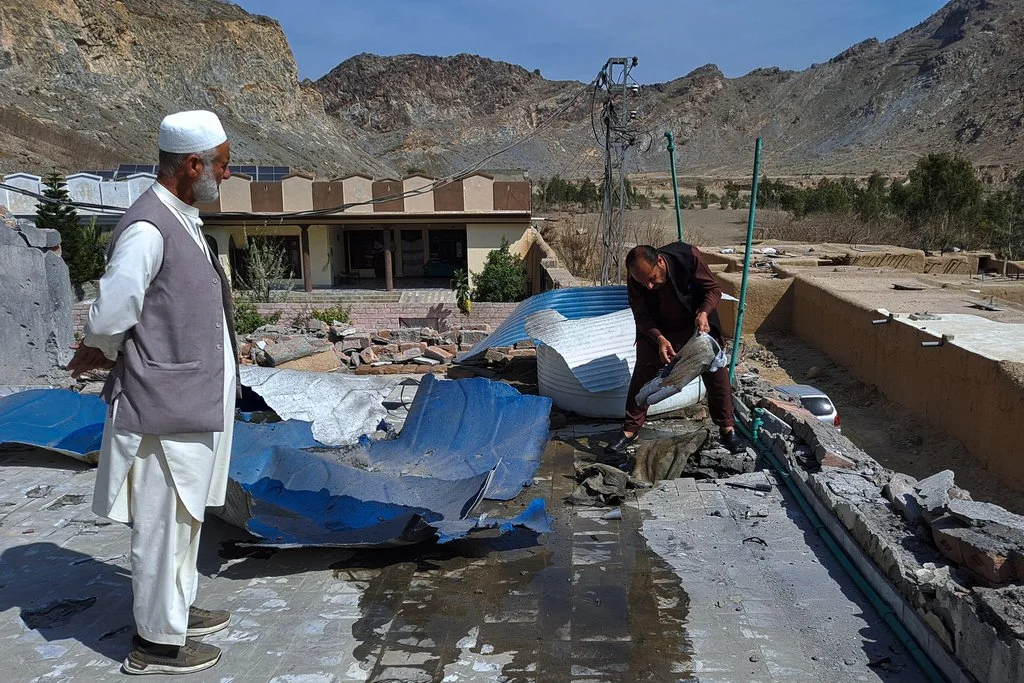
Local residents examine damages to their house due to mortar shell fired by Afghan forces, at a village in Khyber, a district of Pakistan's Khyber Pakhtunkhwa province bordering with Afghanistan, Thursday, March 5, 2026. (AP Photo/S.B. Shah)
Local residents examine damages to their house due to mortar shell fired by Afghan forces, at a village in Khyber, a district of Pakistan's Khyber Pakhtunkhwa province bordering with Afghanistan, Thursday, March 5, 2026. (AP Photo/S.B. Shah)
Beyond the humanitarian crisis, civilians are also experiencing economic strangulation. While cross-border trade accounts for only 0.6 per cent of Pakistani exports, it represents roughly 10 per cent of Afghanistan’s exports, according to a 2026 report by the International Crisis Group. Pakistan’s decision to close border crossings has been described as “disproportionately catastrophic” for landlocked Afghanistan, which relies heavily on these routes for imports of food and medicine. This has caused the cost of essential goods to rise sharply across the country, according to the Danish Refugee Council. Analysts warn that continued clashes could deepen Afghanistan’s humanitarian crisis and further destabilize an already fragile region. With border crossings closed and aid operations disrupted, civilians living along the Durand Line face growing uncertainty as tensions between the two neighbors continue to escalate.