
Trust, Control, and Code: The Restrictions of India and U.S. Tech “Unionship”
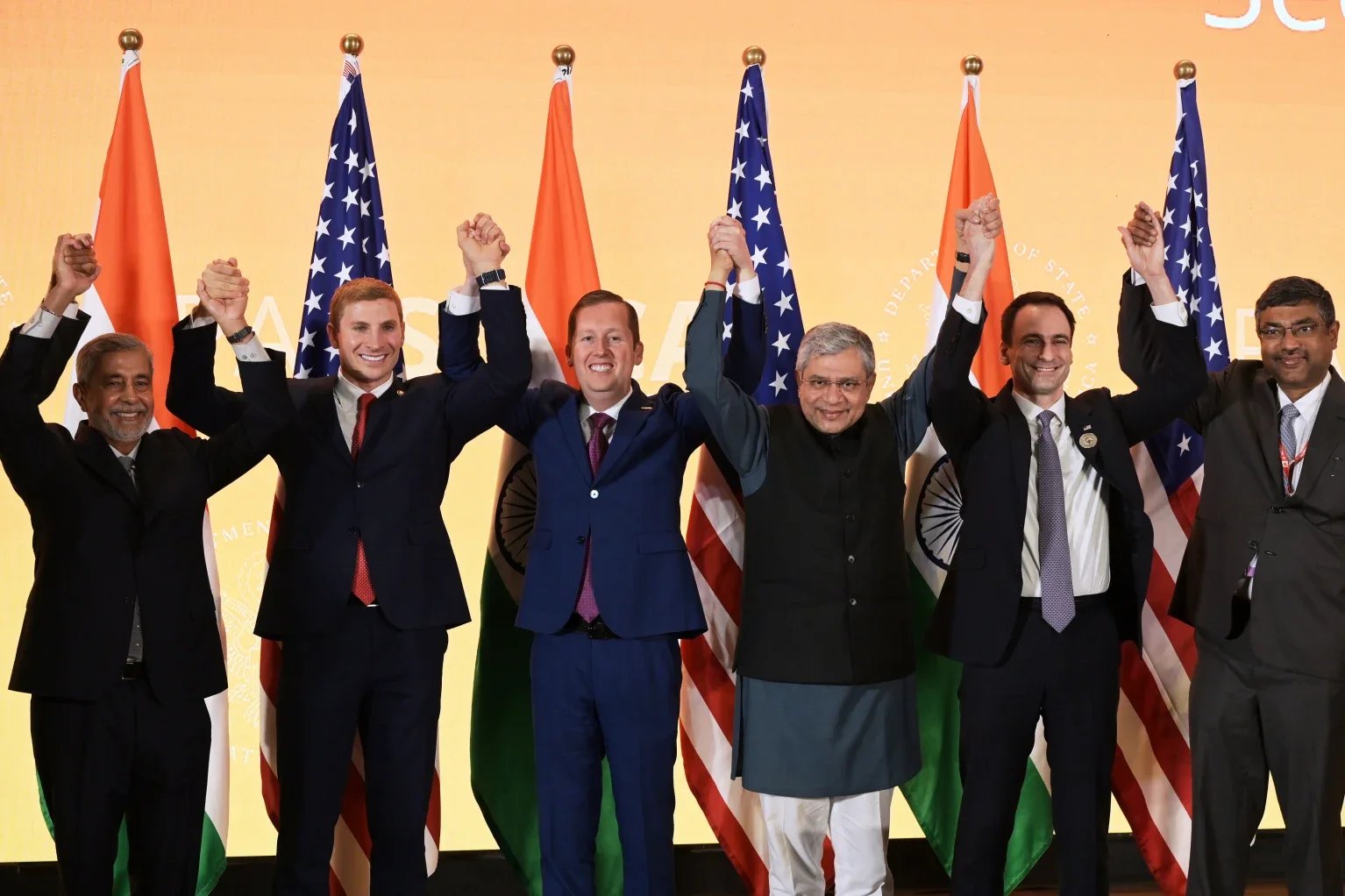
India's IT Minister Ashwini Vaishnaw, third right, poses for a photograph with U.S. Ambassador to India Sergio Gor to his right, U.S. Under Secretary of State for Economic Affairs Jacob Helberg, second left, and other officials after signing an agreement in New Delhi, India, Friday, Feb. 20, 2026. (AP Photo)
In 2026, India and the United States (U.S.) entered what policymakers have described as a “trust but verify” strategic technology partnership, an agreement that mirrors cooperation and steady structural boundaries. At its foundations, the relationship is influenced by a core tension. While the United States and India are increasingly aligned on artificial intelligence (AI), semiconductor supply chains, and defense innovation, U.S. export controls and India’s push for technological independence continue to restrict how far that partnership can develop.
Current conversations between U.S. and Indian officials on AI infrastructure and semiconductor partnership underscore the increasing vitality of this relationship in technology competition internationally. The U.S administration had increasingly viewed India as a key partner in what has been called a wider “Pax Silica” approach, a measure to secure resilient and democratic technology supply chains amid geopolitical tensions. These developments indicate not only growing strategic alignment between the two countries but also a shared effort to co-develop infrastructure through high-level forums such as the U.S.-India Initiative on Critical and Emerging Technology (iCET). This dialogue led to initiatives like mutual semiconductor investment and current bilateral discussions on expanding AI infrastructure and total capacity. Furthermore, there has been a proposal called INDUS-X, which, according to former deputy defense minister of India, Anil Ahuja, “is designed to be an 'Innovation Bridge' to connect U.S. and Indian defense start-ups.” Together, these actions aim to enhance supply chains and influence the development and governance of advanced technologies despite structural constraints.
This partnership is complicated by U.S. export management regimes like the International Traffic in Arms Regulations (ITAR). These regulations are designed to protect sensitive technologies, but in reality, most restrict the transfer of advanced defense and dual-use technologies to allies such as India. These rules also reinforce wider problems around AI governance, data control, and regulatory oversight in cross-border partnerships. As research on AI systems underscores, governments progressively emphasize specifically transparency, reliability, and even risk management when regulating advanced technologies, usually lessening the unrestricted exchange of such technologies. This has created friction in U.S.–India negotiations over technology sharing, particularly ongoing discussions around AI collaboration and semiconductor access.
The Indian government’s response to these constraints has been the renewed push for “Atmanirbhar Bharat,” or self-reliant India. This policy encourages domestic manufacturing, indigenous research, and lowered reliance on technology that is foreign-based. While this aligns with India’s emphasis on strategic sovereignty, it also introduces a paradox: the more India strives for autonomy, the less it may depend on U.S. technology, possibly reducing the very union between the countries that each is trying to reinforce. Concurrently, the U.S. hesitancy to completely liberalize technology transfers heightens India’s incentive to invest in domestic potential.
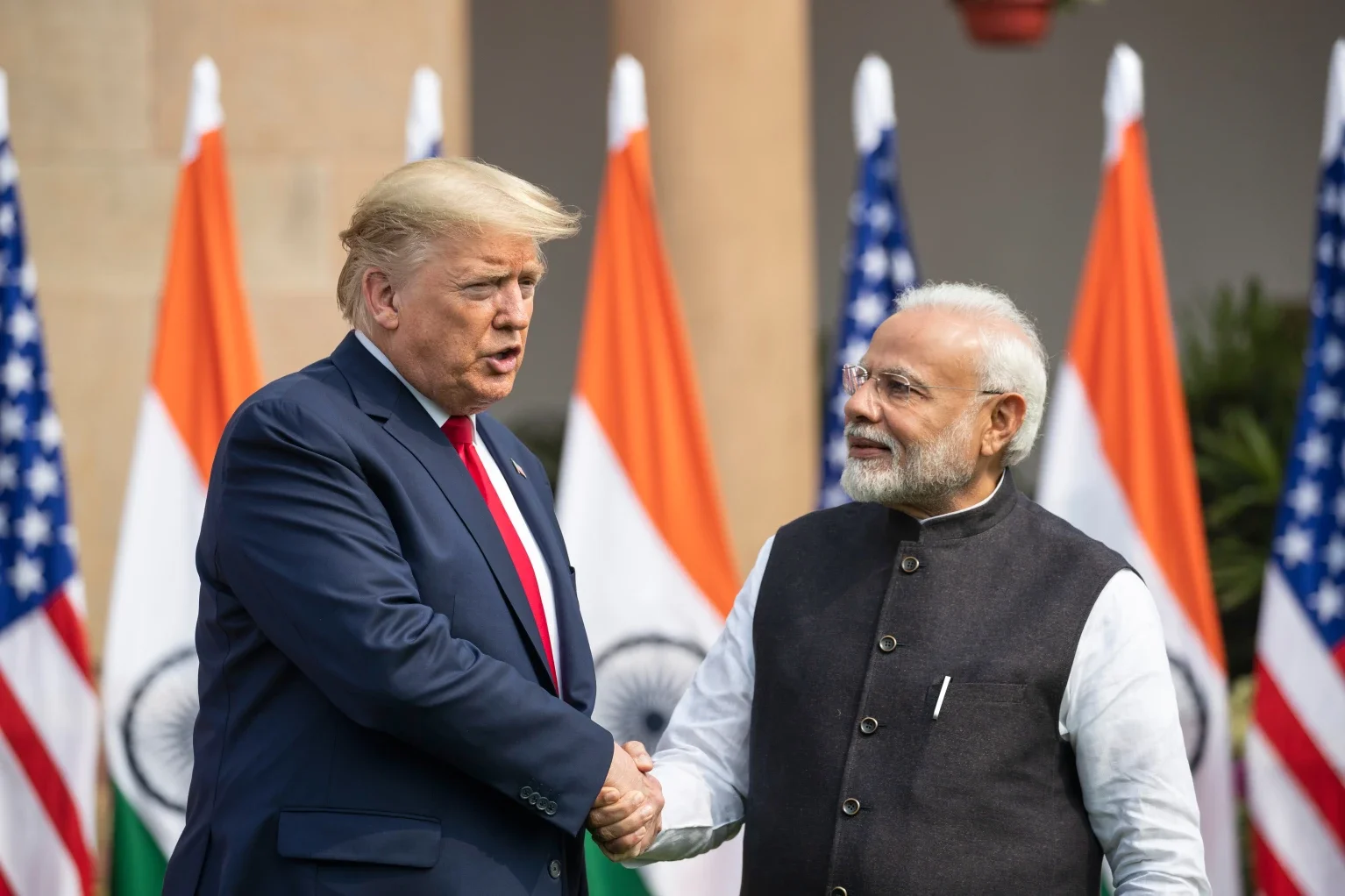
FILE-U.S. President Donald Trump and Indian Prime Minister Narendra Modi shake hands before their meeting at Hyderabad House, Feb. 25, 2020, in New Delhi, India. (AP Photo/Alex Brandon, file)
The February 2026 trade agreement, which aimed to decrease tariffs and simplify economic hurdles, mirrors an attempt to balance these competing dynamics. By lessening trade restrictions, both countries demonstrate a willingness to exacerbate economic connections even as strategic crises prevail. Nonetheless, trade liberalization by itself cannot fix the crucial problem of trust in pivotal technological domains. Export controls remain a primary stoppage, and in the absence of reform or more significant adaptability, they threaten to damage the wider aims of the relationship.
Nonetheless, the partnership stays limited where U.S. regulatory restrictions intersect with India’s drive for domestic production under Atmanirbhar Bharat. Looking to the future, the trajectory of the relationship will depend on whether the United States is more flexible in its restrictions on high-end technology transfers and if India balances its self-reliance agenda with its alliance in vital sectors.