
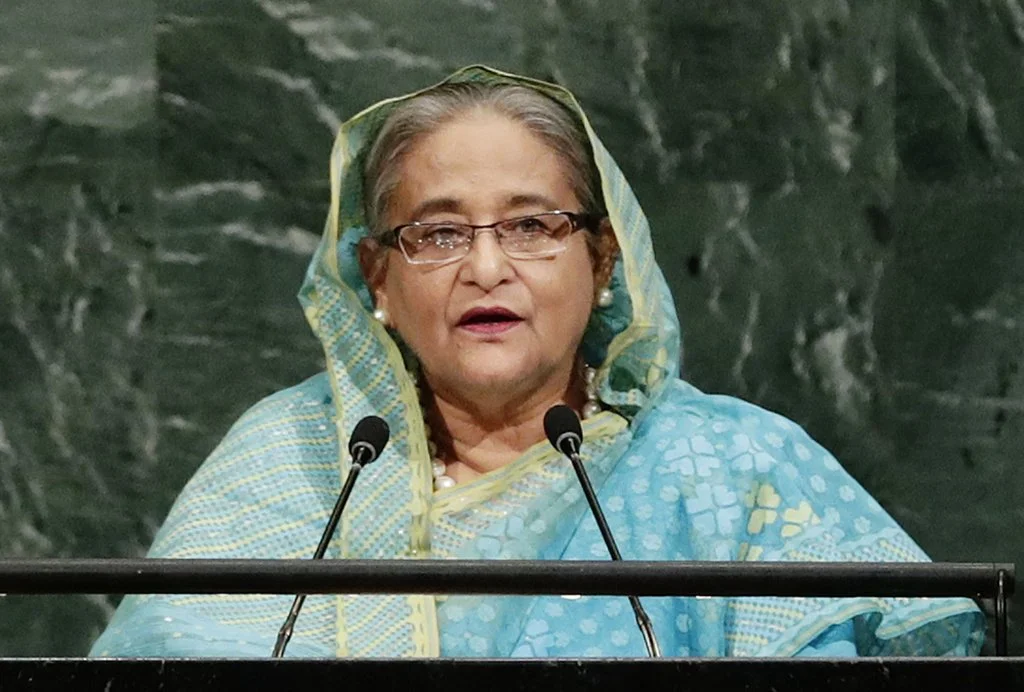
Bangladesh Prime Minister Sheikh Hasina addresses the United Nations General Assembly at the U.N. headquarters, in New York, Sept. 21, 2017. (AP Photo/Frank Franklin II)
In a November remote interview with Agence France-Presse (AFP), Hasina said she was prepared to return to Bangladesh despite the risks to her safety, “I am fully aware of the risks I face if I return,” she stated.
The demonstrations began over a government employment quota system that reserved 30% of civil service positions for descendants of veterans who fought in Bangladesh’s 1971 Liberation War. The protests soon expanded into a broader movement opposing Hasina’s government, which already faced accusations of forced disappearances, killings, and suppression of political opponents and critics. Following a deadly crackdown on demonstrators, protesters marched towards her official residence in Dhaka on August 5, 2024. Hasina subsequently resigned and fled to India, where she has remained since, after more than 15 years as prime minister.
Her announcement comes nearly one year after Bangladesh’s International Crimes Tribunal convicted her of crimes against humanity for her government’s violent suppression of the 2024 demonstrations. The court also sentenced Hasina to death in absentia over her role in the crackdown. A United Nations investigation concluded that up to 1,400 people were killed during the protests and Hasina’s government response between July 1 and August 15, 2024. Because Hasina was not present for the proceedings, human rights organizations raised concerns about the trial’s adherence to fair-trial standards, the verdict’s legitimacy, and the legal process she would face if she returned to Bangladesh. Hasina has repeatedly rejected the tribunal’s legitimacy, claiming the charges are politically motivated. She claims that more than 600 false cases have been filed against her.
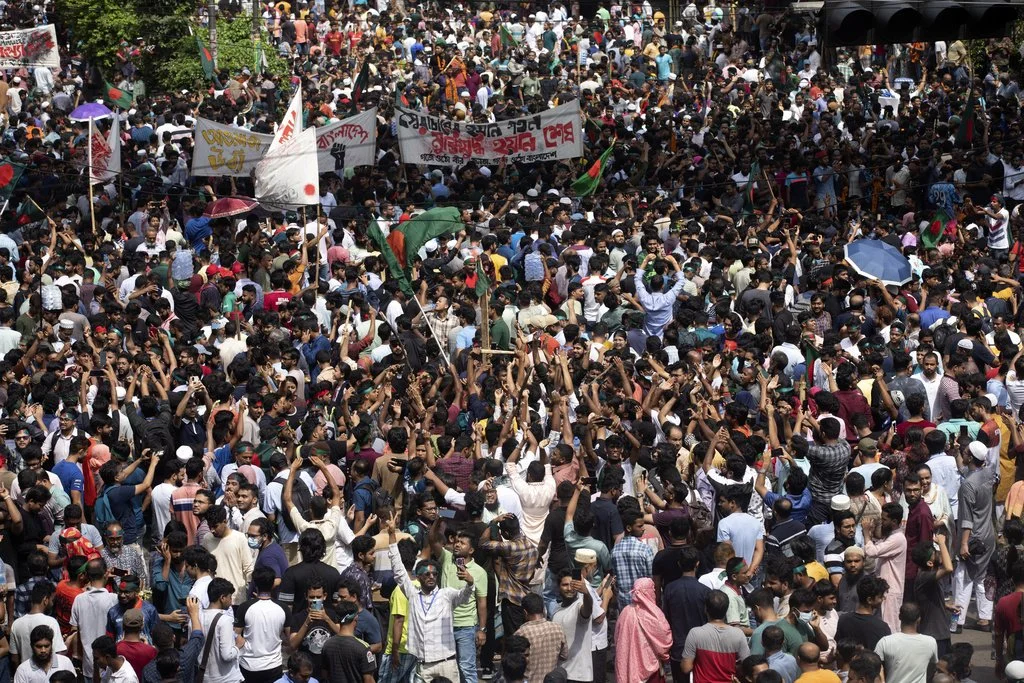
People shout slogans as they take part in a protest against Prime Minister Sheikh Hasina and her government demanding justice for the victims killed in the recent countrywide deadly clashes, in Dhaka, Bangladesh, Monday, Aug. 5, 2024. (AP Photo/Rajib Dhar)
Despite her stated intention to return, the circumstances surrounding it remain uncertain. Her lawyers have tried to request a new Bangladeshi passport and national identity card through the country’s High Commission office in New Delhi, but both requests have been turned down by Bangladeshi authorities. Dhaka has also continued to pursue her extradition under an existing agreement with India, which says that the extradition request remains under legal review. Hasina has dismissed the need for India’s assistance, claiming “why would I ask another country to extradite me, when I have already decided to return voluntarily?”
Following Hasina’s statement about her return, Bangladesh has faced renewed unrest involving supporters of the Awami League party, whose political activities have been banned since May 2025. On November 19, the party’s actions resulted in a nationwide shutdown following a week of protests demanding for Hasina’s return. Bangladeshi police olice reported several crude bomb explosions and vehicle arson attacks across 28 districts in the days preceding November 18th. In response, Bangladesh subsequently deployed paramilitary forces across several districts and arrested more than 100 people who were believed to be links to the Awami League party.
Hasina’s potential return also brings broader political implications. Zillur Rahman, president of the Centre for Governance Studies, suggested that Hasina is seeking to maintain her influence within the Awami League, stating that “she does not want to hand over the party’s leadership to anyone else under any circumstances”. Rahman further argued that Hasina’s refusal to relinquish leadership limits the party’s ability to rebuild its political standing. After the Awami League was barred from the February 2026 general election, the Bangladesh Nationalist Party (BNP) and Prime Minister Tarique Rahman were elected into power.
The current Bangladeshi government has maintained that Hasina must return through the existing extradition agreement with India rather than obtaining a new passport. The State Minister for Foreign Affairs, Humaiun Kobir, rejected her application, stating that “Bangladesh does not give passports to terrorists who kill thousands of people and flee.” He instead urged Hasina to request that India extradite her to Bangladesh to face the tribunal’s verdict. Meanwhile, the International Crimes Tribunal prosecutor Md. Aminul Islam stated that Hasina would have no choice but to face execution should she return to the country.
Whether Hasina will return to Bangladesh this December remains unclear. Her rejected passport application, pending extradition disputes, outstanding criminal convictions, and general unpopularity are significant hurdles to her wish to return. . Nevertheless, her stated intention has brought renewed attention to the political groups that continue to shape Bangladesh following her removal from office.