
Oceans Saving the Earth from Widespread Drought
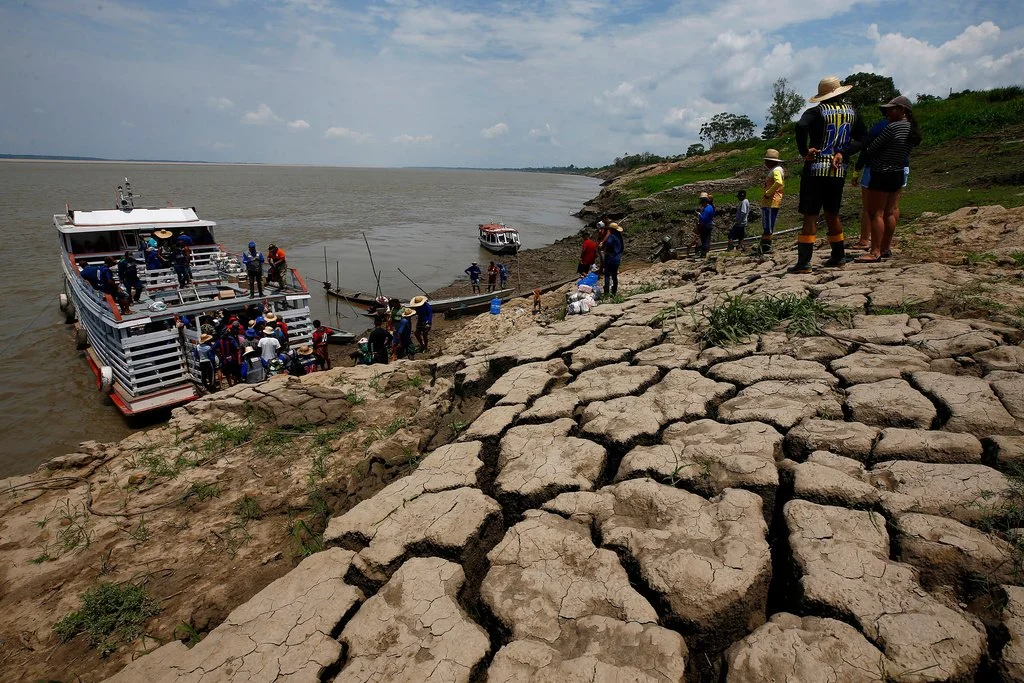
FILE - Residents of a riverside community carry food and containers of drinking water after receiving aid due to the ongoing drought in Careiro da Varzea, Amazonas state, Brazil, Oct. 24, 2023. (AP Photo/Edmar Barros, File)
As the effects of climate change continue to worsen around the world, scientists have been surprised by a specific pattern occurring in droughts. Previously, scientists believed that as much as one-sixth of the planet could be affected by drought at the same time. However, researchers at the Indian Institute of Technology Gandhinagar (IITGN) have determined that droughts tend to affect only 1.8-6.5 percent of the planet at a time. They reached this number by analyzing climate records from 1901 to 2020, utilizing artificial intelligence technologies to assist with data analysis.
The research team at IITGN also considered agricultural data, looking for connections with climate conditions, analyzing crop yields across different regions of the world. They found that even under moderate drought conditions, crop failure rose sharply, reaching above 50 percent for crops such as maize and soybean. If multiple main agricultural regions were experiencing drought at a time, these crop failure rates could be detrimental to the world’s food supply. However, IITGN researchers found that climate processes, such as changes in the sea surface temperatures of the Pacific Ocean, work to limit this spread and shield us from these severe risks.
An important phenomenon in these sea temperatures is the El Niño and La Niña Oscillations. During the El Niño phase, warm water is pushed East across the Pacific Ocean towards the west coast of the Americas. This is a result of tradewinds weakening, which usually push warm water towards Asia during the La Niña phase. The warm water of El Niño pushes the Pacific jet stream south in the Americas, causing North America and Canada to become drier, while the US Gulf Coast region becomes wetter. During the La Niña phase, this process is flipped, as North America and Canada moisten. While the El Niño and La Niña phases don’t occur on set schedules, they contribute to a diversity of humidity across the Earth, allowing for some areas to remain wet as others experience droughts.
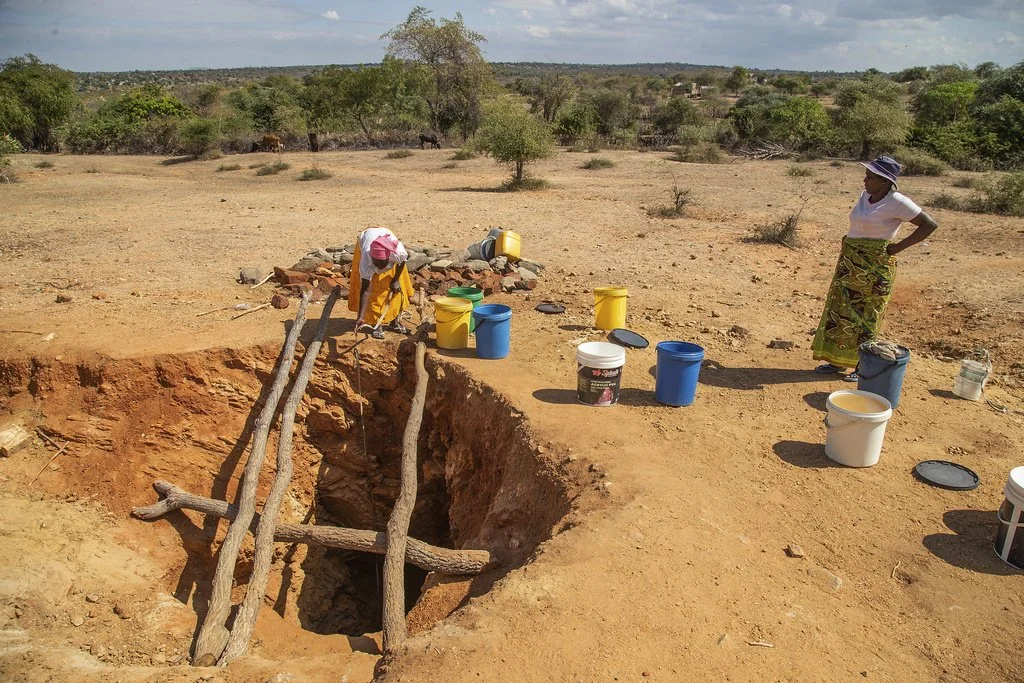
Villagers fetch water from a makeshift borehole in Mudzi, Zimbabwe, Tuesday, July 2, 2024. as the United Nations' food agency says months of drought in southern Africa, triggered by the El Nino weather phenomenon, has had a devastating impact on more than 27 million people and caused the region's worst hunger crisis in decades. (AP Photo/Aaron Ufumeli)
IITGN researchers compared this with the effect of precipitation, which is a main influencer of droughts. They found that, while two-thirds of long-term drought changes arise from changes in rainfall, the other one-third is due to changes in ocean temperatures. Further, these temperature changes are beginning to have a much greater effect in certain regions of the world, such as Europe and Asia, according to Dr. Rohini Kumar of the Helmholtz Centre for Environmental Research.
As ocean temperatures’ effects on drought patterns continue to rise, it’s important to study the factors that control these temperatures. So far, our oceans have absorbed nearly 90 percent of the heat from greenhouse gas emissions, leading to profound changes in ocean temperature patterns. As these emissions increase, Earth’s oceans will continue to absorb the heat, altering its own temperatures. Besides the other detrimental effects this has on the oceans themselves, like acidification and sea level rise, this also makes the El Niño and La Niña events more severe.
Knowing that ocean temperatures are increasingly playing a role in regulating droughts, it becomes much more important to monitor greenhouse gas emissions. While droughts have remained contained, if ocean temperatures continue to rise, we risk altering the El Niño events that influence the location and spread of droughts. Scientists warn that further disruption of ocean temperatures can lead to widespread droughts, causing global food crises. Building off of IITGN’s study, specific research can be done to study these climate change-specific effects in order to inform better policy.