
The Hidden Environmental Cost of the Global AI Data Center Boom
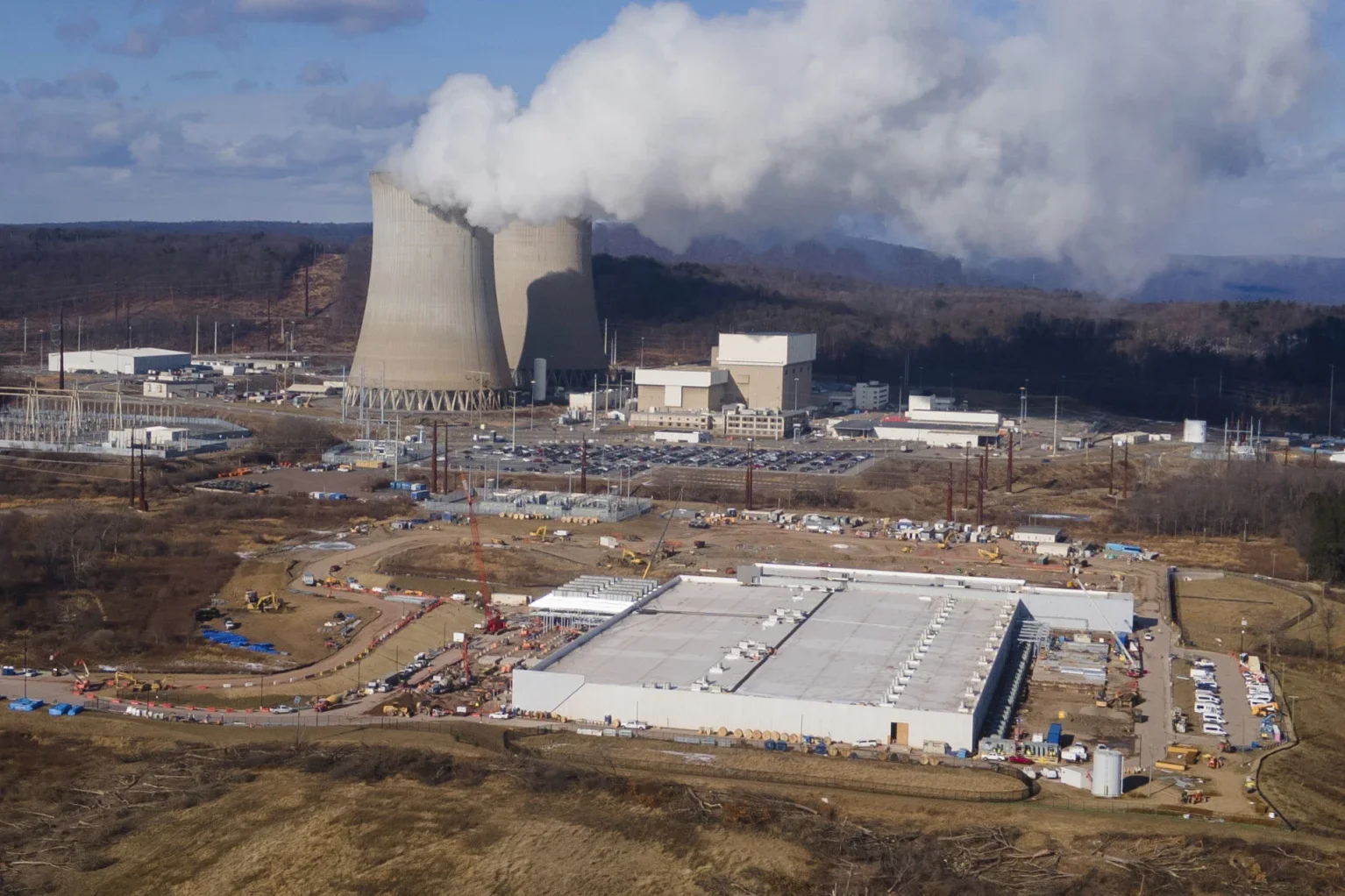
A data center owned by Amazon Web Services, front right, is under construction next to the Susquehanna nuclear power plant in Berwick, Pa., on Jan. 14, 2025AP Photo/Ted Shaffrey
The race to dominate the artificial intelligence market has quickly evolved into a high-stakes infrastructure competition for consuming the most land, energy, and water. As one of the most powerful technologies of the modern era, AI is reshaping industries and economies worldwide. While the promise of AI captures the public interest, the physical realities are creating immense environmental consequences that are shifting the burden onto specific, often vulnerable, communities. Massive data centers lie behind the rapid development of generative AI, requiring vast amounts of raw materials. As governments and technology companies rush to build these infrastructures, the environmental consequences are becoming increasingly difficult to ignore.
Led by tech giants such as Microsoft, Google, Amazon, and Meta, the industry has been launching a building spree of data centers. In 2025 alone, these companies spent roughly $580 billion turning empty fields, deserts, and abandoned factories into “mini cities” of data centers. Analysts estimate that by 2030, the industry could require around $3 trillion in global investments, marking one of the largest infrastructure buildouts in modern history.
These facilities require enormous amounts of computing power that can only be provided by large, energy-intensive server clusters housed in hyperscale data centers. In 2024, data centers accounted for about 1.5 percent of global electricity consumption and, as demand is expected to grow significantly in the coming decade, this percentage is predicted to increase exponentially. In the US alone, data centers consumed 4.4 percent of total electricity in 2023, and federal projections suggest that number could rise to be between 6.7 and 12 percent by 2028. This surge in demand is forcing energy providers and technology companies to rapidly expand power generation and grid capacity.
Electricity is only part of the environmental consequences, however, as AI data centers also consume enormous quantities of water. Due to the large amounts of heat generated by AI servers, most facilities rely on water-based cooling systems to prevent overheating. To cool a single AI model, up to 2 liters of water per kilowatt-hour of electricity could be required. Some individual data centers may use more than 500,000 gallons of water daily, while larger AI training facilities can require millions of gallons per day.

An Amazon Web Services data center, painted to blend into the landscape, is seen on Thursday, Aug. 22, 2024, in Boardman, Ore. (AP Photo/Jenny Kane)
However, the burdens of these demands are not evenly distributed. In the US, the build-out is rapidly pushing into rural areas where water is already a point of concern. In Newton County, Georgia, after META broke ground on a $750 million data center, local residents experienced dry wells and skyrocketing utility bills. The county is now on track to be in a water deficit by 2030, and water rates are set to increase by 33 percent over the next 2 years. Similar tensions have emerged in other parts of the US, including Texas, Arizona, Colorado, California, and Louisiana.
The carbon footprint of AI data centers has also become a growing concern due to their heavy reliance on fossil fuels. In the United States, more than 40 percent of these infrastructures are run on natural gas, as compared to renewable energy, nuclear energy, or coal. As demand for computing continues to rise, researchers estimate these centers to emit between 24 to 44 million metric tons of carbon dioxide annually by 2030, which is equivalent to adding up to 10 million cars to American roads.
Globally, the environmental pressures associated with AI are even more evident. In Ireland, the facilities already consume more than 35 percent of the country’s electricity. Indian data center hubs in Hyderabad and Pune, areas projected to face critical water shortages, are being expanded by Amazon and Microsoft. In Chile, Google was forced to abandon plans for a center due to environmental protests over aquifer depletion.
These patterns reveal a broader trend: data center construction is often concentrated in regions with access to inexpensive land, energy, and/or labor. While North America and Europe currently host many hyperscale data centers, rapid growth is beginning to occur across the Asia-Pacific, Latin America, and the Gulf, as governments compete to attract AI investment. Gulf countries such as Saudi Arabia and the United Arab Emirates are investing billions to become global AI hubs, citing their abundant land and cheap electricity as incentives.
The demand for electricity, land, and energy is so intense that companies are beginning to take energy generation into their own hands. META plans to restart shuttered nuclear plants, and China plans to launch solar-powered data center satellites in space. Despite the results, the intentions behind this rapid reshaping of the American energy landscape are “driven less by climate idealism than by the sheer electricity demand of AI.” Supporters argue that space-based facilities could generate more solar power and reduce the environmental strain on the planet's resources.
Despite these strategies, environmental experts warn that the rapid expansion could outpace efforts to make it sustainable. Building and operating data centers requires large quantities of raw materials that require environmentally destructive mining and generate significant electronic waste, including hazardous materials such as mercury and lead.
As governments and technology companies race to secure their place in the emerging AI economy, the environmental costs of powering this digital revolution remain neglected and unevenly distributed. The challenge for policymakers and industry leaders will be balancing technological progress, economic growth, and geopolitical advantages with environmental responsibilities. Without stronger safeguards and regulations, the invisible backbone of artificial intelligence may cause irreversible environmental damage.