
White House Moves to Secure Glyphosate and Phosphorus as Strategic Materials

The giant draglines in phosphate mining near Mulberry, Fla., reshape the landscape as they dredge up phosphate rock to use in the production of fertilizer. This dragline, shown Aug. 23, 1995, is operated by IMC-Agrico, the biggest of several phosphate mining companies in the area known as Bone Valley. (AP Photo/Chris O'Meara, File)
While herbicides and fertilizer ingredients rarely appear in national security policy, a Feb. 18 executive order from the White House suggests that they now belong there. The directive places glyphosate-based herbicides and elemental phosphorus under the Defense Production Act framework, directing federal agencies to secure reliable domestic supplies of both materials. According to a White House fact sheet outlining the policy’s national security rationale, officials argue that disruptions could threaten both military readiness and the US food system.
Glyphosate is widely used in US agriculture as a weed-control chemical applied across millions of acres of farmland. Elemental phosphorus receives far less public attention, but it plays a crucial role in fertilizer production and appears in a variety of industrial and defense-related applications. Addressing both substances in one directive signals the administration’s view that agricultural inputs and defense manufacturing now depend on overlapping supply chains.
The order instructs federal agencies to use authorities granted under the Defense Production Act, a law developed during the Cold War that allows the federal government to direct industrial capacity toward materials deemed necessary for national defense. The administration says the goal is to prioritize domestic production of the chemicals and reduce vulnerabilities in supply chains that support both agriculture and defense manufacturing, as first reported in the coverage of the policy announcement.
Over the past several decades, large portions of global glyphosate production have moved overseas, particularly to China. China plays a major role in processing phosphate materials used in fertilizers and other chemical products, raising concerns in Washington about reliance on foreign suppliers for inputs that underpin both agriculture and industry.
Elemental phosphorus sits at the center of several of those supply chains, as it is used to produce phosphate fertilizers that support global crop production. However, phosphorus compounds also appear in batteries, semiconductor materials, and certain military technologies such as smoke munitions and pyrotechnic systems. Disruptions to phosphorus processing could ripple across sectors, ranging from farming to defense manufacturing.
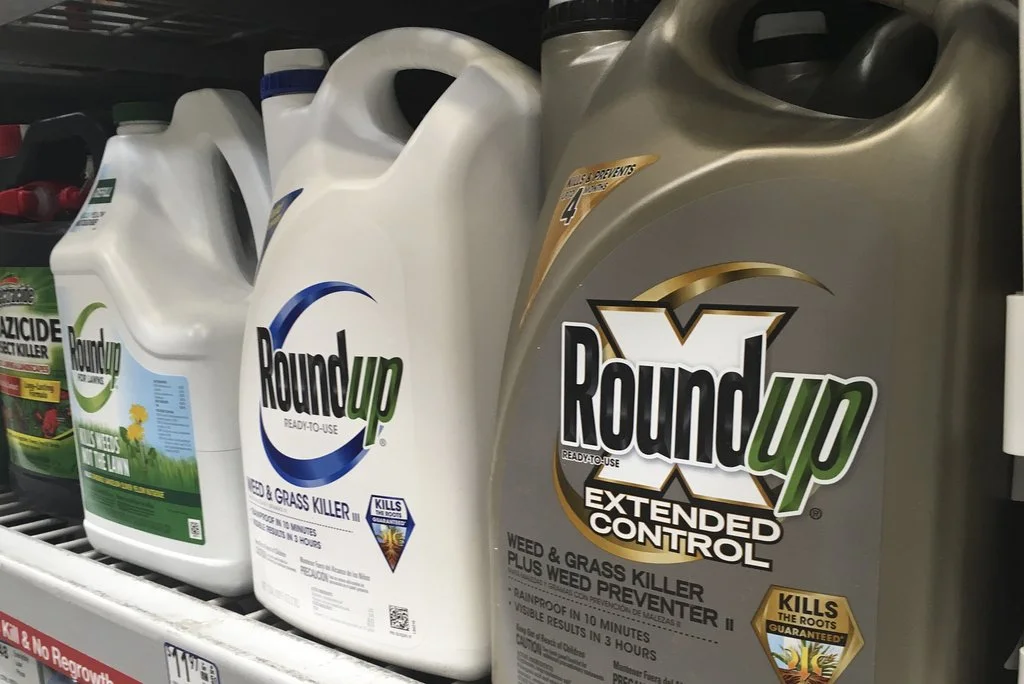
In this Feb. 24, 2019, file photo, containers of Roundup are displayed on a store shelf in San Francisco. The Bayer Corporation has spent more than $10 billion to settle lawsuits that claim the popular weed killer Roundup causes cancer. But a single verdict in Philadelphia this year has topped $2 billion and thousands of cases are still to come. Bayer calls the recent verdict "excessive" and insists Roundup is safe. However, it has reformulated the consumer version to remove a pesticide called glyphosate. (AP Photo/Haven Daley, File)
The executive order also arrives amid renewed political debate over glyphosate itself. The herbicide has been the focus of years of environmental and public health disputes, including thousands of lawsuits alleging that glyphosate exposure causes cancer. Bayer, which manufactures Roundup, has consistently disputed those claims, and regulatory agencies have reached differing conclusions about the chemical’s potential health risks. The issue has also drawn attention from activists aligned with the “Make America Healthy Again” movement, which has raised concerns about pesticides and other food-related chemicals, pushing for greater scrutiny of potential health risks.
The policy could also influence those legal battles. According to reporting on the policy’s implications for chemical manufacturers, some industry analysts note that the executive order encourages domestic production of glyphosate and its precursor chemicals, and could affect regulatory and liability debates surrounding the herbicide.
Environmental advocates have criticized the move, arguing that placing glyphosate production under a national security framework risks sidelining ongoing health and ecological concerns. Several groups say the order could weaken accountability for chemical producers and shift attention away from regulatory oversight, as reflected in the environmental backlash to the order.
Supporters of the policy, however, say it reflects a broader reality: modern national security increasingly depends on economic infrastructure that extends far beyond traditional defense industries. The directive, therefore, shows a wider shift in how policymakers think about strategic materials. In recent years, Washington has moved to secure supply chains for semiconductors, rare earth minerals, and battery components. The new order suggests that agricultural chemicals may now be entering that same category.
If that trend continues, the chemicals behind modern agriculture may increasingly be treated as strategic materials. That shift could exacerbate a growing tension in US politics, where national security arguments for securing chemical supply chains now intersect with rising political concern about the health risks associated with pesticides and other agricultural chemicals.