
Japan's Nuclear Restart Push Hit by Hamaoka Seismic Data Scandal
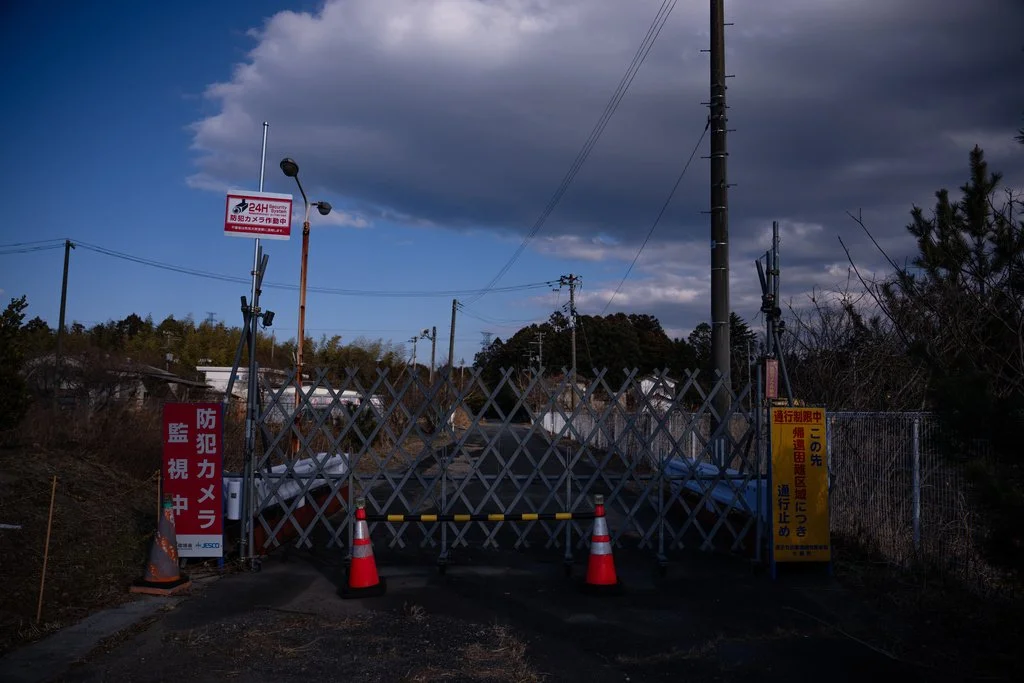
A fence blocks access to a restricted area designated as a 'difficult-to-return-zone' following the 2011 Fukushima Daiichi nuclear disaster in the coastal area of Fukushima prefecture, Friday, Feb. 13, 2026. (AP Photo/Louise Delmotte)
Chubu Electric Power Co. withdrew applications to restart two nuclear reactors at its Hamaoka plant after an outside panel found years of manipulated earthquake safety data. The scandal led President Kingo Hayashi and Chairperson Satoru Katsuno to step down Sept. 30.
Chubu Electric is Japan's third-largest utility, and its only nuclear plant is Hamaoka in Shizuoka Prefecture, southwest of Tokyo. Of Hamaoka’s five reactors, Units 1 and 2 are being decommissioned, while Unit 5 has not applied for a restart. That leaves Units 3 and 4, which began operating respectively in 1987 and 1993, as the two reactors Chubu sought to restart after years out of service. The company applied for Nuclear Regulation Authority safety screenings in 2014 and 2015, a required step toward restarting them. “We view this as an extremely serious matter that could undermine trust in our nuclear power…and potentially shake the very foundations of these operations,” Chubu said.
Seismic data is central to Japan’s post-Fukushima safety review because it helps determine whether a reactor can withstand severe earthquake ground motion. Under NRA requirements, a plant must maintain its important safety functions during such motion, known as the standard seismic motion. The rules treat that benchmark as a prerequisite for seismic safety and require the “reliability and precision” of survey results.
In January, Chubu disclosed that the methods used to select seismic waves for Units 3 and 4 differed from those previously explained to regulators. The NRA suspended Chubu’s screening after a whistleblower tip, and the utility later said concerns about the credibility of the data led it to drop the applications.
The 2011 Fukushima Daiichi disaster exposed major weaknesses in Japan’s nuclear safety system. A magnitude 9.0 earthquake and tsunami disabled power and cooling, causing fuel meltdowns in three of six reactors and a Level 7 accident, the highest international rating. The OECD’s Nuclear Energy Agency says radiation caused no direct health impact, but evacuation and stress affected the well-being of more than 150,000 people and contributed to some early deaths. A parliamentary investigation blamed “regulatory capture.” In 2012, Japan created the Nuclear Regulation Authority, independent of the agency promoting nuclear power. The Nuclear Energy Agency identified institutional failure, rather than technical failure, as the root cause and warned that trust is easily lost and “very difficult to rebuild.”
Recently, Japan has been bringing reactors back under that system. Tokyo Electric Power Co. restarted Unit 6 at Kashiwazaki-Kariwa, the world’s largest nuclear power station by generating capacity, in January, marking the utility’s first reactor restart since Fukushima. Japan shut down all 54 of its commercial reactors after the disaster. Today, 33 are classified as operable, and 15 of those have restarted. Previous efforts to accelerate restarts have fallen short: after Russia’s invasion of Ukraine, the government called for nine units to restart by winter 2022 and seven more by summer 2023, but those targets were not met. Prime Minister Sanae Takaichi’s government has accelerated reactor restarts and backed next-generation nuclear technology amid energy-security concerns and pressure to reduce reliance on fossil fuels.
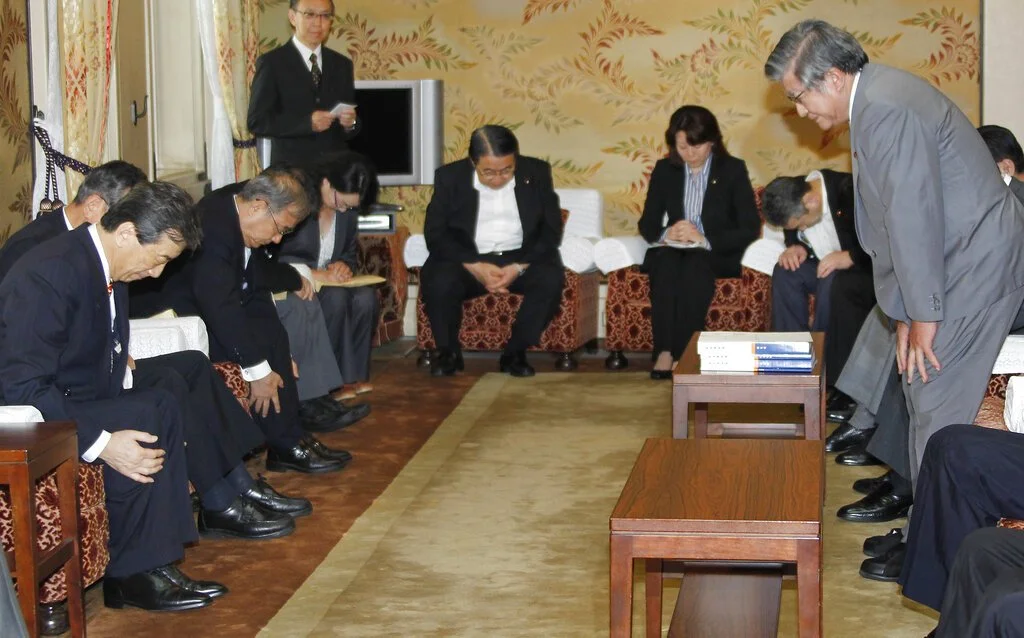
Lower House Chairman Takahiro Yokomichi, right, bows to Kiyoshi Kurokawa, left, chairman of the Fukushima Nuclear Accident Independent Investigation Commission, after receiving the commission's final report at Parliament in Tokyo Thursday, July 5, 2012. The report said the Fukushima disaster was "man-made" because it should have been foreseen and avoided. It urged Parliament to monitor a new regulatory agency and supervise reforms in the crisis management system. It also urged the government to set clear disclosure rules about its relationship with nuclear operators, construct a cross-monitoring system and overhaul laws governing nuclear energy "to meet global standards of safety, public health and welfare." (AP Photo/Koji Sasahara)
Japan’s nuclear push reflects its dependence on imported fuel. In 2025, the Middle East supplied 94 percent of Japan's crude oil imports, with 93 percent coming through the Strait of Hormuz. The Iran war disrupted that route this year, underscoring Japan's exposure to overseas supply shocks as it has begun spending more than 20 trillion yen ($125.8 billion) annually on fossil fuel imports. A government resilience package unveiled Aug. 26 backs pipelines that bypass the strait and aims to replace between two and five nuclear reactors within the next two decades and 11 to 14 within the next three.
Japan’s government has said it will maximize nuclear power use while treating safety as a “fundamental premise.” The Hamaoka case puts those goals side by side: as Japan seeks greater energy security through nuclear power, regulators must also determine whether the evidence used to certify reactors under the post-Fukushima system can be trusted.