
On October 20, 2026, Japan launched an unmanned spacecraft to explore Mars’ moons. The spacecraft is scheduled to return in 2031 with soil samples from Phobos, the larger of Mars’s two moons. The moon dust will return to Earth in a capsule, landing in South Australia’s Woomera desert. Five of the world’s space agencies are involved in this mission, primarily led by the Japan Aerospace Exploration Agency (JAXA). The other space agencies involved include NASA, the French Space Agency, the German Space Agency, and the European Space Agency, all investing millions of dollars.
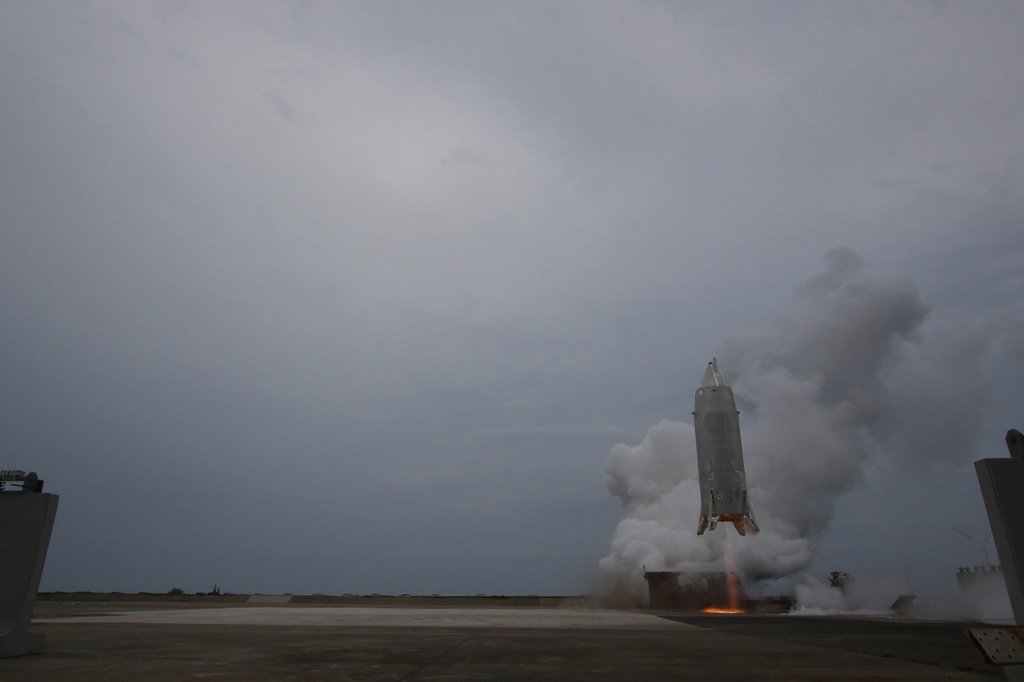
In this photo provided by the Japan Aerospace Exploration Agency (JAXA), the Reusable Vehicle eXperiment, also known as RV-X, is seen landing in a test flight at JAXA's Noshiro Rocket Testing Center in Noshiro, northern Japan, Saturday, July 11, 2026. (AP Photo/JAXA)
This would mark the first time in history that a sample from Mars or its moons is returned to Earth. It would also be the first mission to reach Mars’s moons Phobos and Deimos, as three previous attempts from Russian spacecraft failed. NASA remains the space agency with the most successful Mars landings, totaling nine in the past 50 years; however, none of the samples collected have returned to Earth. While NASA’s 2020 Perseverance Rover mission collected thirty rock samples in hopes of finding signs of ancient life in the Jezero Crater, these samples still lie on Mars, awaiting a return mission. This mission’s most noteworthy finding was from the summer of 2024, when a sample collected contained possible biosignatures. These signs suggest the presence of water and organic material, although further analysis is required. In January 2026, Congress effectively ended the planned sample return program, cutting its funds in the fiscal year budget. This leaves the mission on pause with no plan to bring back the samples that have generated public excitement and been carefully collected over the past five years. Due to this, NASA officials see the Japan mission as an opportunity to finally learn more about Mars, even if indirectly.

A Chinese state media broadcast of a news report about the country's successful landing of a probe on Mars is shown on a large video screen at a shopping mall in Beijing, Saturday, May 15, 2021. China has landed a spacecraft on Mars for the first time in the latest step forward for its ambitious space program. (AP Photo/Mark Schiefelbein)
The Martian Moon Exploration Mission, or MMX, has two main scientific objectives: to understand more about planetary science and to develop more advanced exploration technology for future space travel. Scientists are specifically interested in the formation of the moons and their composition, a topic of scholarly debate. There are two main theories regarding moon formation: the giant impact hypothesis and the capture hypothesis. The giant impact hypothesis suggests that the moons were formed by a collision with Mars and another celestial body, scattering debris that eventually formed Phobos and Deimos. Conversely, the capture hypothesis states that the moons are simply asteroids from outside the solar system that were caught by Mars’s gravitational pull.
The MMX mission’s other scientific goals include exploring the formation of Mars itself, and more broadly, planetary formation throughout our solar system. Scientists hope to gain clues of how essential materials for life were transported between planets and in space. While it would be ideal to study Mars itself, its strong gravity hinders landings and takeoffs, thus the MMX mission seeks to utilize Mars’s moons as tools. As Phobos is closer to Mars than Deimos, JAXA officials chose it for sampling in the hopes that it would be more representative of Mars’s history and evolution.
The MMX spacecraft will observe Phobos for nearly three years, collecting novel data and samples. The total flight distance is roughly 310-370 million miles, meaning that the spacecraft won’t reach Phobos until August, 2027. Still, scientists remain excited at the prospect of studying these returned samples for the first time, marking a major milestone in aerospace research.