
Op-Ed: US Pressure on Cuba is Backfiring
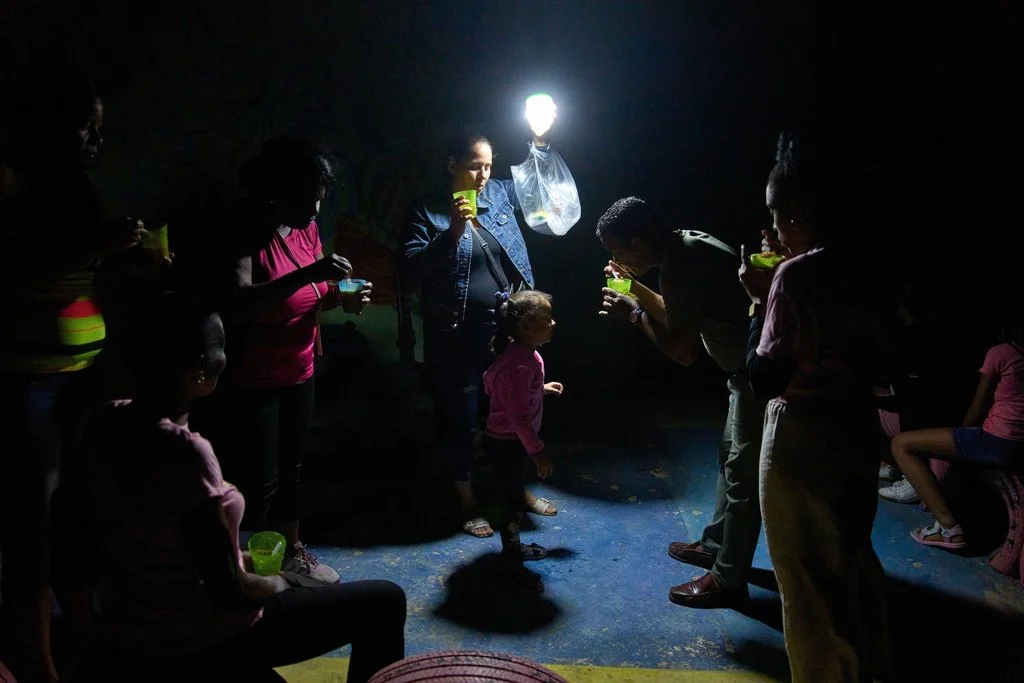
FILE - People eat cups of soup outside during a blackout in Havana, March 4, 2026. (AP Photo/Ramon Espinosa, File)
In March, Cuba endured three nationwide blackouts, leaving more than 10 million people in the dark and in danger, sometimes for over 29 hours, amid intensified US pressure from sanctions and embargo measures. The power outages have disrupted food supply, water access, healthcare, and other essential functions of society.
US President Donald Trump said at the Oval Office last month that he would “[have] the honor of taking Cuba,” and followed with: “Whether I free it, take it… I think I can do anything I want with it.” Whether that is a genuine threat or just political bluster remains unclear, but it is safe to say that it fits a broader pattern in recent US foreign actions.
From the January capture of Nicolás Maduro to the ongoing war on Iran that started in February, the United States has shown an increasingly confrontational foreign policy approach. Trump’s inflammatory remarks on Cuba suggest that his comments were not a response to any specific provocation, but rather a dogmatic willingness to escalate abroad.
The US initially imposed a near-total embargo on Cuba in 1962, under President John F. Kennedy, although most US exports had already been suspended earlier under President Dwight D. Eisenhower. The policy began with the intent to dismiss Fidel Castro’s communist government after the Cuban Revolution and to limit Soviet influence in the region.
In 1961, out of concern over Cuba’s growing ties to the Soviet Union, Kennedy backed the Bay of Pigs Invasion, a CIA operation launched from Guatemala that sought to overthrow Castro. Its failure, however, only pushed Cuba further toward the Soviet Union and deepened its commitment to socialism. The Cuban Missile Crisis occurred only a year later, when Kennedy placed a naval blockade around Cuba after finding Soviet-built nuclear missile sites in the country.
President Obama was the first to reverse US policies regarding Cuba, including the re-opening of embassies for both countries, allowing families to send remittances, and removing Cuba from the State Sponsor of Terrorism List (SSOT). For the first time since the sanctions were put in place, Cuba experienced increased economic activity and greater global engagement. Cuban policies began moving towards the economic openness that the United States was trying to encourage from the start.
The sanctions rescinded during the Obama administration are evidence that good diplomatic relations between the United States and Cuba are possible, and that they are much more favorable than aggression or economic isolation. The resurgence of collaborative diplomatic relations has shown positive effects between the two countries, as shown by the Cuban government’s openness to discourse and reforms. This has resulted in endorsing bilateral agreements, along with a surge in the Cuban private sector, tripling its self-employment numbers.
During both of his terms, Trump has retracted the measures taken by Obama and stiffened the prohibitions in an effort to protect the United States from the threat posed by Cuba. His administration accuses Cuba of aligning with and supporting “numerous hostile countries, transnational terrorist groups, and malign actors adverse to the United States.” While Cuba’s alliances warrant caution, US policy has often reinforced the very relationships it seeks to undermine.
The Trump administration imposed an oil blockade on Cuba this January by cutting off Venezuelan oil exports and threatening other countries with tariffs if they supply to Cuba. Due to the US trade embargo, Cuba has been unable to repair their power grid or import other power sources, and is thus, unlike nearby countries, almost entirely dependent on petroleum for energy.
The oil embargo has forced Cuba to rely on Russia for oil, as the United States has prevented its suppliers from aiding Havana. However, even with Russian assistance, these shipments cannot power the country for much longer than a week. If the US seeks to weaken or break Cuba’s dependence on its adversaries, the blockade is entirely a self-defeating strategy. If anything, it is throwing Cuba into the arms of those who oppose the US.
Not only is Cuba being pushed into deepening its dependencies on countries like Russia and China out of necessity, but the consequences of these sanctions are disproportionately affecting the ordinary population’s livelihood. Blackouts do not destabilize the political leadership; they take away vulnerable families’ access to basic necessities.
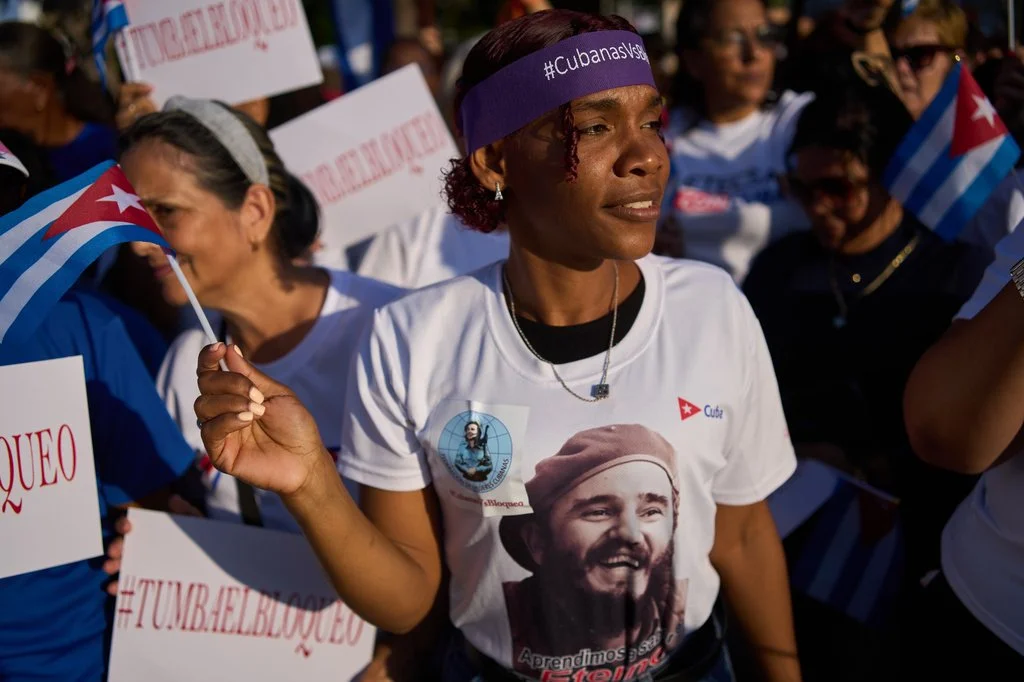
A woman attends a rally calling for the end of the U.S. blockade against the island nation in Havana, Cuba, Tuesday, April 7, 2026. (AP Photo/Ramon Espinosa)
For Cubans, each blackout means spoiled food as refrigeration fails, loss of water access as deliveries and sanitation processes are halted, and for many of those who require medical attention or equipment, it is a matter of life and death. Without power, even for just a few minutes while hospitals’ back-up generators turn on, those in critical conditions face life-threatening risks.
The Center for Economic and Policy Research (CERP) aptly called the actions ‘economic violence,’ a fitting term not just for the effects on Cuba’s economy, but for the 89% of Cubans who face extreme poverty. The embargo not only prevents oil from being imported into the country, but it has also restricted other imports, such as food, of which 80% is imported, leaving Cubans hungry.
Cuba, like many other Latin American nations, is no stranger to political and socioeconomic instability or foreign intervention. The United States has historically played a significant role in shaping politics in the region, often through direct intervention or economic pressure. These actions contribute to a generalized distrust and fear, rather than promoting cooperation and mutually beneficial relations.
The Cuban government is unwavering in its position that it does not want confrontation and is open to discourse and collaboration with the United States, despite the Trump administration showing little interest in pursuing that route. Cuban President Miguel Díaz-Canel told NBC that, if it comes to it, they are willing to die to defend their people in the event of a US attack, but that “This is not what we want. We don’t want war. We don’t want an attack.”
If Trump follows through on his threat to invade Cuba, it would make it clear that the US is not pursuing dialogue or peaceful resolution, even when the option is so openly expressed. An invasion of Cuba could put the United States at risk, and any escalation could have wider implications for the region’s safety and stability.
While it may be unlikely that countries like Russia and China would directly intervene militarily in response to a US escalation, the possibility cannot be entirely dismissed. Cuba is at a geographically strategic location, only 90 miles away from the United States, and it has long held importance for global powers.
With Venezuela no longer serving as a center of influence for countries like Russia, China, and Iran in the region, Cuba becomes an even more valuable strategic foothold for US rivals. This does not guarantee increased support, but as pressure from the US increases, so too does the incentive for rival powers to maintain influence on the island. Even without direct conflict, deeper geopolitical alignment so close to US borders raises the stakes of any escalation and introduces broader regional risks. A crisis in Cuba could quickly become a hemispheric concern rather than an isolated bilateral dispute, especially as many states in Latin America rely heavily on the US for economic support and security cooperation.
For over 30 years, the United Nations has overwhelmingly voted to end the embargo, reflecting a broad international consensus that the policy is outdated and ineffective. While these resolutions are not legally binding, they highlight how increasingly isolated the United States has become in maintaining its stance on Cuba. CEPR points out that the sanctions not only violate international laws and treaties, but also US law as well since the Cuban government has not directly posed a threat to national security.
The embargoes, sanctions, and blockades imposed on Cuba by the United States for nearly seven decades have not achieved their intended purposes: weakening Cuba’s communist-led government, promoting political and economic change, and limiting the island’s alignment with hostile powers. Instead, they have deepened hardship, strengthened Cuba’s reliance on US adversaries, and increased geopolitical tensions.
The United States should reconsider a strategy that has inflicted so much damage while producing so little change. Rather than tightening the pressure, exacerbating Cuban suffering, and turning the island further against it, the US should recognize that hostility has failed and that diplomacy offers a far stronger form of influence.