
Op-ed: The Pope’s Trip to Africa Highlights Catholic Diplomacy, as Cameroon Ceasefire Shows Faith’s Peace Role
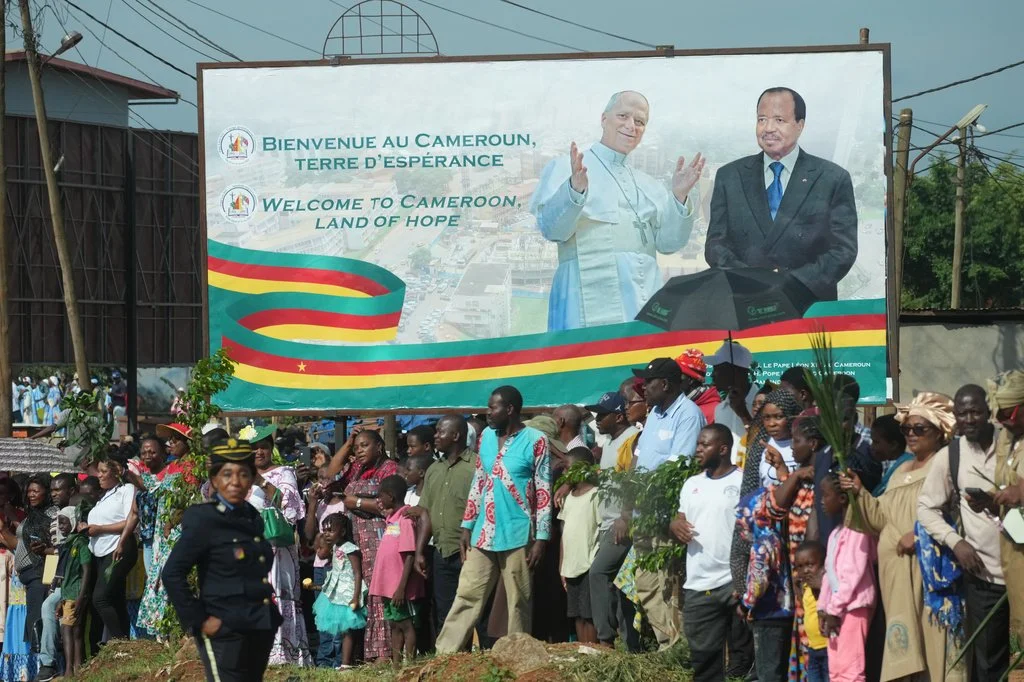
People greet Pope Leo XIV upon his arrival in Yaounde, Cameroon, Wednesday, April 15, 2026, on the third day of an 11-day apostolic journey to Africa. (AP Photo/Andrew Medichini)
Pope Leo XIV’s trip to Africa underscores a breakthrough in Catholic diplomacy as the Cameroon ceasefire restores faith in a peaceful future. This event has also put a global spotlight on a central principle of the Catholic Church: the call to protect human dignity through peace. In Cameroon, that message took on an immediate effect when separatist factions announced a temporary ceasefire ahead of the Pope’s visit to the country’s Northwest region. This ceasefire demonstrates how religious diplomacy efforts for maintaining peace are becoming increasingly successful.
The crisis in Cameroon, also known as the Anglophone crisis, originates in a colonial-era division that sparked the political marginalization of the country’s English-speaking minority. After independence and reunification in 1961, power became increasingly centralized in the Francophone-dominated government, while Anglophone regions in the Northwest and Southwest continued to feel culturally and politically excluded. Because of this, tensions began to rise, eventually erupting into open protests in 2016. During these protests, lawyers and teachers objected to the placement of Francophone judges and educators in English-speaking areas, resulting in a violent government crackdown on the region. This, in turn, helped move a long-standing grievance into a broader conflict.
Today, this conflict continues to devastate the region, leaving many to question whether peace is even possible at this point. However, the region was met with a shining light of hope when Pope Leo XIV paid a visit to Cameroon during his mission trip through Africa. The Catholic Church famously teaches that “peace is not merely the absence of war, but rather, it is the ordering of human nature according to the eternal law of God.” That idea was observable in Bamenda, where Pope Leo met with religious leaders and local figures in a region torn by violence between government forces and Anglophone separatists. In his address, he denounced violence and corruption, calling for a move towards peaceful and credible leadership. His presence was more than a ceremonial visit; it reflected a church tradition that calls for peace as a moral duty, especially in regions such as Cameroon, where civilians have paid the greatest costs.
Cameroon was a particularly meaningful stop for Pope Leo XIV because the Catholic Church there is not a marginal institution. The Church in Cameroon is a major social force in a country where Catholics make up a large share of the population, and bishops and clergy have long participated in public discussions about governance and national unity. This background gives the Pope’s message an impactful reach. When he speaks about peace, he is addressing a church that is already deeply embedded in local life and conflict resolution. This embeddedness helps his message carry more weight among Cameroon's leaders, giving the people hope that his emphasis on peace will bring about change in the nation.
The ceasefire itself echoed these ideals and demonstrated the Catholic social teaching in practice. The Vatican’s emphasis on the sanctity of human life, the common good, and reconciliation was mirrored in the separatists’ stated reason for the pause, which was to protect civilians and allow them safe passage during the visit. Although temporary, the ceasefire showed the power of religious authority and how that power can create a space where violence can be stopped long enough for discussions and, hopefully, lead to relief becoming a semi-permanent possibility. This pause in fighting gave a glimpse into a world where the achievement of peace may be at last possible again.
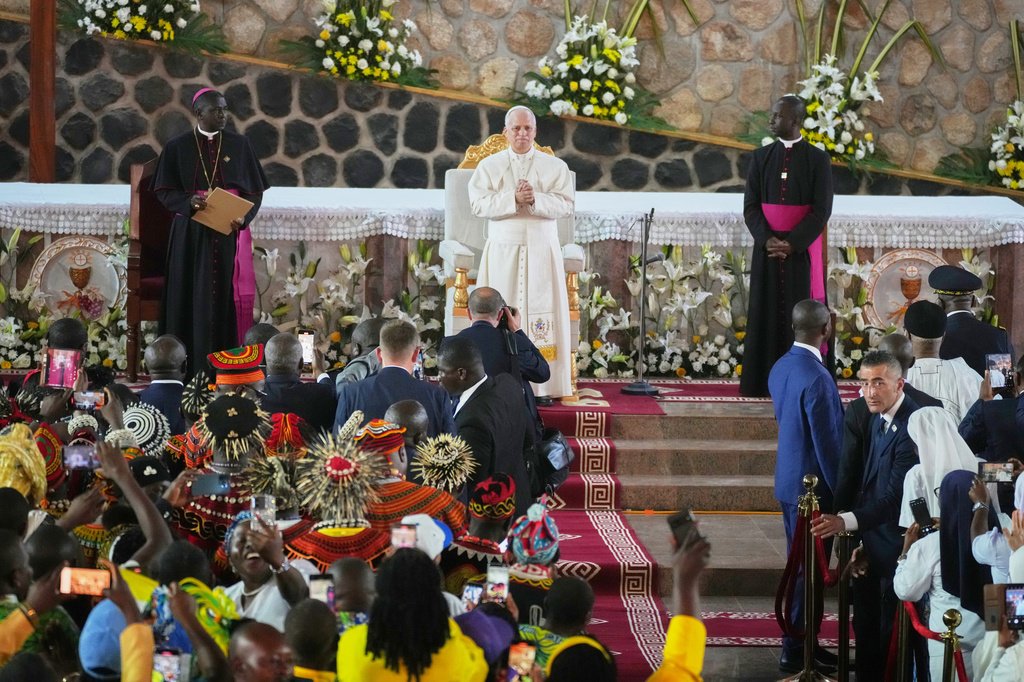
Pope Leo XIV, with the Archbishop of Bamenda, Andrew Nkea Fuanya, left, leads a meeting for peace at Saint Joseph's Cathedral in Bamenda, Cameroon, with the local community Thursday, April 16, 2026, on the fourth day of his 11-day pastoral visit to Africa. (AP Photo/Andrew Medichini)
Pope Leo’s remarks in Cameroon also fit the Church’s broader tradition of criticizing structures that fuel conflict. He condemned “tyrants” and warned against warfare, exploitation, and the misuse of faith to justify violence. In Catholic teaching, peace is inseparable from justice, which is why the Pope’s message touched not only on the local separatist conflict but also on wider questions of poverty, inequality, and the misuse of power. His statements here denounced conflict worldwide, sparking discussions of what this means for broader issues of conflict.
Cameroon is not the only place where faith-based diplomacy has helped create openings for peace. In Mozambique, the Catholic Community of Sant’Egidio played a key role in negotiations that helped end the country’s civil war, showing how trusted religious actors can help mediate when formal diplomacy falls short. In Nigeria, religious leaders have also helped mediate Muslim-Christian tensions in Plateau State, further demonstrating that faith networks can reduce violence when communities trust them more than political institutions. In both cases, the church was used as a vessel of peace in order to end violence and tension in torn regions. These cases exemplify hope for regions in similar positions, regions such as Cameroon.
This is why the Cameroon ceasefire matters beyond the immediate visit. It suggests that papal diplomacy still carries symbolic weight in places where the Church is seen and recognized as a local institution with moral authority. The temporary halt in violence here did not solve the ongoing conflict, and peace talks in Cameroon have repeatedly stalled. However, it did create a worldwide discussion and moment in which the logic of restraint outweighed the logic of war. Even if that moment was brief, it served as a beacon of hope in a region that hasn't seen much of it for a very long time.
For Catholics, Pope Leo XIV’s visit also reflects a core idea of the Church’s mission, that faith should move believers toward reconciliation, not division. In practical terms, that means defending the dignity of civilians and supporting an environment of peace and dialogue between enemies is a responsibility, not a concession. In Bamenda, those principles briefly took shape in the form of a ceasefire, a peace gathering, and a papal message aimed at a country still searching for an end to war.