
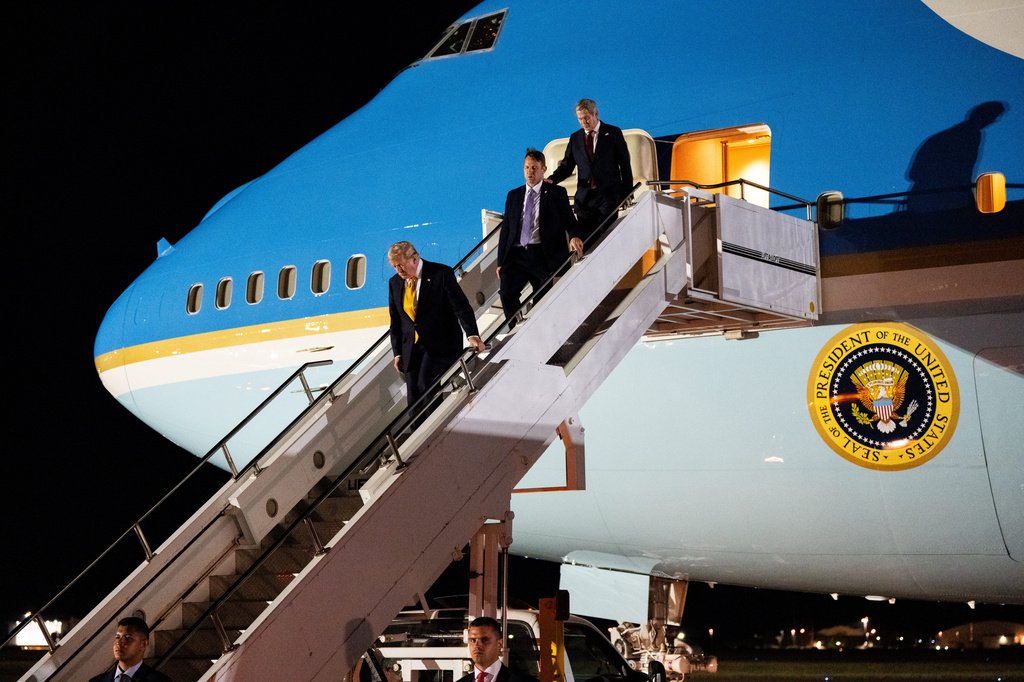
President Donald Trump walks from the legacy Air Force One at U.S. Air Force Base, RAF Mildenhall in Suffolk Eastern England, as he switches planes on his way back to Washington from the NATO summit in Ankara, Turkey, Wednesday, July 8, 2026. (AP Photo/Alex Brandon)
As the Russo-Ukrainian War stretches into its fifth year, Ukraine’s ability to resist what should have been a “three-day special operation” is due to the fact that the US and the European Union have worked closely together on both military assistance towards Ukraine and sanctions against Russia. They’ve been able to form a largely consistent and united front of support for the Eastern European nation, with American intelligence sharing continuing even under the current administration.
Yet the American half of the support has recently been flipped on its head, in what may be one of the largest foreign policy divides between the US and EU since the 2003 invasion of Iraq. President Trump recently negotiated a deal that would effectively release millions of tons of Russian diesel into the international market over the next few weeks, a sharp reversal of the preexisting transatlantic sanctions policy on Russian fuel. Moreover, Trump directly attacked President Zelenskyy himself after the latter’s objection to the diesel deal, claiming that it is “time for Ukraine to get a new president,” and simultaneously slamming the Ukrainian president for strikes on Russian oil infrastructure. All of this further coincided with a sudden and consequential suspension of some Starlink services, which the Ukrainian military has relied on for drone warfare and communication over the past few years. Notably, Elon Musk claimed that any such cuts were the responsibility of the US government, and not his own company SpaceX, which operates Starlink satellites.
This is in direct contrast with the EU’s recent policy regarding Russia. The union recently adopted one of its largest-ever sanctions packages against Russian entities “in Russia’s military industrial complex,” which included over 800 companies. Indeed, it brought the total number of sanctioned entities to over 4,600. Kaja Kallas, the EU’s High Representative for Foreign Affairs, commented that it “is not the time to ease pressure on Moscow but to increase it.”
More broadly, European nations that are positioned along NATO’s so-called “eastern flank” have, over the past year, undertaken a number of initiatives and actions designed to reinforce the security of the alliance. For instance, it launched “Eastern Sentry” last year, “a flexible, multi-domain activity to enhance NATO’s vigilance along the entire eastern flank,” as described by the security organization. This is in addition to the existing land forces and air defense systems that are maintained at NATO’s border with Russia and Belarus.
Moreover, the EU itself launched a more targeted “Eastern Drone Defense Initiative” (EDDI), to specifically maintain a constant screen for – and then respond to – any Russian drones that cross into EU airspace. On a national level, nations such as Poland and Lithuania have exited the UN’s 1997 Mine Ban Treaty, which restricted the deployment of antipersonnel mines, so that they can more effectively fortify their borders against invasion.
It is also important to note that such policy has been a direct response to Russian hybrid warfare attacks across the EU in recent months. For instance, Germany accused Russia in September of attempting to carry out a drone attack at the Leipzig airport, which fortunately did not result in any damage. More recently, four Russian drones violated Moldovan airspace as part of a larger aerial campaign against Ukrainian infrastructure. Ultimately, all of the aforementioned EU and NATO policies, combined with an ever-increasing threat from Russia, have led to a Europe that is more united against Russian aggression than before.
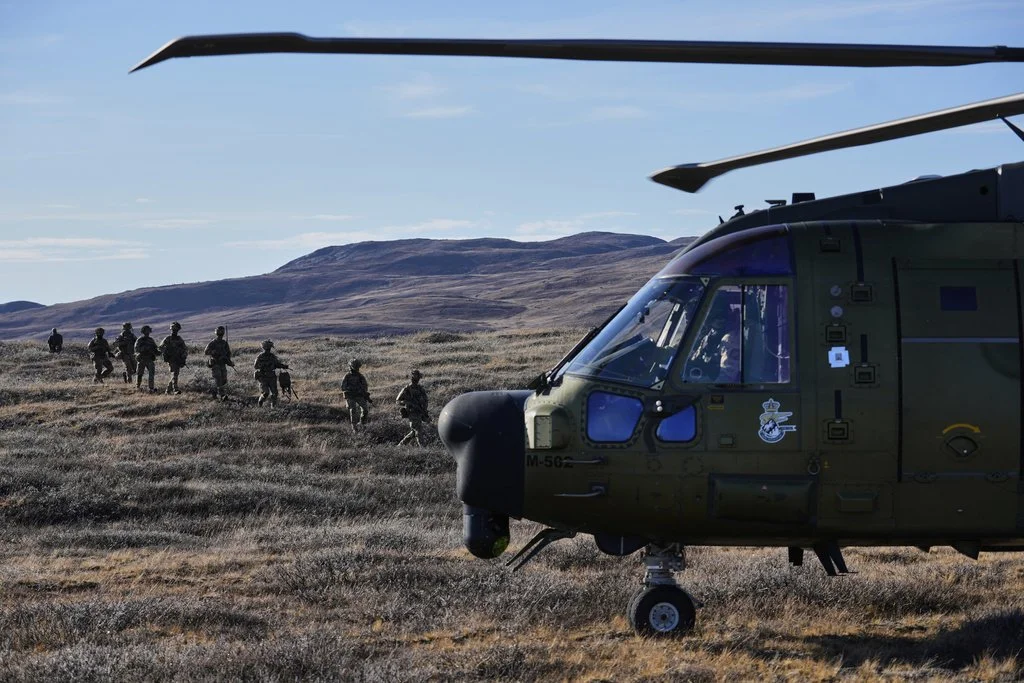
Danish military forces participate in an exercise with hundreds of troops from several European NATO members in Kangerlussuaq, Greenland, Wednesday, Sept. 17, 2025. (AP Photo/Ebrahim Noroozi)
It is hard to imagine a larger geopolitical divide between the Americans and Europeans since the end of the Cold War, with one of the only candidates being the 2003 invasion of Iraq, when America’s military operation to topple Saddam Hussein’s government sparked backlash from major European nations such as France and Germany. Analysis from Stanford’s Freeman Spogli Institute for International Relations described transatlantic relations as hitting a “dramatic and highly visible low point.” Yet even then, European nations such as the UK and Poland were more than willing to fight alongside the US in Iraq. Moreover, the recent cleavage regarding Ukraine and Russia is arguably much more consequential.
The invasion of Iraq, while it may have been seen as a foreign policy blunder by the majority of Europe, was fundamentally not a security threat to the EU or NATO. Rather, it is better characterized as a specific disagreement on how to conduct the War on Terror. Certainly, Europe directly joined American action against the Taliban and later ISIS, even allowing the US to operate black sites across the continent. Ultimately, US actions also did not undermine common trust in NATO’s fundamental Article 5 security guarantee, nor did it create a perception of particular high volatility in American foreign policy.
This illustrates why the recent situation should be far more concerning to a European security agenda. It fundamentally undermines trust in the common institutions and ties between the US and EU, with Trump’s policies also implying a large rift between European and American interests. . Even if the current administration is an anomaly and the next president returns the US to a more stable and Europe-aligned foreign policy, there is no guarantee Trump’s foreign policy may not resurface with a future administration. Once common trust, such as in NATO’s Article 5, is undermined, it is much easier to further erode. Moreover, Russia will undoubtedly take advantage of that doubt to create further transatlantic divides, potentially even testing Europe’s tolerance through further kinetic attacks, making reliance on the US for security outright dangerous for Europe.
There are also actions that Europe can take independently to pursue negotiations to end the war. For instance, hundreds of billions of frozen Russian assets are held at the Belgian bank Euroclear, which may be leveraged as a bargaining chip. Europe has also proven to increasingly have the ability to ensure its own security, as demonstrated by recent cooperation and initiatives such as Eastern Sentry. It has been equally active diplomatically, notably through its relations with Canada and the possibility of the nation becoming an EU “associate member.”
While the US actually leaving NATO or even severing other ties with Europe on paper is unlikely, what’s far more plausible is a European “subgroup” that develops within NATO, conducting military operations and foreign policy to non-NATO states independently. In this context, the US may be rendered partially unnecessary within the agreement, as demonstrated by developments such as Macron’s idea of a French nuclear umbrella that provides deterrence against Russia for all European states in NATO.
Ultimately, while the specifics and exact timeline may vary, it is now exceedingly clear that Europe will have to pursue a security and foreign policy that is largely independent of the US and potentially even opposed. Transatlantic relations may have entered their second era since the end of the Cold War.