

President Donald Trump, left, and Chinese President Xi Jinping, right, shake hands after their U.S.-China summit meeting at Gimhae International Airport Jinping in Busan, South Korea, Thursday, Oct. 30, 2025. (AP Photo/Mark Schiefelbein)
The White House has confirmed Trump’s March 31 visit, his first trip to China since 2017. The announcement follows a U.S. Supreme Court decision that knocked out major Trump tariffs imposed under emergency powers. Both governments now want near-term wins before the leaders meet. The Asahi Shimbun reports that Treasury Secretary Scott Bessent and Chinese Vice Premier He Lifeng are expected to meet in Paris in mid-March to map possible deliverables.
For Trump, trade is the headline objective, although the court ruling forced a pivot. The Supreme Court said Trump overstepped when he used emergency powers to justify sweeping tariffs. The decision puts pressure on his team to rebuild leverage using other trade tools. After the ruling, Trump ordered a 10% global tariff for 150 days while his team launches new investigations under other trade laws. China has called for the duties to be lifted, but it has not said what retaliation, if any, it would take.
China enters the summit wanting stability and market access. In an October 2025 meeting, Trump and Xi agreed to trim U.S. tariffs in exchange for Chinese action on fentanyl-linked supply chains and continued rare earth exports. U.S. officials said the shift lowered the overall tariff burden on Chinese imports, as it aimed to prevent another retaliation spiral.
The Paris session is set up to produce concrete transactions rather than a vague truce. Reuters reported that Bessent and He will discuss potential Chinese purchases of Boeing aircraft and U.S. soybeans. The same report said Boeing is negotiating a deal to sell up to 500 jets to China. Reuters also noted that Beijing has signaled interest in higher soybean imports, though prices could limit volumes.
Trade rarely stays separate from strategy, and the clearest signal may come from U.S. decisions on arms policy. Taiwan remains a risk that could change future relations. The Wall Street Journal and The New York Times have reported that the Trump administration has delayed a multibillion-dollar Taiwan arms package. Officials cited concerns that approval could derail Trump’s Beijing trip. WPR has reported that Xi urged Trump to handle arms sales to Taiwan “with prudence” during a Feb. 4 call. For Washington, the decision on whether, when, and how to proceed signals priorities as much as it signals inventory.
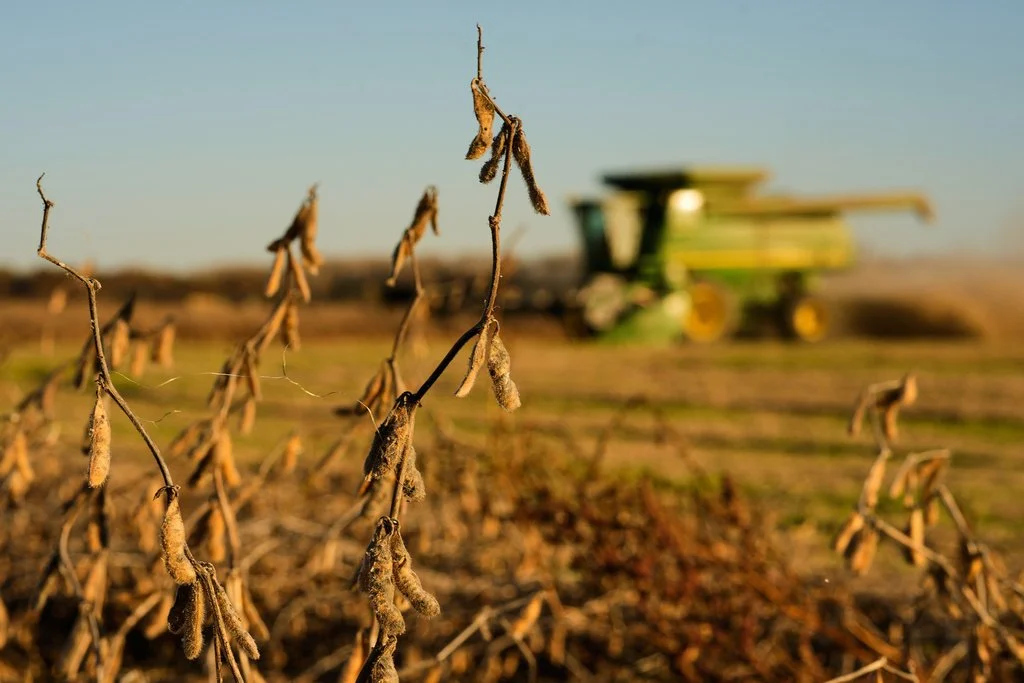
FILE - Austin Rohlfing harvests soybeans on his family's field, Nov. 5, 2025, near Boonville, Mo. (AP Photo/Charlie Riedel, File)
Iran adds a second, fast-moving variable that neither side fully controls. On March 3, Chinese Foreign Minister Wang Yi told Israel’s foreign minister that U.S. and Israeli strikes on Iran should end. AP reported that Wang later called the strikes “unacceptable” and again urged talks. Beijing has positioned itself as a de-escalation voice, while protecting its broader ties and energy interests.
The Iran conflict also complicates Washington’s calendar. AP reported that summit planning continues despite U.S. military action in Iran. But a wider conflict could pull attention from trade and unsettle energy markets. It also gives Beijing room to cast itself as the calmer actor.
Paris will show what can be secured before Air Force One lands in Beijing. A low-probability risk is that China postpones the summit to avoid looking like it softened its criticism of U.S. strikes. If April produces a tariff deal, the next test is whether both sides can prevent security shocks from turning it into a brief pause.