
Pipeline Security: Evaluating Saudi Arabia’s Infrastructure Bypasses
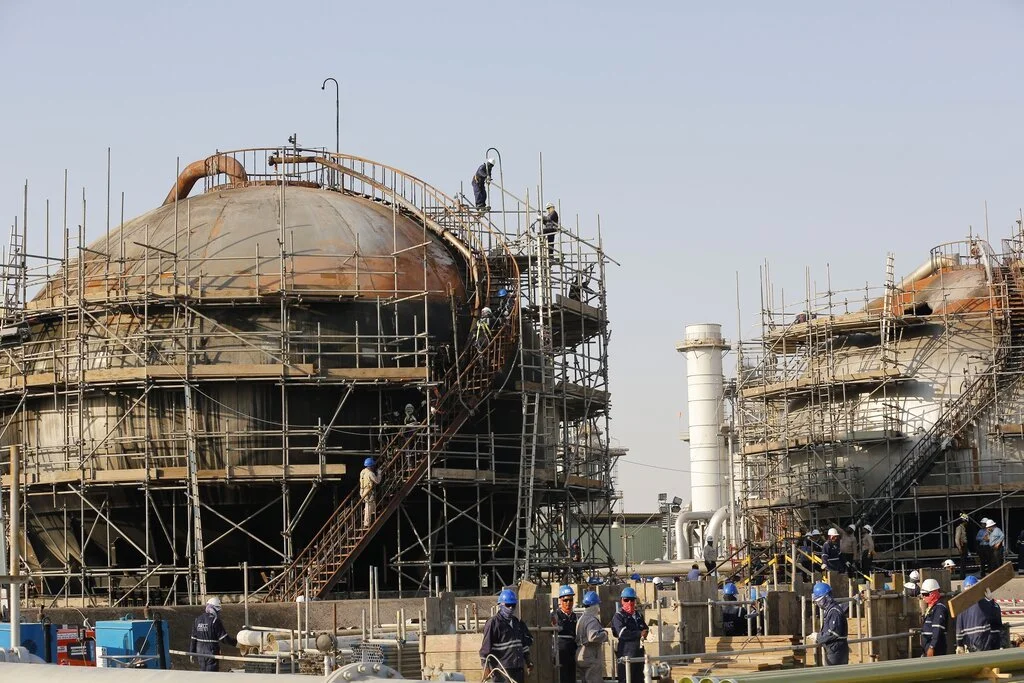
Workers repair damage to Saudi Aramco oil processing equipment following aerial drone and missile strikes. (AP Photo/Amr Nabil)
For decades, the global oil trade has operated under the shadow of maritime choke points, most notably the Strait of Hormuz. Responsible for the transit of nearly 20 percent of global petroleum liquids, the narrow waterway between Oman and Iran remains a critical global energy bottleneck. To insulate its economy and international supply lines from potential blockades, Saudi Arabia constructed the 1,200-kilometer East-West Pipeline. Known as Petroline, the conduit was engineered to carry crude directly from eastern oilfields to the Red Sea port of Yanbu, bypassing Persian Gulf waters entirely.
Yet, recent regional security incidents have tested the operational reliability of overland transit routes. Drone attacks damaged pumping stations along the pipeline, while Houthi strikes near the Bab el-Mandeb Strait continue to disrupt shipping south of Yanbu. Defense analysts note that moving crude overland shifts security risks from maritime corridors to fixed infrastructure vulnerable to asymmetric attack.
These security considerations stand alongside the pipeline's central role in global energy distribution. Petroline has a maximum capacity of approximately 7 million barrels per day, making it one of the largest crude transit networks in the world. At full capacity, the pipeline routes more than half of Saudi Aramco's average daily crude output of 9 to 10 million barrels across the Arabian Peninsula. During periods of naval escalation in the Persian Gulf, market analysts have viewed this overland connection as a buffer against significant price spikes.
Yet, securing thousands of kilometers of overland steel presents distinct operational hurdles. Unlike tanker ships that can adjust speed or re-route around naval hazards, fixed infrastructure remains immobile. Defense analysts emphasize that an attack on a single pumping node can disrupt crude flow across hundreds of kilometers, forcing temporary operational shutdowns and straining storage capacity at both ends of the line.
The geography of the region creates a compounded choke point challenge. While Petroline successfully avoids Hormuz, crude offloaded at Yanbu must still enter maritime traffic in the Red Sea. Tankers heading to European markets must transit the Suez Canal, while those bound for Asia must navigate south through the Bab el-Mandeb strait. Because Houthi forces in Yemen have targeted shipping routes with uncrewed aerial vehicles and anti-ship missiles, oil diverted to the Red Sea confronts a second operational bottleneck.
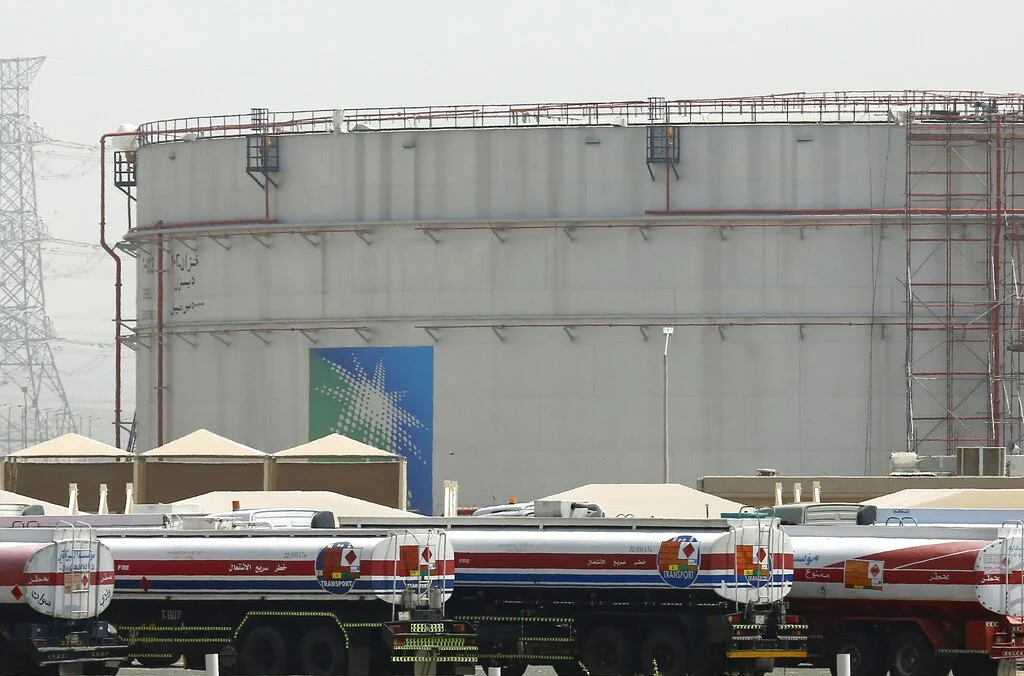
Fuel trucks line up in front of storage tanks at Saudi Aramco's North Jeddah bulk plant near the Red Sea coast. (AP Photo/Amr Nabil)
Beyond maritime transit risks, land-based energy facilities face ongoing physical and financial pressure from aerial threats. Unmanned aerial systems cost a fraction of conventional defensive hardware, allowing attackers to bypass regional air defenses and target exposed power stations and storage facilities. As non-state actors refine long-range precision strike capabilities, the financial cost of monitoring and hardening thousands of kilometers of desert pipeline rises significantly.
While bypass projects require billions of dollars in capital investment to provide logistical redundancy, energy analysts suggest that overland pipelines do not eliminate supply risks. In active conflict environments, terrestrial routes present distinct defensive challenges alongside their operational benefits.