
Milei Escalates Argentina’s Falklands Claim Amid Offshore Oil Dispute
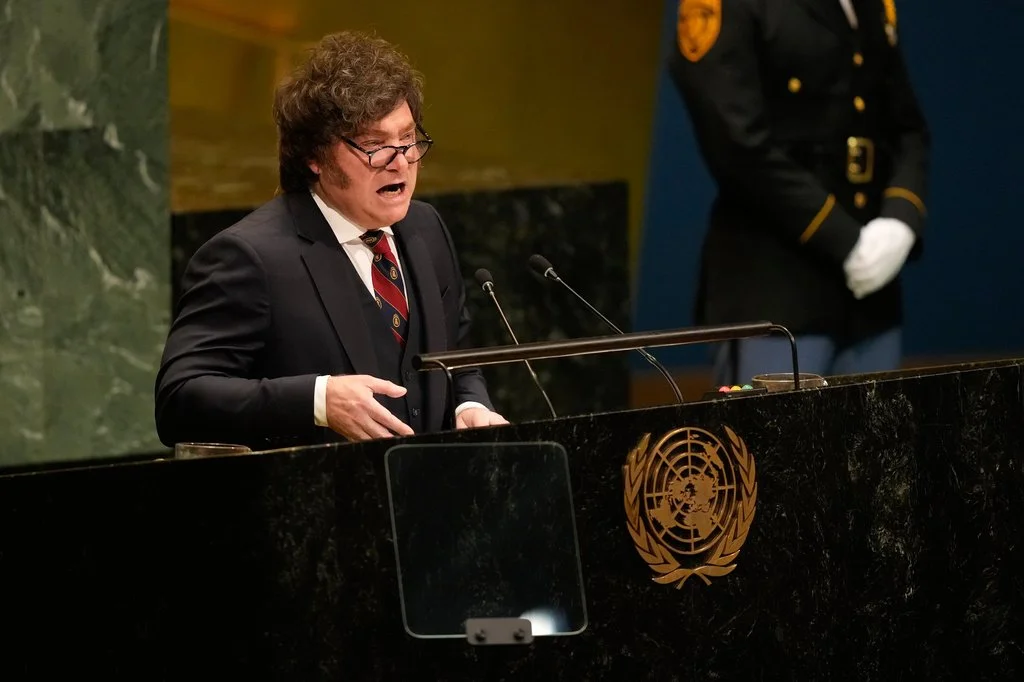
Argentina's President Javier Milei speaks during the United Nations General Assembly at United Nations headquarters held Sept. 23, 2026. Photo: AP Photo/Seth Wenig
Nearly 200 years after Britain took control of the Falkland Islands, the dispute over the South Atlantic territory has returned to the forefront of Argentine foreign policy. President Javier Milei renewed Argentina’s sovereignty claim before the United Nations General Assembly on Sept. 23, accusing the organization of neglecting the longstanding dispute and calling for renewed negotiations with the United Kingdom. His remarks come amid escalating tensions between the two countries over plans to develop offshore oil near the islands, which have prompted Argentina to pursue international legal action against the United Kingdom.
The roots of the dispute stretch back to the nineteenth century. Argentina argues that it inherited Spain’s claim to the islands after gaining independence and that Britain unlawfully displaced Argentine authorities when it established control in 1833. Britain disputes Argentina’s interpretation and maintains its own claim to sovereignty. The disagreement turned violent in 1982, when Argentina’s ruling military dictatorship invaded the islands. Britain responded by sending forces to the South Atlantic and regained control following a 74-day war. The conflict killed 649 Argentine military personnel, 255 British personnel, and three Falkland Islanders.
Argentina’s defeat weakened the military government, which collapsed the following year as the country returned to democratic rule. The transition did not end Argentina’s sovereignty claim, however, and successive democratic governments continued to pursue the issue through peaceful and international channels. Britain, meanwhile, has emphasized the islanders’ right to self-determination. In a 2013 referendum, 99.8 percent of voters chose to remain a British Overseas Territory. Argentina rejected the referendum as resolving the sovereignty dispute, a position it reiterated in September following Milei’s renewed push over the islands.
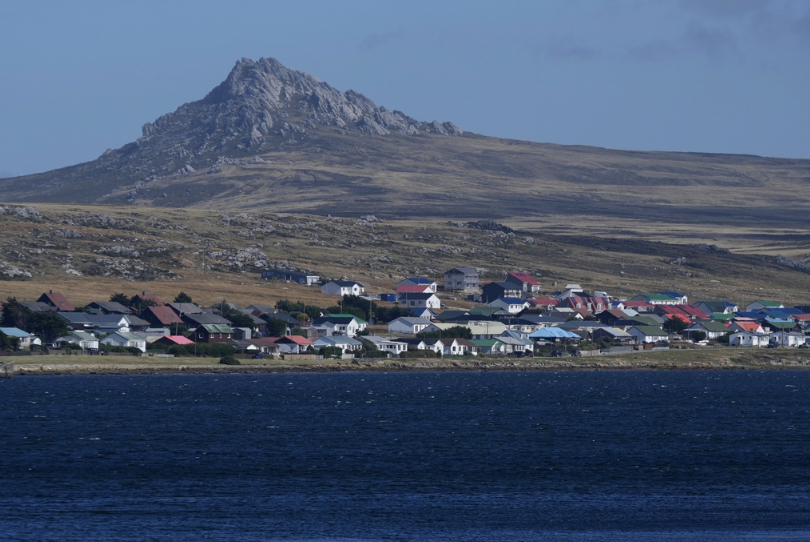
Port Stanley, the capital of the Falkland Islands and home to the majority of the territory’s population. In a 2013 referendum, 99.8 percent of voters chose to remain a British Overseas Territory. Photo: AP Photo/Ricardo Mazalan
Milei has continued Argentina’s longstanding claim while taking a more active approach to the dispute. Speaking before the General Assembly, Milei reaffirmed Argentina’s claim to sovereignty over the islands, known in Argentina as the Malvinas, and criticized the United Nations for failing to advance a resolution to the dispute. He called for renewed bilateral negotiations with Britain while maintaining that Argentina would pursue its claim through peaceful means.
Milei’s renewed push comes as tensions over the islands extend beyond the sovereignty question itself. One source of renewed friction is the Sea Lion project, an offshore oil development north of the Falkland Islands that is expected to begin production in 2028. Argentina argues that the project is exploiting natural resources in waters over which it claims sovereignty and has pursued sanctions against companies involved. On Sept. 28, Milei escalated Argentina’s response by instructing the Foreign Ministry and government lawyers to initiate arbitration against the United Kingdom under Annex VII of the United Nations Convention on the Law of the Sea. Argentina also gave Britain two weeks to take measures to halt the oil development, warning that it would seek provisional measures from the International Tribunal for the Law of the Sea if Britain did not comply.
Britain has rejected Argentina’s challenges. The British government maintains that the Falkland Islands Government has the right to develop the territory’s natural resources and has condemned Argentina’s threats against companies involved in the islands’ economy. Britain has also maintained its broader position that it will not negotiate sovereignty unless the Falkland Islanders themselves want it to do so.
Milei’s renewed push has brought new attention to a sovereignty dispute that neither war nor decades of diplomacy have resolved. The Sea Lion oil project has added new economic and legal tensions, with Argentina now pursuing international legal action against Britain. Still, the fundamental divide remains unchanged: Argentina continues to seek negotiations over sovereignty, while Britain maintains that the islands’ future should be determined by those who live there.