
Uncertainty Remains as Cuban President Claims Hypocrisy by the United States
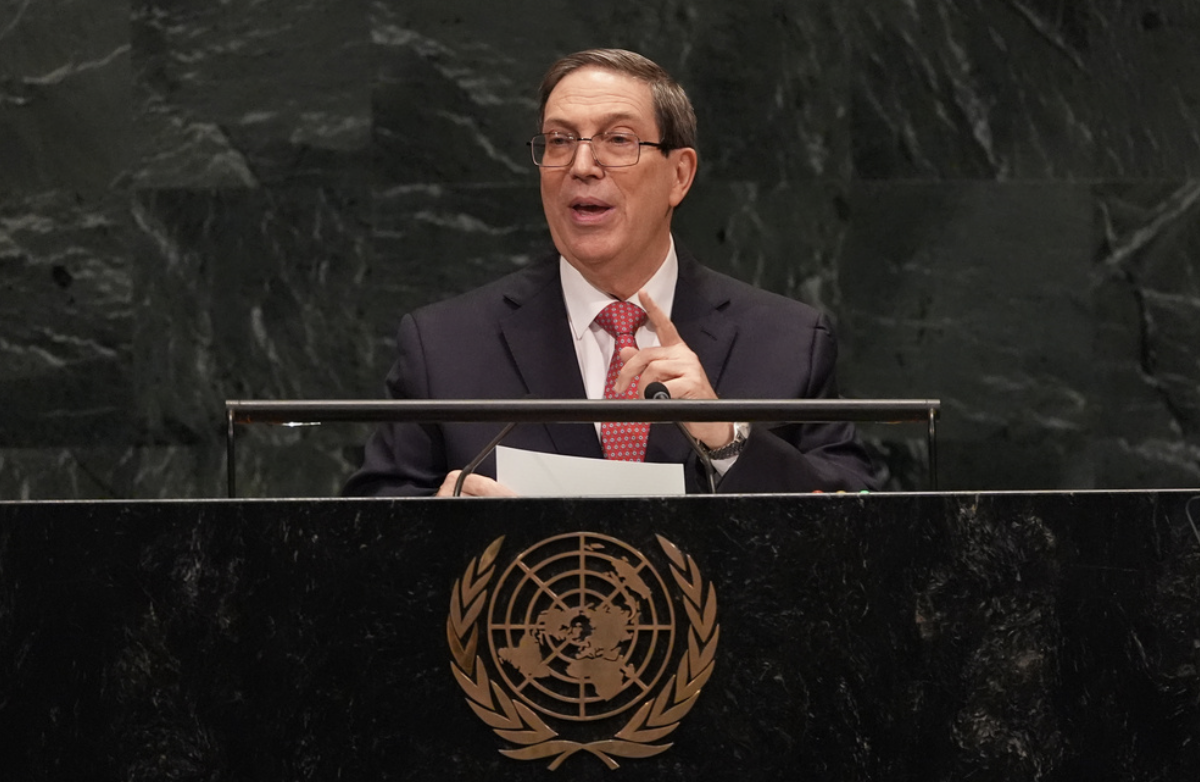
Foreign Minister Bruno Eduardo Rodríguez Parrilla of Cuba speaks during the 81st session of the United Nations General Assembly at United Nations headquarters, Saturday, Sept. 26, 2026. (AP Photo/Heather Khalifa)
After months of economic reforms in Cuba, President Díaz-Canel accused the United States of hypocrisy for its trade restrictions on private Cuban businesses. The restrictions state that any US banking institution must block funds exchanged between US enterprises and Cuban nationals, thus making trade between US and Cuban companies significantly more difficult. Most notably, Spanish hotel chain Meliá has announced its closure due to significant difficulties in bringing in private tourist revenues.
Díaz-Canel’s complaint comes after an alleged U.S. support for private enterprise on the island, but subsequent restrictions on private businesses following US sanctions. As analyzed by American University professor and expert on US-Cuban relations William LeoGrande, “the United States has done everything imaginable to try to prevent foreign investors,” therefore when the US government claims that it wants Cuba to privatize their economy and open itself to foreign investment, LeoGrande argues “they’re being disingenuous.” This dishonesty, therefore, is hypocritical in Díaz-Canel’s view.
In the past year, Cuba has issued sweeping reforms to revitalize its economy after a decades-long embargo and a recent oil blockade by the US military, seizing any oil cargo vessel entering the country. PBS reports that the market overhaul has been the most significant shift in the Cuban economy since their 1959 revolution. The shift has been in gradual response to US economic pressure in recent months, characterized by Secretary of State Marco Rubio’s recent claim to Fox News radio host Sean Hannity that Cuba is a “failed state.” The statement is contextualized by months of US action towards the island, and repeated pressures by the US to change regime, as Rubio added in the same interview that he hopes Cuba will “open their eyes” to reshape their government.
Cuban economic reforms include a dismantling of the state monopoly on foreign trade and production, as well as providing space for private business and a private workforce without state intervention. In addition to US sanction and blockade, these reforms are in response to health crises currently running rampant in Cuba due to water and energy supplies being cut off.
The combined effects of fuel shortages, infrastructure failure, and economic restrictions have intensified daily challenges for the Cuban people. In the past couple of months, Cuba has experienced rolling blackouts, forcing the government to cut back the work-week to four days for state owned companies, shorten the length of school days, and waive in-person attendance for universities.
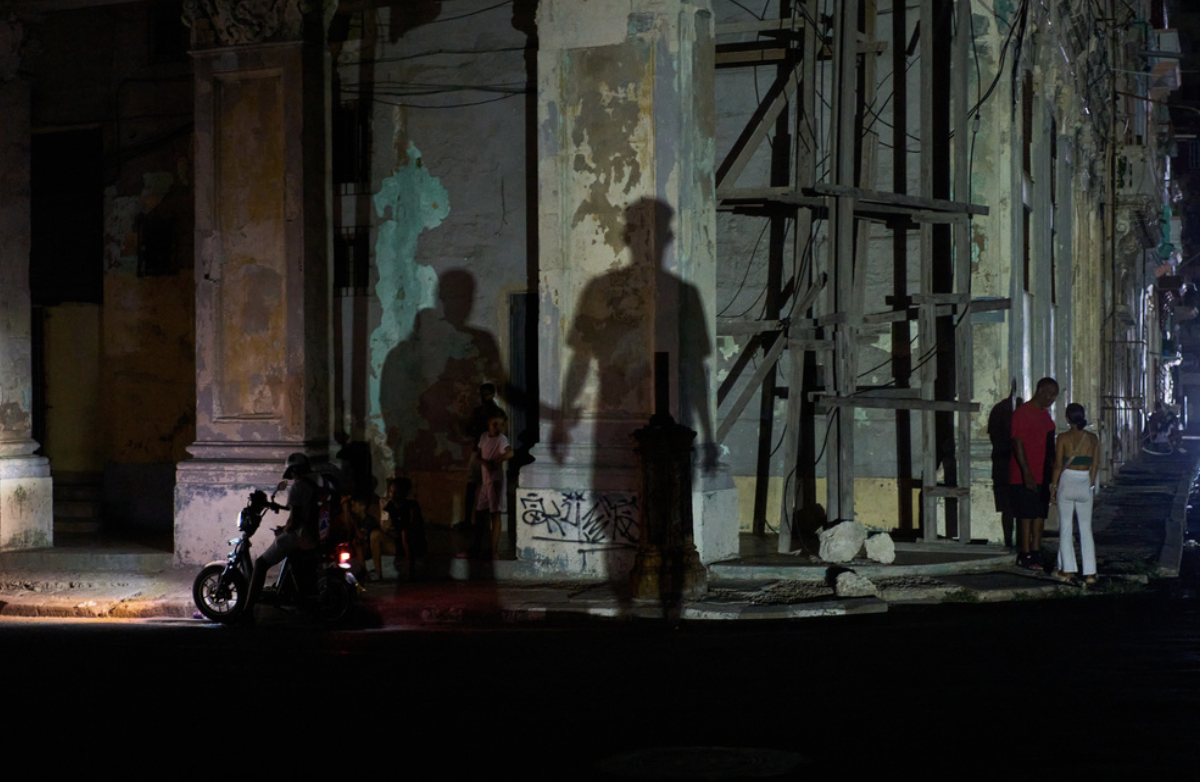
Shadows of people walking in the dark are seen during a blackout in Havana, Cuba, Friday, Sept. 18, 2026. (AP Photo/Ramon Espinosa)
In addition to the military blockade imposed around the port of Havana, the trade of oil with Venezuela has been completely blocked off since the January military intervention to capture Venezuelan president Nicolás Maduro by the Trump administration. Three million dollars worth of oil being illegally imported into Cuba has additionally been seized in the past week.
Economic reform is not all the country is doing to combat diplomatic aggression from the US. At the United Nations’ 81st General Assembly, Cuban Foreign Minister Rodríguez Parrilla called the actions by the Trump administration “unrealizable.” He referenced the recent blockades as an act of war by the US and claimed that the policy of peace through force is an invocation of the 1960 Mallory Memorandum, which sought to incite regime change in Cuba through starvation and other means of economic destabilization. The memorandum posits that, through embargoes, sanctions, and blockades, the Cuban communist regime would fall.
“Cuba is not a threat. The blockade is,” Rodríguez Parrilla emphasized in his UN General Assembly speech, foreshadowing Díaz-Canel’s claims of hypocrisy by the US. The US has continued its sanctions and blockade on Cuba, and private enterprise is still restricted by US law. Amid energy pressures, the Cuban government has decided to implement new renewable energy practices, claims Cuban Minister of Energy and Mines Vicente de la O Levy. This suggestion of alternative energy is proof that the Cuban government is looking for appropriate responses to US action, and those responses by both sides continue.