
Mexico Proposes Social Media Restrictions Following School Attack
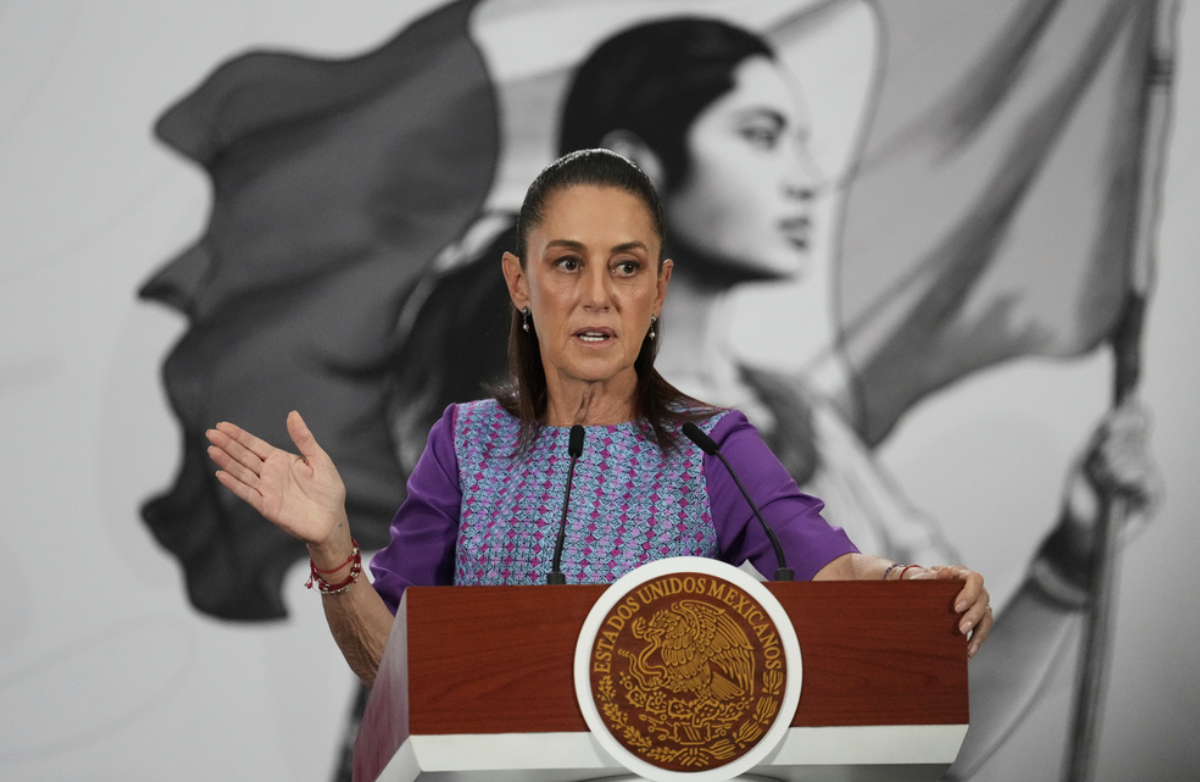
President Claudia Sheinbaum gives her daily morning press conference at the National Palace in Mexico City, Thursday, April 30, 2026. (AP Photo/Fernando Llano)
On Oct. 9, Mexico’s President Claudia Sheinbaum announced at her daily press conference that the Mexican government plans to introduce a bill that would require social media platforms to detect and remove content that incites or encourages violence.
This statement came just a day after a fatal incident that occurred at Secondary School No. 13 in La Unión, a rural community in the municipality of Torreón, Coahuila. In this attack, two 18-year-old twin brothers, armed with machetes and allegedly explosives, covertly entered the school and killed the school’s vice principal and injured four others.
During press conferences following the tragedy, the State Attorney General of Coahuila, Federico Fernández Montañez, reported that the aggressors — former students who never graduated — acted out of vague grievances they had against the school’s staff and their desire to replicate international school attacks that they idolized and followed on social media platforms. Video footage shows that students helped restrain the attackers, allowing authorities to detain the brothers and turn them over to the Coahuila Attorney General’s Office.
Sheinbaum delivered her response to the event the following morning. Along with Security Minister Omar García Harfuch, Sheinbaum announced the formation of a specialized group coordinated by the Legal Counsel of the Federal Executive (Consejero Jurídico del Ejecutivo Federal) that will draft an Executive Federal Decree outlining obligations for digital platforms to identify and immediately remove content or comments that incite violence, as well as define rules regarding specific content categories that must be barred on social media accounts that belong to minors, in hopes of preventing school-wide violence and protecting Mexico’s young people from exposure to violence. This inter-institutional working group will involve police forces, intelligence and technology agencies, various federal ministries and experts from academic institutions.
Sheinbaum notes that this decree will uphold the balance between preventing censorship and protecting families, so she highlighted that it must clearly define which content is considered dangerous material.
“We have a decree related to this: the prohibition and the obligation for platforms to take down such content,” said Sheinbaum at the press conference. “It must be very clear which ones, so they don’t cross into censorship. But I believe that no father, mother, no Mexican man or woman agrees with certain content being spread on social media.”
The Mexican government has plans to finalize and publish the decree on Oct. 13 or Oct. 14, but at a follow-up press conference on Oct. 9, Presidential legal adviser Luisa María Alcalde presented the proposed decree on “safe digital environments” for minors. This initial draft showed that the decree will establish that platforms are obligated to take down content that incites violence with hate speech and violent extremism; sexual abuse, self-harm and eating disorders, among other topics, and report the identification of this content to the Secretariat of Security and Citizen Protection and the National Guard.
Over the past few years, there have been similar instances of young people inciting violence in schools, with their motivation linked to their digital footprint, as noted by Sheinbaum.
In January 2020, at a primary school in Torreón, a sixth-grade student armed with two guns shot and killed his teacher, before also turning the gun on himself and injuring 6 others. Local authorities believe the first-person shooter video game referenced on the shirt the boy was wearing may have influenced his actions. Additionally, in March 2026, a 15-year-old boy shot and killed two female teachers at his high school in Michoacán. Just hours before the attack, the teenage perpetrator posted photos and videos on social media holding an AR-15 rifle alongside misogynistic messages and references to school shootings. His online profile also reflected participation in extreme anti-feminist online discourse driven by algorithmic radicalization. Both of these perpetrators’ online activities that inspired their violent act are exact examples of the kind of violent content and hate speech that the Mexican government aims to require digital platforms to remove.
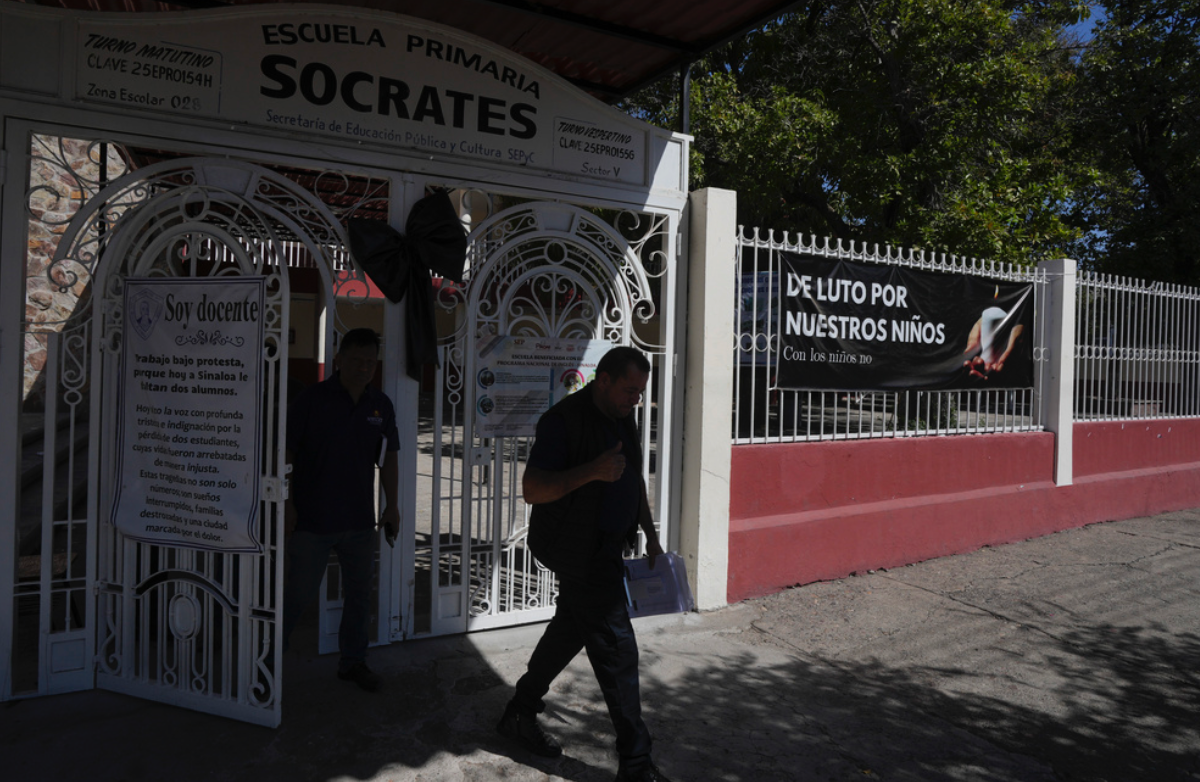
A banner, right, that reads in Spanish, "Mourning for our children," in reference to two students from Socrates Primary School who were killed in a shooting a month prior, hangs on a fence at the school in Culiacan, Sinaloa state, Mexico, Tuesday, Feb. 25, 2025. (AP Photo/Fernando Llano)
Mexico’s federal efforts to put certain restrictions on social media platforms align with similar efforts worldwide. In addition to the United Kingdom, Australia, and the European Union passing laws that hold tech companies accountable for proactively removing harmful digital content, lawmakers across Latin America are shifting away from legislation that shields tech companies from responsibility for user-generated content. In Brazil, Argentina, Costa Rica and Chile, court rulings and federal legislation regarding social media regulation are becoming increasingly strict, particularly concerning the safety of minors.
At the Oct. 9 press conference, Alcalde explained that the decree’s goals will be complemented by two educational initiatives: the “ABCs of Emotions”—a social-emotional learning curriculum deployed in schools that will address the root psychological factors of violence—and mandatory assemblies hosted at every public secondary school in Mexico.
While the decree’s foundational pillars are set, other operational challenges still remain. As President Sheinbaum prepares to meet with representatives from major digital platforms prior to the decree’s estimated publication, enforcement in practice remains up for discussion.